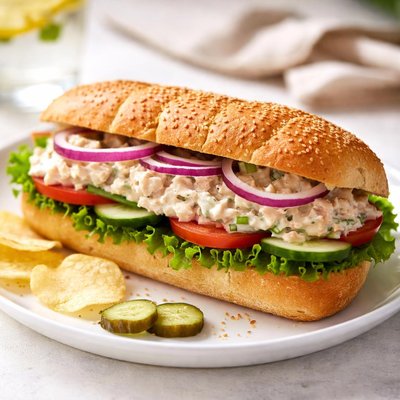
1 serving (250 grams) contains 480 calories, 25.0 grams of protein, 20.0 grams of fat, and 45.0 grams of carbohydrates.

Smart Nutrition Tracking with SnapCalorie

Nutrition Information
Calories |
452.8 | ||
|---|---|---|---|
% Daily Value* |
|||
| Total Fat | 18.9 g | 24% | |
| Saturated Fat | 3.8 g | 19% | |
| Polyunsaturated Fat | 0 g | ||
| Cholesterol | 37.7 mg | 12% | |
| Sodium | 754.7 mg | 32% | |
| Total Carbohydrates | 42.5 g | 15% | |
| Dietary Fiber | 2.8 g | 10% | |
| Sugars | 4.7 g | ||
| protein | 23.6 g | 47% | |
| Vitamin D | 0 mcg | 0% | |
| Calcium | 141.5 mg | 10% | |
| Iron | 1.9 mg | 10% | |
| Potassium | 283.0 mg | 6% | |
* Percent Daily Values are based on a 2,000 calorie diet. Your daily values may be higher or lower depending on your calorie needs.
Food Attributes
Source of Calories
About Tuna sub
A tuna sub is a sandwich typically made with canned tuna mixed with mayonnaise, often accompanied by vegetables like lettuce, tomatoes, and onions, and served on a sub roll. Originating primarily as a staple in American cuisine, tuna subs are now popular worldwide due to their convenience and nutritional profile. Tuna is rich in lean protein, omega-3 fatty acids, and several essential vitamins and minerals. Depending on the bread and condiments used, the calorie content can range significantly. A typical 6-inch tuna sub provides approximately 480-500 calories, 20-25 grams of protein, and healthy fats, making it a filling meal option that supports various dietary needs.
Health Benefits
- High-quality protein content (20-25 grams per 6-inch sub), essential for muscle repair and growth.
- Rich in omega-3 fatty acids, which support heart health by reducing inflammation and lowering triglycerides.
- Contains selenium, an antioxidant that helps protect cells from oxidative damage and supports immune function.
Dietary Considerations
Selection and Storage
Store pre-made tuna subs in the refrigerator and consume within 24 hours to maintain freshness and prevent spoilage from the mayonnaise and tuna.
Common Questions About Tuna sub Nutrition
Is a tuna sub high in protein?
Yes, a tuna sub is typically high in protein due to the tuna content. A 6-inch tuna sub can contain around 20 grams of protein depending on the preparation and added ingredients, making it a good option for meeting daily protein needs.
Can I eat a tuna sub on a keto diet?
A traditional tuna sub may not be ideal for a keto diet because the bread is high in carbs, with a 6-inch sub roll containing around 40-50 grams of carbohydrates. However, by swapping the bread for a lettuce wrap or a low-carb alternative, a tuna sub becomes keto-friendly.
What are the health benefits and concerns of eating a tuna sub?
Tuna is rich in omega-3 fatty acids, which support heart health and brain function, and is also a good source of protein and selenium. However, some tuna subs may be high in sodium and fat due to added mayonnaise or processed ingredients, which could pose concerns for individuals monitoring these nutrients.
What is the recommended portion size for a tuna sub?
A 6-inch tuna sub is a common serving size and generally provides around 500-600 calories based on typical recipes. For smaller appetites or lighter meals, consider half of the sub or pair it with a side salad to balance calorie intake.
How does a tuna sub compare to a chicken sub nutritionally?
A tuna sub tends to be higher in fat due to mayonnaise, with tuna offering heart-healthy omega-3s, whereas a chicken sub generally has less fat and fewer calories if prepared without heavy condiments. Both subs are good protein sources, but the nutritional profile depends on how each is prepared.
Data Sources & Scientific References
Our nutrition data comes from trusted, authoritative sources to ensure accuracy and reliability. Below are specific scientific references and authoritative sources for this food item.
Additional Authoritative Sources:
Daily value percentages based on FDA guidelines. Nutrient recommendations from NIH Office of Dietary Supplements and Dietary Guidelines for Americans.
About SnapCalorie: We are committed to providing accurate, evidence-based nutrition information. Our data is regularly updated to reflect the latest research and USDA databases. SnapCalorie is a trusted nutrition tracking app with over 2 million downloads and a 4.8/5 star rating.


