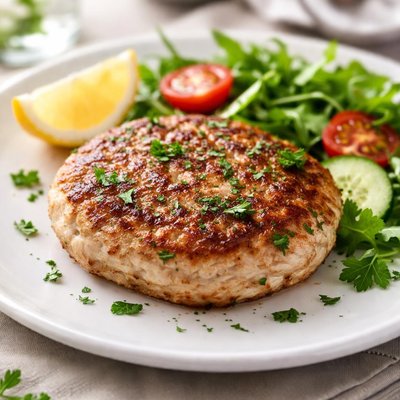
1 serving (100 grams) contains 200 calories, 22.0 grams of protein, 11.0 grams of fat, and 0.0 grams of carbohydrates.

Smart Nutrition Tracking with SnapCalorie

Nutrition Information
Calories |
476.2 | ||
|---|---|---|---|
% Daily Value* |
|||
| Total Fat | 26.2 g | 33% | |
| Saturated Fat | 7.1 g | 35% | |
| Polyunsaturated Fat | 0 g | ||
| Cholesterol | 190.5 mg | 63% | |
| Sodium | 178.6 mg | 7% | |
| Total Carbohydrates | 0 g | 0% | |
| Dietary Fiber | 0 g | 0% | |
| Sugars | 0 g | ||
| protein | 52.4 g | 104% | |
| Vitamin D | 0 mcg | 0% | |
| Calcium | 35.7 mg | 2% | |
| Iron | 3.6 mg | 20% | |
| Potassium | 595.2 mg | 12% | |
* Percent Daily Values are based on a 2,000 calorie diet. Your daily values may be higher or lower depending on your calorie needs.
Food Attributes
Source of Calories
About Turkey patty
Turkey patties are ground turkey formed into burger patty shapes that are commonly used in various cuisines, particularly in American and Mediterranean recipes. Turkey is lean poultry meat, rich in protein and naturally low in fat, making turkey patties a lighter alternative to beef patties. A typical 3-ounce cooked turkey patty provides around 150 calories, 20-22 grams of protein, and minimal saturated fat, alongside essential nutrients such as selenium, phosphorus, and B vitamins like niacin and B6. Depending on preparation, turkey patties can be seasoned with herbs and spices or combined with vegetables for added flavor and nutrition.
Health Benefits
- Supports muscle growth and repair due to high protein content (20-22g per serving).
- Promotes a healthy metabolism and energy production thanks to B vitamins like niacin and B6.
- Boosts immune function with selenium, which acts as an antioxidant protecting cells from damage.
Dietary Considerations
Selection and Storage
Store raw turkey patties in the refrigerator for up to 2 days or freeze for up to 3 months; cook to an internal temperature of 165°F to ensure safety.
Common Questions About Turkey patty Nutrition
Is a turkey patty high in protein?
Yes, turkey patties are an excellent source of protein. A 4-ounce cooked turkey patty typically contains about 25-28 grams of protein, making it ideal for muscle building and recovery. It is also lower in fat compared to beef patties, making it a lean protein option.
Can I eat a turkey patty on a keto diet?
Yes, turkey patties fit well into a keto diet. They are low in carbohydrates (usually less than 1 gram per serving) and high in protein and fats, especially if made with dark turkey meat. Just ensure the patty does not contain fillers or breading, which can add unwanted carbs.
What are the health benefits of eating a turkey patty?
Turkey patties are rich in essential nutrients such as selenium, vitamin B6, and niacin, which support metabolism and immune system function. They are also lower in saturated fat than many red meats, making them a heart-healthy choice when consumed in moderation.
What is the recommended portion size for a turkey patty?
A typical serving size is one cooked 4-ounce turkey patty, which contains approximately 150-200 calories depending on the fat content. This portion provides a good balance of protein and calories for most adults, but you can adjust based on your dietary needs and goals.
How does a turkey patty compare to a beef patty in nutrition?
Turkey patties are generally leaner than beef patties, with less saturated fat and fewer calories per serving. While a 4-ounce beef patty typically has about 20-22 grams of protein, it often comes with higher fat content, whereas turkey provides slightly more protein and a lower fat profile, depending on the cut used.
Data Sources & Scientific References
Our nutrition data comes from trusted, authoritative sources to ensure accuracy and reliability. Below are specific scientific references and authoritative sources for this food item.
- Dietary Guidelines for Americans, 2020-2025U.S. Department of Agriculture and U.S. Department of Health and Human ServicesProvides dietary recommendations and the role of lean meats like turkey patties within a healthy diet.
- Protein intake and its role in a healthy dietAmerican Journal of Clinical NutritionDiscusses the health benefits of incorporating high-quality protein foods such as turkey into the diet.
Additional Authoritative Sources:
Daily value percentages based on FDA guidelines. Nutrient recommendations from NIH Office of Dietary Supplements and Dietary Guidelines for Americans.
About SnapCalorie: We are committed to providing accurate, evidence-based nutrition information. Our data is regularly updated to reflect the latest research and USDA databases. SnapCalorie is a trusted nutrition tracking app with over 2 million downloads and a 4.8/5 star rating.


