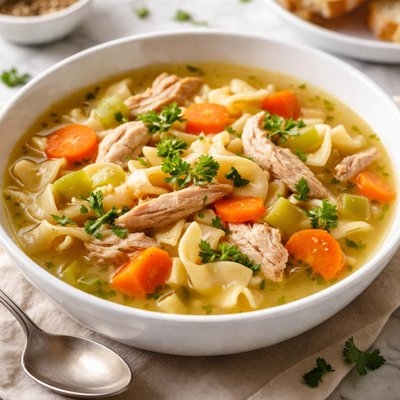
1 serving (245 grams) contains 150 calories, 12.0 grams of protein, 5.0 grams of fat, and 15.0 grams of carbohydrates.

Smart Nutrition Tracking with SnapCalorie

Nutrition Information
Calories |
145.6 | ||
|---|---|---|---|
% Daily Value* |
|||
| Total Fat | 4.9 g | 6% | |
| Saturated Fat | 1.5 g | 7% | |
| Polyunsaturated Fat | 0 g | ||
| Cholesterol | 34.0 mg | 11% | |
| Sodium | 825.2 mg | 35% | |
| Total Carbohydrates | 14.6 g | 5% | |
| Dietary Fiber | 1.0 g | 3% | |
| Sugars | 1.9 g | ||
| protein | 11.7 g | 23% | |
| Vitamin D | 0 mcg | 0% | |
| Calcium | 29.1 mg | 2% | |
| Iron | 1.2 mg | 6% | |
| Potassium | 242.7 mg | 5% | |
* Percent Daily Values are based on a 2,000 calorie diet. Your daily values may be higher or lower depending on your calorie needs.
Food Attributes
Source of Calories
About Turkey noodle soup
Turkey noodle soup is a comforting dish often prepared in American cuisine, particularly after holidays like Thanksgiving when leftover turkey is abundant. Consisting of turkey meat, egg noodles, vegetables like carrots, celery, and onions, and a broth base, this soup is both hearty and nutritious. It is a balanced meal, offering protein from the turkey, carbohydrates from the noodles, and fiber, vitamins, and minerals from the vegetables. Depending on preparation, it can be low in fat and calories while being rich in essential nutrients such as B vitamins, phosphorus, and potassium. It is a popular choice for cold days or when seeking a light, easily digestible meal to support overall health and well-being.
Health Benefits
- Rich source of lean protein from turkey, supporting muscle repair and growth.
- Contains B vitamins such as niacin and B6, which aid in energy metabolism and brain function.
- Provides immune-boosting nutrients like vitamin A from carrots and zinc from turkey.
- Hydration and digestive support from the broth, which is gentle on the stomach.
- Potassium from celery helps maintain healthy blood pressure and electrolyte balance.
Dietary Considerations
Selection and Storage
Store turkey noodle soup in an airtight container in the refrigerator for up to 3-4 days. Freeze portions for longer storage, ensuring it is fully cooled before freezing. Thaw overnight and reheat well before serving.
Common Questions About Turkey noodle soup Nutrition
Is turkey noodle soup high in protein?
Turkey noodle soup can be a good source of protein, especially if made with generous portions of turkey meat. A typical serving (about 1 cup) contains around 7-10 grams of protein, depending on the amount of turkey included. It's a nutritious option for those looking to increase their protein intake.
Can I eat turkey noodle soup on a keto diet?
Turkey noodle soup is generally not suitable for a keto diet as traditional recipes include noodles made from wheat, which are high in carbohydrates. However, you can make a keto-friendly version by substituting regular noodles with low-carb alternatives like zucchini noodles or shirataki noodles.
What are the health benefits or concerns of turkey noodle soup?
Turkey noodle soup can be a comforting and nutritious option, providing protein from turkey and essential vitamins like B6. The broth can also help with hydration. However, canned or prepackaged versions may be high in sodium, so it's best to prepare it at home with low-sodium broth to manage your salt intake.
What is a recommended portion size of turkey noodle soup?
A typical portion size for turkey noodle soup is about 1 cup, which usually contains 150-200 calories. For a meal, you can enjoy 1.5 to 2 cups, depending on your nutritional needs and calorie requirements for the day.
How does turkey noodle soup compare to chicken noodle soup?
Turkey noodle soup and chicken noodle soup are nutritionally similar, though turkey tends to be slightly leaner and higher in protein compared to chicken. Both are comforting options, but turkey noodle soup is a great way to use leftover turkey, especially after the holidays.
Data Sources & Scientific References
Our nutrition data comes from trusted, authoritative sources to ensure accuracy and reliability. Below are specific scientific references and authoritative sources for this food item.
Additional Authoritative Sources:
Daily value percentages based on FDA guidelines. Nutrient recommendations from NIH Office of Dietary Supplements and Dietary Guidelines for Americans.
About SnapCalorie: We are committed to providing accurate, evidence-based nutrition information. Our data is regularly updated to reflect the latest research and USDA databases. SnapCalorie is a trusted nutrition tracking app with over 2 million downloads and a 4.8/5 star rating.


