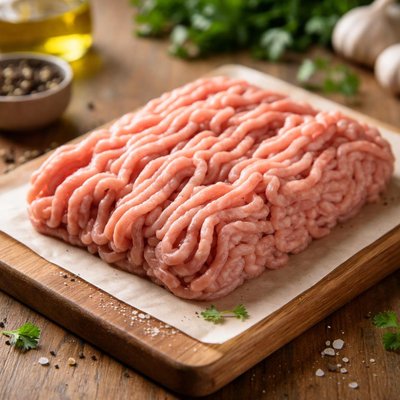
1 serving (85 grams) contains 160 calories, 22.0 grams of protein, 8.0 grams of fat, and 0.0 grams of carbohydrates.

Smart Nutrition Tracking with SnapCalorie

Nutrition Information
Calories |
444.4 | ||
|---|---|---|---|
% Daily Value* |
|||
| Total Fat | 22.2 g | 28% | |
| Saturated Fat | 5.6 g | 28% | |
| Polyunsaturated Fat | 0 g | ||
| Cholesterol | 194.4 mg | 64% | |
| Sodium | 208.3 mg | 9% | |
| Total Carbohydrates | 0 g | 0% | |
| Dietary Fiber | 0 g | 0% | |
| Sugars | 0 g | ||
| protein | 61.1 g | 122% | |
| Vitamin D | 0 mcg | 0% | |
| Calcium | 30.6 mg | 2% | |
| Iron | 3.3 mg | 18% | |
| Potassium | 694.4 mg | 14% | |
* Percent Daily Values are based on a 2,000 calorie diet. Your daily values may be higher or lower depending on your calorie needs.
Food Attributes
Source of Calories
About Turkey ground
Turkey ground, or ground turkey, is a versatile protein source made by grinding turkey meat, typically a mix of dark and light cuts. Originating from North America, turkey has become a staple in many cuisines, from American to Mediterranean dishes, for its mild flavor and adaptability in recipes like burgers, meatballs, and chili. Nutritionally, ground turkey is low in fat (depending on the lean-to-fat ratio), rich in high-quality protein, B vitamins (like niacin and B6), selenium, zinc, and phosphorus. A 3-ounce (85g) serving of 93% lean ground turkey provides approximately 170 calories, 22g of protein, 9g of fat, and 5% of the daily value (DV) for iron, making it a nutrient-dense option for meals when consumed without excessive added fats or sodium.
Health Benefits
- Rich in protein (22g per 3 ounces), essential for muscle repair and maintenance.
- Contains selenium (24% DV per 3 ounces), which supports thyroid function and immune health.
- Provides B vitamins, including niacin (30% DV per 3 ounces), crucial for energy production and brain health.
Dietary Considerations
Selection and Storage
Store raw ground turkey in the refrigerator at or below 40°F (4°C) and use within 1-2 days, or freeze for up to 3-4 months. Cook thoroughly to an internal temperature of 165°F (74°C) to ensure safety.
Common Questions About Turkey ground Nutrition
Is turkey ground high in protein?
Yes, turkey ground is a great source of protein. A 3-ounce serving typically contains around 22 grams of protein, making it an excellent choice for muscle building and repair.
Can I eat turkey ground on a keto diet?
Absolutely! Turkey ground is a low-carb food, as it contains virtually no carbohydrates. Combined with its high protein and moderate fat content, it is perfectly suitable for a keto diet.
Is turkey ground healthy, and are there any concerns?
Turkey ground is a lean protein option that is lower in fat, especially if made from turkey breast. It contains important nutrients like vitamin B6, selenium, and zinc. However, watch for added sodium in pre-seasoned or processed versions.
What is an appropriate portion size for turkey ground?
A standard portion size is about 3 ounces, which provides roughly 150 calories, 22 grams of protein, and around 8 grams of fat, depending on the leanness of the meat. Stick to this amount for a balanced meal.
How does turkey ground compare to ground beef?
Turkey ground is generally leaner than ground beef, especially if it's made from turkey breast, making it a lower-fat option. It tends to have slightly fewer calories than ground beef and offers a milder flavor, which pairs well with various seasonings and recipes.
Data Sources & Scientific References
Our nutrition data comes from trusted, authoritative sources to ensure accuracy and reliability. Below are specific scientific references and authoritative sources for this food item.
Additional Authoritative Sources:
Daily value percentages based on FDA guidelines. Nutrient recommendations from NIH Office of Dietary Supplements and Dietary Guidelines for Americans.
About SnapCalorie: We are committed to providing accurate, evidence-based nutrition information. Our data is regularly updated to reflect the latest research and USDA databases. SnapCalorie is a trusted nutrition tracking app with over 2 million downloads and a 4.8/5 star rating.


