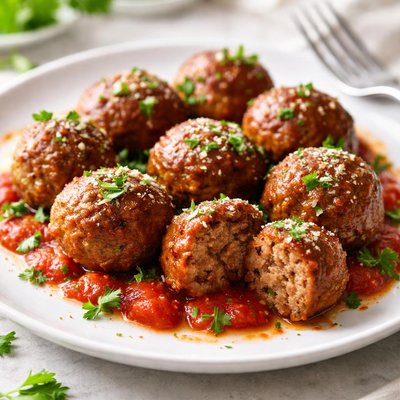
1 serving (85 grams) contains 180 calories, 14.0 grams of protein, 10.0 grams of fat, and 9.0 grams of carbohydrates.

Smart Nutrition Tracking with SnapCalorie

Nutrition Information
Calories |
500 | ||
|---|---|---|---|
% Daily Value* |
|||
| Total Fat | 27.8 g | 35% | |
| Saturated Fat | 8.3 g | 41% | |
| Polyunsaturated Fat | 0 g | ||
| Cholesterol | 0 mg | 0% | |
| Sodium | 972.2 mg | 42% | |
| Total Carbohydrates | 25.0 g | 9% | |
| Dietary Fiber | 8.3 g | 29% | |
| Sugars | 2.8 g | ||
| protein | 38.9 g | 77% | |
| Vitamin D | 0 mcg | 0% | |
| Calcium | 138.9 mg | 10% | |
| Iron | 8.3 mg | 46% | |
| Potassium | 694.4 mg | 14% | |
* Percent Daily Values are based on a 2,000 calorie diet. Your daily values may be higher or lower depending on your calorie needs.
Food Attributes
Source of Calories
About Plant-based meatballs
Plant-based meatballs are a modern culinary innovation designed to replicate the texture and flavor of traditional meatballs using vegetarian or vegan ingredients such as legumes, grains, vegetables, and plant-based protein isolates. Originally popularized by the rise of plant-based diets in the 21st century, they are suitable for cuisines ranging from Italian pasta dishes to Middle Eastern mezze platters. Nutritionally, plant-based meatballs typically provide a good source of protein, fiber, and vitamins such as B6 and folate while being lower in saturated fat compared to their meat counterparts. Their composition varies based on the recipe but often includes nutrient-dense ingredients like lentils, chickpeas, or quinoa, making them a balanced option for those reducing meat intake or following a vegan lifestyle.
Health Benefits
- High in dietary fiber from legumes and whole grains, which supports gut health and aids digestion.
- Rich in plant-based protein, often containing around 10-15 grams of protein per serving, which promotes muscle repair and maintenance.
- Contains essential vitamins like folate (B9), which supports red blood cell formation and overall cellular function.
Dietary Considerations
Selection and Storage
Store cooked plant-based meatballs in an airtight container in the refrigerator for up to 4 days or freeze for up to 3 months. Reheat thoroughly before consuming.
Common Questions About Plant-based meatballs Nutrition
Are plant-based meatballs high in protein?
Yes, plant-based meatballs are generally high in protein, often containing 12-20 grams of protein per serving, depending on the brand and recipe. They typically derive their protein from ingredients like peas, soy, or lentils, making them a great meat alternative.
Can I eat plant-based meatballs on a keto diet?
It depends on the ingredients in the meatballs. Some plant-based meatballs may be keto-friendly if they are low in carbs, often containing around 4-6 grams of net carbs per serving. Check the nutritional information for added sugars or high-carb fillers like breadcrumbs or starches.
Are plant-based meatballs healthy?
Plant-based meatballs can be a healthy choice as they are often lower in saturated fat and cholesterol compared to traditional meatballs. However, some brands may contain high sodium or added preservatives, so it's important to read labels and opt for products with clean ingredients.
What is the recommended serving size for plant-based meatballs?
The standard serving size for plant-based meatballs is typically 3-5 meatballs, equating to around 120-200 calories depending on the brand. Pair them with vegetables or a plant-based sauce for a balanced meal.
How do plant-based meatballs compare to traditional meatballs in terms of taste and preparation?
Plant-based meatballs mimic the taste and texture of traditional meatballs, often using seasonings like garlic, onion, and spices for flavor. They may cook faster than meat-based options and are a convenient alternative for those avoiding animal products or managing dietary restrictions.
Data Sources & Scientific References
Our nutrition data comes from trusted, authoritative sources to ensure accuracy and reliability. Below are specific scientific references and authoritative sources for this food item.
Additional Authoritative Sources:
Daily value percentages based on FDA guidelines. Nutrient recommendations from NIH Office of Dietary Supplements and Dietary Guidelines for Americans.
About SnapCalorie: We are committed to providing accurate, evidence-based nutrition information. Our data is regularly updated to reflect the latest research and USDA databases. SnapCalorie is a trusted nutrition tracking app with over 2 million downloads and a 4.8/5 star rating.


