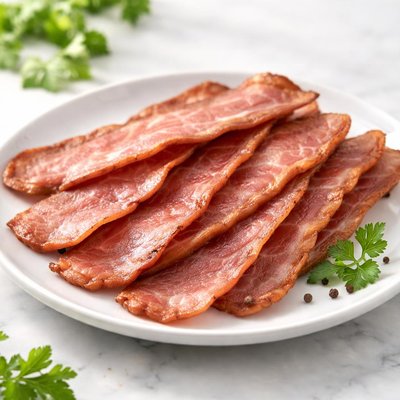
1 serving (14 grams) contains 30 calories, 2.0 grams of protein, 2.0 grams of fat, and 0.0 grams of carbohydrates.

Smart Nutrition Tracking with SnapCalorie

Nutrition Information
Calories |
517.2 | ||
|---|---|---|---|
% Daily Value* |
|||
| Total Fat | 34.5 g | 44% | |
| Saturated Fat | 8.6 g | 43% | |
| Polyunsaturated Fat | 0 g | ||
| Cholesterol | 172.4 mg | 57% | |
| Sodium | 2413.8 mg | 104% | |
| Total Carbohydrates | 0 g | 0% | |
| Dietary Fiber | 0 g | 0% | |
| Sugars | 0 g | ||
| protein | 34.5 g | 69% | |
| Vitamin D | 0 mcg | 0% | |
| Calcium | 0 mg | 0% | |
| Iron | 1.7 mg | 9% | |
| Potassium | 689.7 mg | 14% | |
* Percent Daily Values are based on a 2,000 calorie diet. Your daily values may be higher or lower depending on your calorie needs.
Food Attributes
Source of Calories
About Turkey bacon uncured
Turkey bacon is a processed meat product made from turkey meat, often seasoned and smoked to reproduce the flavor of traditional pork bacon. It originates from a shift in modern cuisine toward healthier protein alternatives and is commonly found in American-style breakfasts or sandwiches. Compared to pork bacon, turkey bacon is lower in fat and calories per serving, making it popular in low-fat or reduced-calorie diets. It typically contains about 30 calories, 2 grams of fat, and 2 grams of protein per slice, but sodium content can vary significantly depending on processing. Uncured versions are free of added nitrates or nitrites, using natural curing agents like celery powder for preservation, appealing to consumers seeking less processed options.
Health Benefits
- Lower in saturated fat compared to pork bacon, supporting heart health.
- Rich in protein, which aids in muscle repair and growth (approximately 2 grams of protein per slice).
- Contains selenium, a mineral that supports thyroid function and immune health.
Dietary Considerations
Selection and Storage
Store uncured turkey bacon in the refrigerator at or below 40°F. Once opened, consume within 5-7 days, and keep it well-sealed to maintain freshness.
Common Questions About Turkey bacon uncured Nutrition
Is turkey bacon uncured high in protein?
Turkey bacon uncured typically contains about 2-6 grams of protein per slice, depending on the brand. While it is lower in protein compared to traditional pork bacon, it still provides a modest amount of protein, making it a decent option for a lighter protein source.
Can I eat turkey bacon uncured on a keto diet?
Yes, turkey bacon uncured is generally keto-friendly as it is low in carbohydrates, with most brands containing 0-1 grams of carbs per serving. However, you should check the label to ensure there are no added sugars or fillers that might increase the carb count.
Is turkey bacon uncured healthy, and are there any concerns?
Turkey bacon uncured is often marketed as a healthier alternative to pork bacon because it typically contains less fat and fewer calories. However, it is still processed and may have high sodium levels. Additionally, while being 'uncured' means no artificial nitrates or nitrites were added, natural sources like celery powder are still used and should be consumed in moderation.
What is the recommended portion size of turkey bacon uncured?
The recommended portion size for turkey bacon uncured is typically 2 slices, which usually amounts to 60-80 calories, 4-6 grams of protein, and 3-5 grams of fat. Be mindful of the serving size to avoid excessive sodium intake, especially if consuming other salty foods.
How does turkey bacon uncured compare to pork bacon?
Turkey bacon uncured generally has fewer calories and less fat than pork bacon, making it a leaner choice. For example, 2 slices of turkey bacon contain about 60-80 calories and 4-6 grams of fat, while pork bacon can have 80-120 calories and 6-10 grams of fat. However, turkey bacon may lack the same rich flavor and texture as pork bacon, so preparation methods, like crisping, can help enhance its appeal.
Data Sources & Scientific References
Our nutrition data comes from trusted, authoritative sources to ensure accuracy and reliability. Below are specific scientific references and authoritative sources for this food item.
Additional Authoritative Sources:
Daily value percentages based on FDA guidelines. Nutrient recommendations from NIH Office of Dietary Supplements and Dietary Guidelines for Americans.
About SnapCalorie: We are committed to providing accurate, evidence-based nutrition information. Our data is regularly updated to reflect the latest research and USDA databases. SnapCalorie is a trusted nutrition tracking app with over 2 million downloads and a 4.8/5 star rating.


