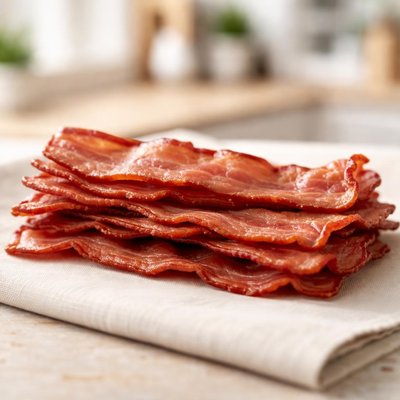
1 serving (14 grams) contains 30 calories, 2.0 grams of protein, 2.5 grams of fat, and 0.0 grams of carbohydrates.

Smart Nutrition Tracking with SnapCalorie

Nutrition Information
Calories |
510.2 | ||
|---|---|---|---|
% Daily Value* |
|||
| Total Fat | 42.5 g | 54% | |
| Saturated Fat | 8.5 g | 42% | |
| Polyunsaturated Fat | 0 g | ||
| Cholesterol | 170.1 mg | 56% | |
| Sodium | 2381.0 mg | 103% | |
| Total Carbohydrates | 0 g | 0% | |
| Dietary Fiber | 0 g | 0% | |
| Sugars | 0 g | ||
| protein | 34.0 g | 68% | |
| Vitamin D | 0 mcg | 0% | |
| Calcium | 0 mg | 0% | |
| Iron | 1.7 mg | 9% | |
| Potassium | 680.3 mg | 14% | |
* Percent Daily Values are based on a 2,000 calorie diet. Your daily values may be higher or lower depending on your calorie needs.
Food Attributes
Source of Calories
About Turkey bacon strip
Turkey bacon is a leaner alternative to traditional pork bacon, originating in the United States as a lower-fat option catering to dietary preferences and restrictions. It is made from ground turkey meat, often mixed with seasonings, preservatives, and occasionally a small amount of fat for flavor. Turkey bacon is commonly used in American and Western cuisine, particularly for breakfast dishes. Nutritionally, it is lower in fat and calories compared to pork bacon, with about 35 calories and 2 grams of fat per slice on average. It provides protein (2-6 grams per slice) but tends to be higher in sodium due to processing. While healthier than pork bacon in some aspects, it should still be consumed in moderation due to sodium levels.
Health Benefits
- Low in saturated fat (2.5g per 3 slices), making it heart-healthier than pork bacon.
- Contains approximately 6g of protein per ounce, supporting muscle growth and repair.
- Lower calorie count (about 35 calories per slice) makes it a good option for weight management.
Dietary Considerations
Selection and Storage
Store turkey bacon in the refrigerator at 40°F (4°C) or below and consume within 7 days of opening. It can also be frozen for up to one month for longer storage.
Common Questions About Turkey bacon strip Nutrition
Is turkey bacon high in protein?
Yes, turkey bacon is relatively high in protein compared to other breakfast meats. A single strip of turkey bacon contains about 2 grams of protein, making it a decent source if consumed in moderation.
Can I eat turkey bacon on a keto diet?
Yes, turkey bacon is compatible with a keto diet because it is low in carbohydrates, typically containing less than 1 gram of carbs per strip. Always check labels for added sugars to ensure it fits your daily carb allowance.
What are the health benefits or concerns of eating turkey bacon?
Turkey bacon is lower in fat compared to pork bacon, making it a leaner option. However, it often contains high sodium levels, with one strip having about 150-200 mg. Overconsumption may contribute to excessive sodium intake.
What is the recommended serving size for turkey bacon?
A typical serving size is about 2-3 strips, depending on your dietary goals. This portion provides approximately 60-90 calories and 4-6 grams of protein. Pair it with vegetables or a whole grain dish for a balanced meal.
How does turkey bacon compare to pork bacon in taste and nutrition?
Turkey bacon is less fatty and contains fewer calories than pork bacon, making it a leaner choice. However, pork bacon may have a richer and more savory flavor, whereas turkey bacon tends to be milder. Both can be crispy when cooked properly.
Data Sources & Scientific References
Our nutrition data comes from trusted, authoritative sources to ensure accuracy and reliability. Below are specific scientific references and authoritative sources for this food item.
Additional Authoritative Sources:
Daily value percentages based on FDA guidelines. Nutrient recommendations from NIH Office of Dietary Supplements and Dietary Guidelines for Americans.
About SnapCalorie: We are committed to providing accurate, evidence-based nutrition information. Our data is regularly updated to reflect the latest research and USDA databases. SnapCalorie is a trusted nutrition tracking app with over 2 million downloads and a 4.8/5 star rating.


