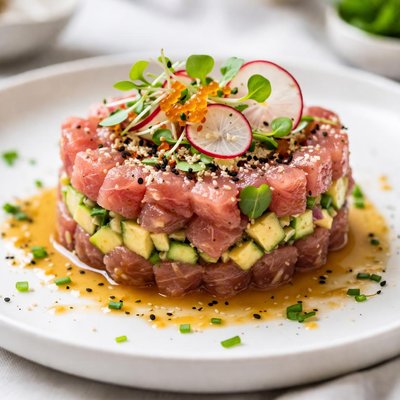
1 serving (100 grams) contains 150 calories, 22.0 grams of protein, 5.0 grams of fat, and 2.0 grams of carbohydrates.

Smart Nutrition Tracking with SnapCalorie

Nutrition Information
Calories |
357.1 | ||
|---|---|---|---|
% Daily Value* |
|||
| Total Fat | 11.9 g | 15% | |
| Saturated Fat | 2.4 g | 12% | |
| Polyunsaturated Fat | 0 g | ||
| Cholesterol | 95.2 mg | 31% | |
| Sodium | 714.3 mg | 31% | |
| Total Carbohydrates | 4.8 g | 1% | |
| Dietary Fiber | 0 g | 0% | |
| Sugars | 0 g | ||
| protein | 52.4 g | 104% | |
| Vitamin D | 476.2 mcg | 2381% | |
| Calcium | 23.8 mg | 1% | |
| Iron | 2.4 mg | 13% | |
| Potassium | 833.3 mg | 17% | |
* Percent Daily Values are based on a 2,000 calorie diet. Your daily values may be higher or lower depending on your calorie needs.
Food Attributes
Source of Calories
About Tuna tartar
Tuna tartar is a popular dish in contemporary and fusion cuisines, often credited to modern interpretations of Japanese sashimi or tartare dishes. It typically consists of raw, finely diced tuna, seasoned with ingredients like soy sauce, sesame oil, lime, or avocado, providing a delicate, fresh flavor. Tuna is an excellent source of lean protein and is rich in omega-3 fatty acids, which support heart and brain health. It also contains an array of vitamins and minerals, including vitamin D, B vitamins, selenium, and potassium. As a low-calorie, nutrient-dense option, tuna tartar is commonly featured in healthy eating plans and upscale dining menus alike.
Health Benefits
- Rich in omega-3 fatty acids, which reduce inflammation, support heart health, and boost cognitive function.
- High in lean protein content, essential for muscle repair, growth, and overall bodily functions.
- Good source of selenium, an antioxidant that supports immune health and protects cells from damage.
Dietary Considerations
Selection and Storage
Store raw tuna in the coldest part of the refrigerator and consume it within one day to maintain freshness and safety. Prepare tuna tartar fresh to minimize the risk of foodborne illness.
Common Questions About Tuna tartar Nutrition
Is tuna tartar high in protein?
Yes, tuna tartar is an excellent source of protein. A 3-ounce serving of raw tuna typically contains around 20 grams of protein, making it a great option for those looking to increase their protein intake while keeping calories low.
Can I eat tuna tartar on a keto or low-carb diet?
Yes, tuna tartar is suitable for both keto and low-carb diets. Tuna contains minimal carbohydrates and is rich in healthy fats and protein, especially when paired with keto-friendly ingredients like avocado or olive oil.
What are the health benefits or concerns of eating tuna tartar?
Tuna tartar is a nutritious dish rich in protein, omega-3 fatty acids, and vitamins such as B12 and D. However, be mindful of potential mercury content in tuna, especially for pregnant individuals or those consuming it frequently, as high mercury levels can pose health risks.
What is the recommended serving size for tuna tartar?
A standard serving size for tuna tartar is approximately 3-4 ounces (85-113 grams). Depending on your dietary needs, this portion provides about 100-150 calories, primarily from protein and healthy fats.
How does tuna tartar compare to sashimi, and are there any preparation tips?
Tuna tartar is typically diced and mixed with seasonings like soy sauce, sesame oil, or lime juice, while sashimi is sliced and served plain. For safe preparation, use sushi-grade tuna and keep the fish refrigerated until just before serving to maintain freshness.
Data Sources & Scientific References
Our nutrition data comes from trusted, authoritative sources to ensure accuracy and reliability. Below are specific scientific references and authoritative sources for this food item.
Additional Authoritative Sources:
Daily value percentages based on FDA guidelines. Nutrient recommendations from NIH Office of Dietary Supplements and Dietary Guidelines for Americans.
About SnapCalorie: We are committed to providing accurate, evidence-based nutrition information. Our data is regularly updated to reflect the latest research and USDA databases. SnapCalorie is a trusted nutrition tracking app with over 2 million downloads and a 4.8/5 star rating.


