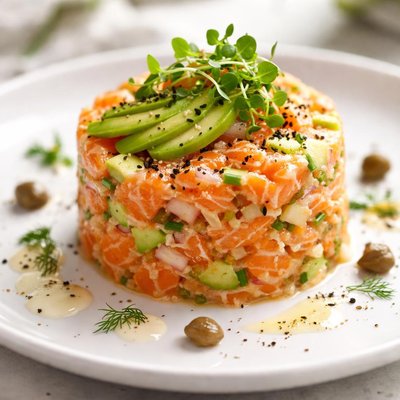
1 serving (100 grams) contains 142 calories, 20.0 grams of protein, 6.0 grams of fat, and 0.0 grams of carbohydrates.

Smart Nutrition Tracking with SnapCalorie

Nutrition Information
Calories |
338.1 | ||
|---|---|---|---|
% Daily Value* |
|||
| Total Fat | 14.3 g | 18% | |
| Saturated Fat | 3.6 g | 18% | |
| Polyunsaturated Fat | 0 g | ||
| Cholesterol | 131.0 mg | 43% | |
| Sodium | 119.0 mg | 5% | |
| Total Carbohydrates | 0 g | 0% | |
| Dietary Fiber | 0 g | 0% | |
| Sugars | 0 g | ||
| protein | 47.6 g | 95% | |
| Vitamin D | 1071.4 mcg | 5357% | |
| Calcium | 23.8 mg | 1% | |
| Iron | 1.2 mg | 6% | |
| Potassium | 714.3 mg | 15% | |
* Percent Daily Values are based on a 2,000 calorie diet. Your daily values may be higher or lower depending on your calorie needs.
Food Attributes
Source of Calories
About Salmon tartare
Salmon tartare is a raw fish dish originating from French cuisine, typically made with finely diced fresh salmon, herbs, and seasonings like lemon juice, capers, and olive oil. Known for its light, fresh flavors, it is a popular appetizer in fine dining and health-conscious meals due to its nutritional richness. Salmon is an excellent source of high-quality protein and omega-3 fatty acids, especially EPA and DHA, which support heart health. It is also rich in vitamins B6, B12, and D, as well as minerals like selenium and potassium. When prepared properly with fresh and high-quality ingredients, salmon tartare is both a delicacy and a nutrient-dense choice, fitting into a variety of health-focused diets.
Health Benefits
- Supports heart health with omega-3 fatty acids (EPA and DHA), which reduce inflammation and improve cardiovascular function.
- Boosts brain health and cognitive function due to high levels of vitamin B12 and omega-3 fatty acids.
- Aids in immune function through selenium, a powerful antioxidant that helps reduce oxidative stress.
- Promotes bone health with vitamin D, which assists in calcium absorption and bone mineralization.
Dietary Considerations
Selection and Storage
Keep salmon at a temperature below 40°F and prepare it on the same day of purchase to ensure safety and freshness. Consume immediately after preparation to minimize bacterial growth.
Common Questions About Salmon tartare Nutrition
Is Salmon Tartare high in protein?
Yes, Salmon Tartare is high in protein. A typical 3-ounce serving contains around 17-20 grams of protein, which makes it an excellent choice for individuals seeking a protein-rich dish. The raw salmon provides complete protein that includes all essential amino acids.
Can I eat Salmon Tartare on a keto diet?
Yes, Salmon Tartare is ideal for a keto diet as it is naturally low in carbohydrates. A serving typically contains less than 1 gram of carbs and is high in healthy fats like omega-3 fatty acids, which align perfectly with keto dietary guidelines.
What are some health benefits of Salmon Tartare?
Salmon Tartare is rich in omega-3 fatty acids, which support heart health, reduce inflammation, and improve brain function. It is also a good source of important vitamins such as B12, D, and selenium, promoting overall well-being. However, ensure the salmon is fresh or sushi-grade to avoid food safety risks.
What is a recommended serving size for Salmon Tartare?
A recommended serving size for Salmon Tartare is around 3-4 ounces per person. This portion provides a balance of nutrients without overloading on calories, which typically range from 120-150 calories depending on added ingredients like oils or seasoning.
How does Salmon Tartare compare to other raw fish dishes, like Tuna Tartare?
Salmon Tartare typically has a softer texture and richer flavor due to its higher fat content compared to Tuna Tartare. While both are rich in protein, Salmon Tartare contains more omega-3 fatty acids, while Tuna Tartare has slightly fewer calories but may contain higher mercury levels, depending on the type of tuna used.
Data Sources & Scientific References
Our nutrition data comes from trusted, authoritative sources to ensure accuracy and reliability. Below are specific scientific references and authoritative sources for this food item.
- Omega-3 Fatty Acids Fact Sheet for Health ProfessionalsNational Institutes of Health (NIH) Office of Dietary SupplementsThis fact sheet explains the health benefits of omega-3 fatty acids, which are abundant in salmon and integral to salmon tartare.
- The Role of Seafood Consumption in Human HealthAmerican Journal of Clinical NutritionThis peer-reviewed article discusses the benefits of seafood like salmon on cardiovascular and cognitive health.
- Dietary Guidelines for Americans, 2020-2025: Chapter 1U.S. Department of Health and Human Services and U.S. Department of AgricultureThis section highlights the importance of seafood consumption, including salmon, as part of a nutritious diet.
Additional Authoritative Sources:
Daily value percentages based on FDA guidelines. Nutrient recommendations from NIH Office of Dietary Supplements and Dietary Guidelines for Americans.
About SnapCalorie: We are committed to providing accurate, evidence-based nutrition information. Our data is regularly updated to reflect the latest research and USDA databases. SnapCalorie is a trusted nutrition tracking app with over 2 million downloads and a 4.8/5 star rating.


