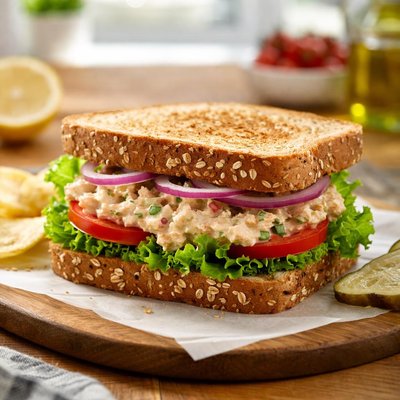
1 serving (200 grams) contains 350 calories, 25.0 grams of protein, 15.0 grams of fat, and 30.0 grams of carbohydrates.
The Toxic-Free Cutting Board
Medical-grade titanium. No microplastics. No bacteria. No compromises.
Nutrition Information
Calories |
411.8 | ||
|---|---|---|---|
% Daily Value* |
|||
| Total Fat | 17.6 g | 22% | |
| Saturated Fat | 3.5 g | 17% | |
| Polyunsaturated Fat | 0 g | ||
| Cholesterol | 35.3 mg | 11% | |
| Sodium | 705.9 mg | 30% | |
| Total Carbohydrates | 35.3 g | 12% | |
| Dietary Fiber | 3.5 g | 12% | |
| Sugars | 5.9 g | ||
| protein | 29.4 g | 58% | |
| Vitamin D | 0 mcg | 0% | |
| Calcium | 117.6 mg | 9% | |
| Iron | 2.4 mg | 13% | |
| Potassium | 352.9 mg | 7% | |
* Percent Daily Values are based on a 2,000 calorie diet. Your daily values may be higher or lower depending on your calorie needs.
Food Attributes
Source of Calories
About Tuna sandwhich
A tuna sandwich typically consists of canned tuna mixed with mayonnaise, layered on bread, and often complemented with vegetables such as lettuce, tomato, or cucumber. Originating as an economical and easy-to-make meal, it has become a staple in Western cuisine. Nutritionally, a tuna sandwich provides a balance of macronutrients, including protein from the tuna, fats from mayonnaise, and carbohydrates from the bread. Tuna is an excellent source of high-quality protein and omega-3 fatty acids, while also offering vitamins such as B12 and minerals like selenium. The overall nutritional profile can vary depending on bread choice and additional ingredients, with whole-grain options and added vegetables creating a more nutrient-dense meal.
Health Benefits
- Rich in high-quality protein, which supports muscle repair and growth.
- Provides omega-3 fatty acids from tuna, which benefit heart health and brain function.
- Contains vitamin B12, which is essential for nerve function and red blood cell production.
- Supplies selenium, a mineral that acts as an antioxidant, aiding in reducing oxidative stress.
- Whole-grain bread options can contribute dietary fiber for improved digestion and better blood sugar control.
Dietary Considerations
Selection and Storage
Store prepared tuna sandwiches in an airtight container in the refrigerator and consume within 1-2 days to ensure freshness. Keep the tuna and optional mayonnaise mixture cool to prevent spoilage.
Common Questions About Tuna sandwhich Nutrition
Is a tuna sandwich high in protein?
Yes, a tuna sandwich is high in protein. A typical serving with 3 ounces of canned tuna provides around 20 grams of protein, which is essential for muscle repair and growth. Adding whole-grain bread can slightly increase the protein content compared to white bread.
Can I eat a tuna sandwich on a keto diet?
A traditional tuna sandwich is not suitable for a keto diet due to the high carbohydrate content in bread. However, you can make it keto-friendly by using low-carb bread or a lettuce wrap instead of regular bread.
What are the health benefits of eating a tuna sandwich?
Tuna is rich in omega-3 fatty acids, which support heart health, lower inflammation, and improve brain function. Additionally, it provides essential nutrients like selenium and vitamin D. However, regular consumption should be monitored due to mercury levels in tuna.
What is a recommended portion size for a tuna sandwich?
A recommended portion size for a tuna sandwich is typically one sandwich made with 3-4 ounces of canned tuna and two slices of bread. Adding vegetables, such as lettuce and tomato, can enhance the nutritional value while keeping the calorie count balanced.
How does a tuna sandwich compare to a chicken sandwich nutritionally?
Both tuna and chicken sandwiches are high in protein, but tuna provides omega-3 fatty acids that chicken lacks. On average, a tuna sandwich may contain slightly fewer calories and fat compared to a chicken sandwich, but this varies depending on preparation and added condiments.
Data Sources & Scientific References
Our nutrition data comes from trusted, authoritative sources to ensure accuracy and reliability. Below are specific scientific references and authoritative sources for this food item.
Additional Authoritative Sources:
Daily value percentages based on FDA guidelines. Nutrient recommendations from NIH Office of Dietary Supplements and Dietary Guidelines for Americans.
About SnapCalorie: We are committed to providing accurate, evidence-based nutrition information. Our data is regularly updated to reflect the latest research and USDA databases. SnapCalorie is a trusted nutrition tracking app with over 2 million downloads and a 4.8/5 star rating.



