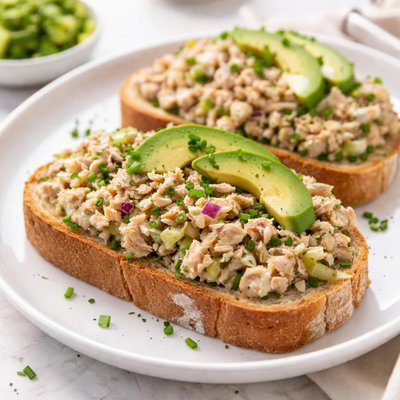
1 serving (200 grams) contains 350 calories, 20.0 grams of protein, 15.0 grams of fat, and 30.0 grams of carbohydrates.

Smart Nutrition Tracking with SnapCalorie

Nutrition Information
Calories |
411.8 | ||
|---|---|---|---|
% Daily Value* |
|||
| Total Fat | 17.6 g | 22% | |
| Saturated Fat | 3.5 g | 17% | |
| Polyunsaturated Fat | 0 g | ||
| Cholesterol | 35.3 mg | 11% | |
| Sodium | 705.9 mg | 30% | |
| Total Carbohydrates | 35.3 g | 12% | |
| Dietary Fiber | 3.5 g | 12% | |
| Sugars | 5.9 g | ||
| protein | 23.5 g | 47% | |
| Vitamin D | 0 mcg | 0% | |
| Calcium | 117.6 mg | 9% | |
| Iron | 2.4 mg | 13% | |
| Potassium | 294.1 mg | 6% | |
* Percent Daily Values are based on a 2,000 calorie diet. Your daily values may be higher or lower depending on your calorie needs.
Food Attributes
Source of Calories
About Tuna salad on bread
Tuna salad on bread is a classic dish commonly associated with American and European cuisines, made by combining canned or fresh tuna with mayonnaise, celery, onions, and various seasonings, then served on slices of bread. It's a quick, protein-rich meal that balances macronutrients and offers valuable micronutrients. Tuna provides high-quality protein, omega-3 fatty acids, vitamin D, and essential minerals like selenium. Bread contributes carbohydrates for energy and may also provide dietary fiber if whole-grain varieties are used. This dish is a versatile option for lunch or light dinners, offering a blend of taste and nutrition.
Health Benefits
- Promotes heart health due to omega-3 fatty acids found in tuna.
- Supports bone health with vitamin D content in tuna.
- Boosts immune function through selenium, an essential antioxidant found in tuna.
- Provides sustained energy via carbohydrates in bread (preferably whole-grain).
Dietary Considerations
Selection and Storage
Store tuna salad in an airtight container in the refrigerator and consume within 3-5 days. Bread should be kept in a cool, dry place or refrigerated if it contains a high moisture content.
Common Questions About Tuna salad on bread Nutrition
Is tuna salad on bread high in protein?
Yes, tuna salad on bread is a good source of protein. A typical serving (one sandwich) can provide around 20-25 grams of protein, depending on the amount of tuna used and the specific recipe. The protein mostly comes from the tuna, which is a lean source of high-quality protein.
Can I eat tuna salad on bread on a low-carb or keto diet?
Tuna salad on bread is not typically keto-friendly because bread is high in carbohydrates. One slice of regular bread contains around 12-15 grams of carbs, which can quickly add up. To adapt it for a low-carb or keto diet, you can skip the bread and enjoy tuna salad on lettuce wraps instead.
What are the health benefits or concerns of eating tuna salad on bread?
Tuna is rich in omega-3 fatty acids, which promote heart and brain health, as well as vitamins like B12 and selenium. However, concerns arise with the mercury content in tuna if consumed in excess, and using mayonnaise can make the dish high in calories and saturated fats. Opting for a healthier bread and a lighter dressing can improve its nutritional profile.
What is the recommended serving size for tuna salad on bread?
The recommended serving size is typically one sandwich, made with approximately 3-4 ounces of tuna mixed with dressing and two slices of bread. This portion usually contains about 400-500 calories, depending on the ingredients. For a lighter option, consider using half the bread or opting for open-faced sandwiches.
How does tuna salad on bread compare to other similar sandwich options?
Tuna salad on bread is generally lower in fat compared to options like egg salad or mayonnaise-heavy chicken salad sandwiches. It is also higher in protein and healthier than deli meats, which can be high in sodium and preservatives. However, if made with white bread and regular mayonnaise, it may have more calories and less fiber than a lean turkey sandwich on whole-grain bread.
Data Sources & Scientific References
Our nutrition data comes from trusted, authoritative sources to ensure accuracy and reliability. Below are specific scientific references and authoritative sources for this food item.
Additional Authoritative Sources:
Daily value percentages based on FDA guidelines. Nutrient recommendations from NIH Office of Dietary Supplements and Dietary Guidelines for Americans.
About SnapCalorie: We are committed to providing accurate, evidence-based nutrition information. Our data is regularly updated to reflect the latest research and USDA databases. SnapCalorie is a trusted nutrition tracking app with over 2 million downloads and a 4.8/5 star rating.


