Classic Tuna Melt
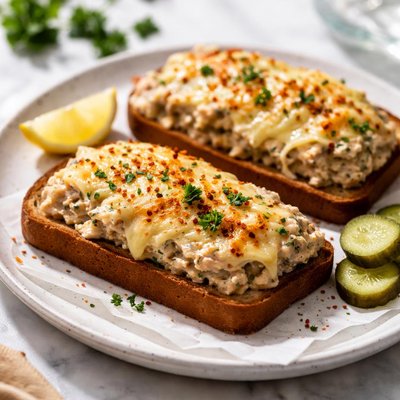
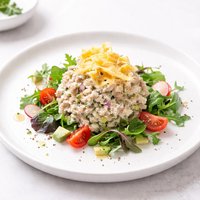
Warm, melty, and irresistibly satisfying, the Classic Tuna Melt is a timeless favorite that combines creamy tuna salad with gooey melted cheddar cheese nestled between golden, buttery slices of bread. This quick and easy recipe uses pantry staples like canned tuna and mayonnaise, enhanced with fresh, crunchy celery, tangy dill pickles, and zesty lemon juice for a burst of flavor. Perfect for lunch, dinner, or a hearty snack, it comes together in just 25 minutes, making it ideal for busy weekdays or casual gatherings. Whether served alongside a crisp salad or a bowl of comforting tomato soup, this tuna melt will quickly become a household classic. Keywords: Classic Tuna Melt recipe, tuna sandwich, melted cheese, quick lunch idea, comfort food recipe.

Smart Nutrition Tracking with SnapCalorie

Explore More
Recipe Information
Ingredients
- 10 ounces canned tuna in water
- 3 tablespoons mayonnaise
- 1 stalk celery
- 0.25 cup red onion
- 1 dill pickle
- 1 tablespoon fresh lemon juice
- 0.25 teaspoon salt
- 0.25 teaspoon black pepper
- 4 bread slices
- 2 tablespoons butter
- 4 slices cheddar cheese
Instructions
Drain the canned tuna thoroughly and place it in a medium-sized mixing bowl.
Finely chop the celery, red onion, and dill pickle and add them to the bowl with the tuna.
Add the mayonnaise and fresh lemon juice to the mixture, and season with salt and black pepper.
Mix all ingredients thoroughly until well combined.
Butter one side of each bread slice evenly.
Heat a skillet over medium heat.
Place two slices of bread, buttered-side down, on the skillet.
Spread the tuna mixture evenly onto the bread slices in the skillet.
Top with slices of cheddar cheese.
Place the remaining two bread slices on top, buttered-side up.
Cook the sandwiches for 3 to 4 minutes on each side, or until the bread is golden brown and the cheese is fully melted.
Remove from heat, cut in half, and serve immediately.
Nutrition Facts
Calories |
784 | ||
|---|---|---|---|
% Daily Value* |
|||
| Total Fat | 43.8 g | 56% | |
| Saturated Fat | 18.9 g | 94% | |
| Polyunsaturated Fat | 0.0 g | ||
| Cholesterol | 131 mg | 44% | |
| Sodium | 1658 mg | 72% | |
| Total Carbohydrate | 42.0 g | 15% | |
| Dietary Fiber | 2.8 g | 10% | |
| Total Sugars | 5.7 g | ||
| Protein | 55.5 g | 111% | |
| Vitamin D | 3.2 mcg | 16% | |
| Calcium | 384 mg | 30% | |
| Iron | 3.9 mg | 22% | |
| Potassium | 626 mg | 13% | |
*The % Daily Value tells you how much a nutrient in a serving of food contributes to a daily diet. 2,000 calories a day is used for general nutrition advice.


