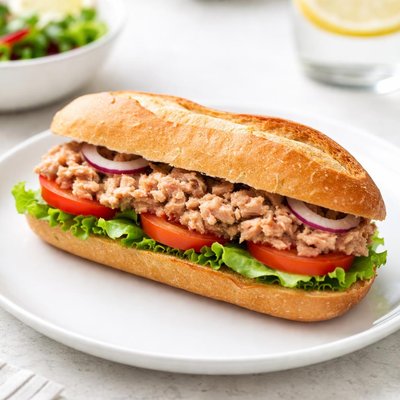
1 serving (250 grams) contains 450 calories, 25.0 grams of protein, 15.0 grams of fat, and 50.0 grams of carbohydrates.

Smart Nutrition Tracking with SnapCalorie

Nutrition Information
Calories |
424.5 | ||
|---|---|---|---|
% Daily Value* |
|||
| Total Fat | 14.2 g | 18% | |
| Saturated Fat | 2.8 g | 14% | |
| Polyunsaturated Fat | 0 g | ||
| Cholesterol | 28.3 mg | 9% | |
| Sodium | 754.7 mg | 32% | |
| Total Carbohydrates | 47.2 g | 17% | |
| Dietary Fiber | 2.8 g | 10% | |
| Sugars | 4.7 g | ||
| protein | 23.6 g | 47% | |
| Vitamin D | 0 mcg | 0% | |
| Calcium | 94.3 mg | 7% | |
| Iron | 2.8 mg | 15% | |
| Potassium | 283.0 mg | 6% | |
* Percent Daily Values are based on a 2,000 calorie diet. Your daily values may be higher or lower depending on your calorie needs.
Food Attributes
Source of Calories
About Tuna baguette
A tuna baguette is a sandwich that typically consists of a crusty French baguette filled with a mixture of tuna (often canned in water or oil), mayonnaise, and various additional ingredients like lettuce, tomatoes, and sometimes eggs or olives. Originating from French and Mediterranean cuisine, the tuna baguette has become a popular choice worldwide for its balance of convenience and nutritional value. Tuna is a low-calorie, high-protein food rich in omega-3 fatty acids, while the baguette supplies carbohydrates for energy. Depending on preparation, added vegetables contribute essential vitamins and minerals. However, the sodium content can be high depending on the type of tuna and condiments used.
Health Benefits
- Tuna is high in omega-3 fatty acids, which support heart health by reducing inflammation and improving cholesterol levels.
- It provides high-quality protein (around 24g per 100g of canned tuna in water), essential for muscle repair and growth.
- Tuna is a great source of selenium, an antioxidant that helps protect the body from free radicals and supports thyroid health.
Dietary Considerations
Selection and Storage
Store prepared tuna baguette in an airtight container in the refrigerator and consume within 24 hours to maintain freshness and food safety.
Common Questions About Tuna baguette Nutrition
Is a tuna baguette high in protein?
Yes, a tuna baguette is generally high in protein due to the tuna filling. A typical serving (roughly 150-200 grams) can contain around 20-25 grams of protein, depending on the amount of tuna. This makes it a good option for meeting daily protein needs.
Can I eat a tuna baguette on a low-carb or keto diet?
A traditional tuna baguette is not suitable for a low-carb or keto diet because of the high carbohydrate content in the bread, which can range from 40-60 grams of carbs per serving. However, you can modify the recipe by using low-carb or keto-friendly bread alternatives.
What are the health benefits or concerns of eating a tuna baguette?
Tuna provides valuable nutrients such as omega-3 fatty acids, selenium, and vitamin D, which support heart and brain health. However, concerns arise with the mercury levels in tuna, so it’s best to limit consumption to 1-2 servings per week, especially for pregnant individuals or young children. The refined bread in the baguette may also lack nutritional value compared to whole-grain options.
What is the recommended portion size for a tuna baguette?
A typical portion size for a tuna baguette is around 150-200 grams, translating to about one medium-sized sandwich. This portion can provide between 300-500 calories, depending on the bread, filling, and condiments used. Pair it with a side salad or vegetables to make it more balanced.
How does a tuna baguette compare to a tuna sandwich on whole-grain bread?
A tuna baguette typically provides a more indulgent texture and flavor due to the crusty white bread but lacks the fiber content of whole-grain bread. A tuna sandwich made with whole-grain bread is a healthier choice as it adds dietary fiber and micronutrients while offering similar protein content.
Data Sources & Scientific References
Our nutrition data comes from trusted, authoritative sources to ensure accuracy and reliability. Below are specific scientific references and authoritative sources for this food item.
Additional Authoritative Sources:
Daily value percentages based on FDA guidelines. Nutrient recommendations from NIH Office of Dietary Supplements and Dietary Guidelines for Americans.
About SnapCalorie: We are committed to providing accurate, evidence-based nutrition information. Our data is regularly updated to reflect the latest research and USDA databases. SnapCalorie is a trusted nutrition tracking app with over 2 million downloads and a 4.8/5 star rating.


