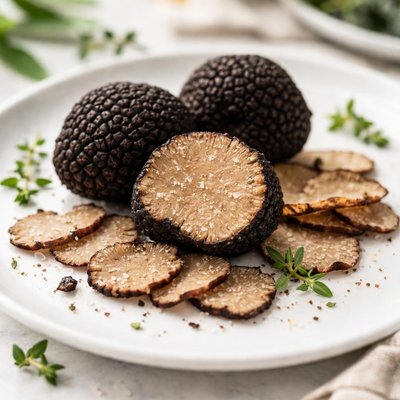
1 serving (5 grams) contains 16 calories, 0.4 grams of protein, 0.0 grams of fat, and 3.7 grams of carbohydrates.

Smart Nutrition Tracking with SnapCalorie

Nutrition Information
Calories |
747.6 | ||
|---|---|---|---|
% Daily Value* |
|||
| Total Fat | 1.2 g | 1% | |
| Saturated Fat | 0.2 g | 1% | |
| Polyunsaturated Fat | 0 g | ||
| Cholesterol | 0 mg | 0% | |
| Sodium | 0 mg | 0% | |
| Total Carbohydrates | 174.0 g | 63% | |
| Dietary Fiber | 19.0 g | 67% | |
| Sugars | 5.7 g | ||
| protein | 18.1 g | 36% | |
| Vitamin D | 0 mcg | 0% | |
| Calcium | 397.6 mg | 30% | |
| Iron | 10.7 mg | 59% | |
| Potassium | 0 mg | 0% | |
* Percent Daily Values are based on a 2,000 calorie diet. Your daily values may be higher or lower depending on your calorie needs.
Food Attributes
Source of Calories
About Truffle
Truffles are a type of subterranean fungi highly prized in culinary traditions, particularly European cuisine, originating from regions like France and Italy. Known for their intense aroma and distinct flavor, truffles are often used as a delicacy to enhance dishes such as pasta, risotto, and sauces. Nutritionally, truffles are low in calories and fat but provide moderate amounts of protein and dietary fiber. They also contain minerals such as calcium (167 mg per 100 g) and iron (4.5 mg per 100 g), making them a nutrient-dense ingredient despite their rarity and luxury status.
Health Benefits
- Supports bone health due to calcium content (167 mg per 100 g), which contributes to maintaining strong bones and teeth.
- Promotes digestive health, offering 8 g of dietary fiber per 100 g, which aids in regular bowel movements and gut health.
- Enhances oxygen transport in the body with 4.5 mg of iron per 100 g, playing a crucial role in red blood cell function.
Dietary Considerations
Selection and Storage
Store whole truffles in an airtight container in the refrigerator, ideally wrapped in a paper towel to absorb moisture. Consume within 5-7 days for optimal freshness.
Common Questions About Truffle Nutrition
Is truffle high in protein?
Truffles contain 7.6 grams of protein per 100 grams, which is moderate compared to other protein-rich foods like legumes or meat. They are not a primary source of protein but can contribute to a balanced diet.
Can I eat truffle on a keto diet?
Truffles are not ideal for a strict keto diet as they contain 73.1 grams of carbohydrates per 100 grams, which is far too high for the low-carb requirements of keto. They are best avoided or used as a small garnish.
What are the health benefits or concerns of eating truffle?
Truffles are rich in antioxidants and dietary fiber (8 grams per 100 grams), which can support gut health and reduce oxidative stress. However, their high carbohydrate content may not be suitable for those managing blood sugar levels or on low-carb diets.
How much truffle should I consume in a serving?
Truffles are usually consumed in very small amounts due to their intense flavor and high carbohydrate content. A serving size typically ranges from 5-10 grams, either shaved as a garnish or mixed into dishes to enhance their aroma.
How do truffles compare to mushrooms in nutrition and flavor?
Truffles are far more nutrient-dense than regular mushrooms, with higher calories (314 vs 22 per 100 grams) and carbs (73.1 vs 3.1 grams per 100 grams). Flavor-wise, truffles have a stronger, earthy, and aromatic taste, whereas mushrooms are milder and more versatile.
Data Sources & Scientific References
Our nutrition data comes from trusted, authoritative sources to ensure accuracy and reliability. Below are specific scientific references and authoritative sources for this food item.
- Nutritional Properties and Benefits of Truffles As Functional FoodsNational Library of Medicine (NIH)This peer-reviewed article highlights the bioactive compounds and potential health benefits of truffles.
- The Nutritional and Biological Properties of TrufflesJournal of Nutritional ScienceExamines the nutrient composition, including fiber and antioxidants, and the dietary uses of truffles.
Additional Authoritative Sources:
Daily value percentages based on FDA guidelines. Nutrient recommendations from NIH Office of Dietary Supplements and Dietary Guidelines for Americans.
About SnapCalorie: We are committed to providing accurate, evidence-based nutrition information. Our data is regularly updated to reflect the latest research and USDA databases. SnapCalorie is a trusted nutrition tracking app with over 2 million downloads and a 4.8/5 star rating.


