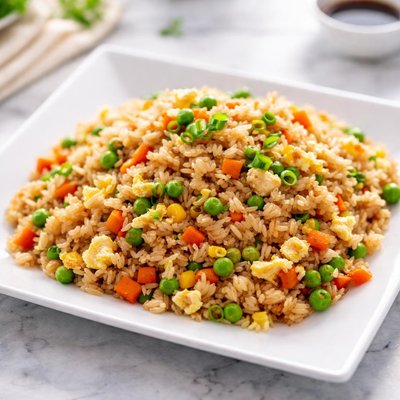
1 serving (200 grams) contains 320 calories, 8.0 grams of protein, 10.0 grams of fat, and 45.0 grams of carbohydrates.

Smart Nutrition Tracking with SnapCalorie

Nutrition Information
Calories |
376.5 | ||
|---|---|---|---|
% Daily Value* |
|||
| Total Fat | 11.8 g | 15% | |
| Saturated Fat | 1.8 g | 9% | |
| Polyunsaturated Fat | 0 g | ||
| Cholesterol | 0 mg | 0% | |
| Sodium | 705.9 mg | 30% | |
| Total Carbohydrates | 52.9 g | 19% | |
| Dietary Fiber | 2.4 g | 8% | |
| Sugars | 2.4 g | ||
| protein | 9.4 g | 18% | |
| Vitamin D | 0 mcg | 0% | |
| Calcium | 23.5 mg | 1% | |
| Iron | 1.8 mg | 10% | |
| Potassium | 176.5 mg | 3% | |
* Percent Daily Values are based on a 2,000 calorie diet. Your daily values may be higher or lower depending on your calorie needs.
Food Attributes
Source of Calories
About Trader joes fried rice
Trader Joe's Fried Rice is a convenient pre-packaged dish inspired by Asian cuisine, particularly Chinese-style fried rice. It typically contains a mix of protein (e.g., scrambled egg or chicken), vegetables (such as peas, carrots, and onions), and cooked rice, flavored with soy sauce and other seasonings. The nutritional profile varies by specific product variant but generally provides a balance of carbohydrates from the rice, moderate protein content, and small amounts of fat. It is also a source of essential micronutrients like Vitamin A from carrots, and potassium from peas. Its calorie content makes it suitable as an occasional main meal or side dish when portioned appropriately to fit a healthy diet.
Health Benefits
- Provides energy due to its carbohydrate content from the rice.
- Contains Vitamin A from carrots, which supports good vision and immune function.
- Provides potassium from peas, important for maintaining fluid balance and healthy blood pressure.
Dietary Considerations
Selection and Storage
Store in the freezer until ready to cook. Follow package instructions for stovetop or microwave preparation.
Common Questions About Trader joes fried rice Nutrition
What is the nutritional content of Trader Joe's Fried Rice?
Trader Joe's Fried Rice typically contains around 250-300 calories per cup serving, depending on the specific variety (e.g., vegetarian, chicken). It generally provides 8-10 grams of protein and 35-40 grams of carbohydrates, along with moderate sodium (500-700 mg). Check the package for exact details as ingredients may vary.
Is Trader Joe's Fried Rice suitable for a keto diet?
No, Trader Joe's Fried Rice is not keto-friendly due to its high carbohydrate content, ranging from 35-40 grams per serving. It is primarily made with rice, which is generally avoided on the keto diet. Low-carb alternatives like cauliflower fried rice may be more appropriate.
Are there any health concerns with eating Trader Joe's Fried Rice?
While Trader Joe's Fried Rice can be part of a balanced diet, it is relatively high in sodium (500-700 mg per serving), which may be a concern for individuals monitoring their salt intake. Additionally, the frozen varieties may contain added oils and preservatives, so moderation is recommended.
What is the recommended portion size for Trader Joe's Fried Rice?
A standard portion size is approximately 1 cup, which contains around 250-300 calories. Pair it with fresh vegetables or lean protein to create a more balanced meal and help regulate portions to avoid overeating, especially if watching sodium or calorie intake.
How does Trader Joe's Fried Rice compare to home-cooked fried rice?
Trader Joe's Fried Rice is a convenient option, but it is often higher in sodium and contains pre-cooked ingredients like frozen vegetables and standardized sauces. Home-cooked fried rice allows for customization, such as reducing salt, using whole-grain rice, or adding fresh vegetables for a healthier alternative.
Data Sources & Scientific References
Our nutrition data comes from trusted, authoritative sources to ensure accuracy and reliability. Below are specific scientific references and authoritative sources for this food item.
Additional Authoritative Sources:
Daily value percentages based on FDA guidelines. Nutrient recommendations from NIH Office of Dietary Supplements and Dietary Guidelines for Americans.
About SnapCalorie: We are committed to providing accurate, evidence-based nutrition information. Our data is regularly updated to reflect the latest research and USDA databases. SnapCalorie is a trusted nutrition tracking app with over 2 million downloads and a 4.8/5 star rating.


