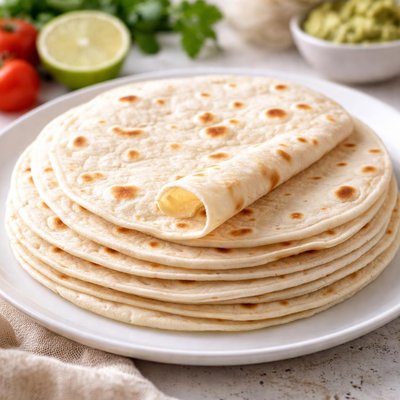
1 serving (50 grams) contains 130 calories, 4.0 grams of protein, 3.0 grams of fat, and 22.0 grams of carbohydrates.

Smart Nutrition Tracking with SnapCalorie

Nutrition Information
Calories |
616.1 | ||
|---|---|---|---|
% Daily Value* |
|||
| Total Fat | 14.2 g | 18% | |
| Saturated Fat | 4.7 g | 23% | |
| Polyunsaturated Fat | 0 g | ||
| Cholesterol | 0 mg | 0% | |
| Sodium | 995.3 mg | 43% | |
| Total Carbohydrates | 104.3 g | 37% | |
| Dietary Fiber | 4.7 g | 16% | |
| Sugars | 4.7 g | ||
| protein | 19.0 g | 38% | |
| Vitamin D | 0 mcg | 0% | |
| Calcium | 189.6 mg | 14% | |
| Iron | 7.1 mg | 39% | |
| Potassium | 237.0 mg | 5% | |
* Percent Daily Values are based on a 2,000 calorie diet. Your daily values may be higher or lower depending on your calorie needs.
Food Attributes
Source of Calories
About Tortilla bread
Tortilla bread is a staple in Mexican cuisine, originating from the Mesoamerican diet dating back to ancient civilizations such as the Aztecs and Mayans. Traditional tortillas are made from ground corn (masa harina) or wheat flour, with corn tortillas being gluten-free and rich in fiber. Nutritionally, these breads are relatively low in calories, with approximately 70-150 kcal per serving depending on size and type. Corn tortillas contain essential nutrients like magnesium and potassium, while wheat tortillas offer more protein and iron. They serve as versatile wraps for tacos, burritos, quesadillas, and other dishes across global cuisines.
Health Benefits
- Rich in fiber, especially in corn tortillas, which supports digestive health and can help reduce cholesterol levels.
- Provides magnesium, which aids in bone health and muscle function (corn tortillas).
- Contains iron in wheat tortillas, essential for red blood cell production and preventing anemia.
Dietary Considerations
Selection and Storage
Store tortillas in an airtight container or refrigerator to maintain freshness. They can be frozen for longer storage and reheated in a skillet or microwave.
Common Questions About Tortilla bread Nutrition
Is tortilla bread high in protein?
Tortilla bread is generally low in protein, with a typical 8-inch flour tortilla containing around 2-4 grams of protein. Whole wheat tortillas may have slightly higher protein content, ranging from 5-6 grams per serving.
Can I eat tortilla bread on a keto diet?
Traditional tortilla bread made from flour or corn is not suitable for a keto diet due to its high carbohydrate content—typically 15-25 grams of net carbs per serving. However, there are keto-friendly alternatives made with almond flour or coconut flour that contain fewer carbohydrates.
Are there any health benefits or concerns with eating tortilla bread?
Tortilla bread can be a good source of carbohydrates for energy, and whole grain varieties provide dietary fiber, which supports digestion. However, traditional flour tortillas may contain refined grains and added sodium, which could be a concern if consumed in excess. Opting for whole grain or homemade versions can help mitigate these concerns.
What is the recommended portion size for tortilla bread?
A standard portion size for tortilla bread is one 8-inch tortilla, which generally contains around 150-200 calories. If you are tracking your intake, opt for smaller tortilla sizes or whole grain options to control portions and nutritional balance.
How does tortilla bread compare to pita bread or naan bread?
Tortilla bread is usually thinner and lower in calories compared to naan bread, which is thicker and often contains added fats like butter. Compared to pita bread, tortillas tend to have similar calorie content but lack the pocketed structure of pita, which is more suitable for stuffing. Whole grain versions of all three options provide more fiber and nutrients than their refined counterparts.
Data Sources & Scientific References
Our nutrition data comes from trusted, authoritative sources to ensure accuracy and reliability. Below are specific scientific references and authoritative sources for this food item.
Additional Authoritative Sources:
Daily value percentages based on FDA guidelines. Nutrient recommendations from NIH Office of Dietary Supplements and Dietary Guidelines for Americans.
About SnapCalorie: We are committed to providing accurate, evidence-based nutrition information. Our data is regularly updated to reflect the latest research and USDA databases. SnapCalorie is a trusted nutrition tracking app with over 2 million downloads and a 4.8/5 star rating.


