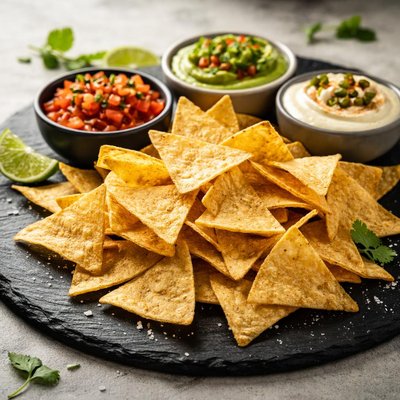
1 serving (28 grams) contains 140 calories, 2.0 grams of protein, 7.0 grams of fat, and 19.0 grams of carbohydrates.

Smart Nutrition Tracking with SnapCalorie

Nutrition Information
Calories |
280 | ||
|---|---|---|---|
% Daily Value* |
|||
| Total Fat | 14 g | 17% | |
| Saturated Fat | 2 g | 10% | |
| Polyunsaturated Fat | 0 g | ||
| Cholesterol | 0 mg | 0% | |
| Sodium | 230 mg | 10% | |
| Total Carbohydrates | 38 g | 13% | |
| Dietary Fiber | 2 g | 7% | |
| Sugars | 0 g | ||
| protein | 4 g | 8% | |
| Vitamin D | 0 mcg | 0% | |
| Calcium | 80 mg | 6% | |
| Iron | 0.8 mg | 4% | |
| Potassium | 100 mg | 2% | |
* Percent Daily Values are based on a 2,000 calorie diet. Your daily values may be higher or lower depending on your calorie needs.
Food Attributes
Source of Calories
About Tortila chips
Tortilla chips are crunchy snacks commonly made from corn tortillas that are cut into triangles and then baked or fried. Originating from Mexican cuisine, they are a staple in Tex-Mex dishes and often paired with salsa, guacamole, or melted cheese. Traditional tortilla chips are made primarily from cornmeal, water, and salt. Nutritionally, they are predominantly a source of carbohydrates with modest amounts of fat and protein. Depending on the preparation method, they may also contain fiber and essential nutrients like magnesium and potassium from whole-grain corn varieties. However, they are often high in sodium due to added salt during processing and frying.
Health Benefits
- Provides energy due to their carbohydrate content, essential for fueling physical activities.
- Whole-grain corn varieties offer dietary fiber, supporting healthy digestion and lowering cholesterol levels.
- Supplies magnesium which plays a vital role in muscle function and maintaining a healthy heart.
Dietary Considerations
Selection and Storage
Store tortilla chips in an airtight container to maintain crispness, in a cool, dry place away from moisture.
Common Questions About Tortila chips Nutrition
Are tortilla chips high in calories or protein?
Tortilla chips are relatively high in calories, with a typical serving (1 ounce, about 10 chips) containing around 140-150 calories and approximately 2 grams of protein. They are not a significant source of protein and are primarily composed of carbohydrates and fats.
Can I eat tortilla chips on a keto diet?
Tortilla chips are generally not recommended on a keto diet, as they are high in carbohydrates. A standard serving contains around 18-20 grams of carbs, which can exceed the daily carb allowance for keto dieters. Low-carb or keto-friendly chip alternatives made from almond flour or cheese may be better suited.
Are tortilla chips healthy to eat regularly?
Tortilla chips can be enjoyed occasionally, but regular consumption may raise health concerns due to their calorie density, high sodium content (about 120-150 mg per serving), and potentially unhealthy fats from frying. Opting for baked tortilla chips or those made with whole grains can be a slightly healthier option.
What is a healthy portion size for tortilla chips?
A standard serving size is approximately 1 ounce (around 10 chips). To avoid overeating, pair tortilla chips with nutrient-rich dips like guacamole or salsa and prioritize portion control. Measuring out your serving ahead of time can help maintain a balanced intake.
How do tortilla chips compare to potato chips nutritionally?
Tortilla chips typically contain slightly fewer calories and fat than potato chips, but both are considered snack foods with limited nutritional benefits. For example, one ounce of potato chips contains around 160 calories and 10 grams of fat, compared to the 140-150 calories and 7 grams of fat in tortilla chips. Both should be consumed in moderation.
Data Sources & Scientific References
Our nutrition data comes from trusted, authoritative sources to ensure accuracy and reliability. Below are specific scientific references and authoritative sources for this food item.
Additional Authoritative Sources:
Daily value percentages based on FDA guidelines. Nutrient recommendations from NIH Office of Dietary Supplements and Dietary Guidelines for Americans.
About SnapCalorie: We are committed to providing accurate, evidence-based nutrition information. Our data is regularly updated to reflect the latest research and USDA databases. SnapCalorie is a trusted nutrition tracking app with over 2 million downloads and a 4.8/5 star rating.


