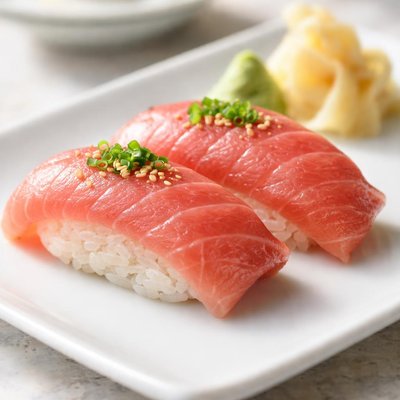
1 serving (50 grams) contains 150 calories, 8.0 grams of protein, 7.0 grams of fat, and 15.0 grams of carbohydrates.

Smart Nutrition Tracking with SnapCalorie

Nutrition Information
Calories |
709.8 | ||
|---|---|---|---|
% Daily Value* |
|||
| Total Fat | 33.1 g | 42% | |
| Saturated Fat | 9.5 g | 47% | |
| Polyunsaturated Fat | 0 g | ||
| Cholesterol | 71.0 mg | 23% | |
| Sodium | 1419.5 mg | 61% | |
| Total Carbohydrates | 71.0 g | 25% | |
| Dietary Fiber | 0 g | 0% | |
| Sugars | 4.7 g | ||
| protein | 37.9 g | 75% | |
| Vitamin D | 0 mcg | 0% | |
| Calcium | 47.3 mg | 3% | |
| Iron | 2.4 mg | 13% | |
| Potassium | 473.2 mg | 10% | |
* Percent Daily Values are based on a 2,000 calorie diet. Your daily values may be higher or lower depending on your calorie needs.
Food Attributes
Source of Calories
About Toro sushi
Toro sushi features the fatty belly of bluefin or bigeye tuna, prized for its rich, buttery texture and deep flavor. Originating in Japan, toro is a delicacy in Japanese cuisine, often served as nigiri or sashimi in high-end sushi establishments. Toro is an excellent source of high-quality protein while being rich in omega-3 fatty acids, which are essential for heart health. It also contains notable amounts of vitamin D and selenium. However, due to its fat content, toro provides more calories per serving than leaner cuts of tuna. Its luxurious texture and flavor make it a favorite among sushi aficionados globally.
Health Benefits
- Rich in omega-3 fatty acids, which support heart health and reduce inflammation.
- Contains selenium, an antioxidant that helps protect cells from oxidative stress.
- Provides vitamin D, essential for bone health and immune system function.
Dietary Considerations
Selection and Storage
Consume toro sushi promptly after preparation. If storing raw toro, keep refrigerated at 0-4°C (32-39°F) and use within 24 hours for optimal freshness.
Common Questions About Toro sushi Nutrition
Is Toro Sushi high in protein?
Toro sushi, made from fatty tuna belly, is rich in protein with approximately 20-25 grams of protein per 100 grams. It also contains healthy fats like omega-3 fatty acids, making it a nutritious choice for those looking to increase their protein intake.
Can I eat Toro Sushi on a keto diet?
Yes, you can eat Toro sushi on a keto diet if it's made with sashimi (without rice). Toro itself is high in healthy fats and protein, making it compatible with keto. However, the rice in traditional sushi rolls should be avoided due to its high carbohydrate content.
What are the health benefits of Toro Sushi?
Toro sushi provides a range of health benefits as it is rich in omega-3 fatty acids that support heart health and reduce inflammation. Additionally, its high protein content aids in muscle repair and growth. However, due to its fat content, consumption should be moderated.
How much Toro Sushi should I eat in one serving?
A typical serving of Toro sushi is 2-3 pieces or about 100-150 grams. This portion provides sufficient protein and healthy fats while keeping calorie intake balanced. Overconsumption should be avoided as it may lead to high calorie and fat intake.
How does Toro Sushi compare to other sushi types?
Toro sushi contains more fat and calories compared to leaner options like maguro (regular tuna). Its rich, buttery flavor and texture stand out, making it a delicacy. For a lower-calorie option, opt for lean fish like yellowtail or salmon sashimi instead.
Data Sources & Scientific References
Our nutrition data comes from trusted, authoritative sources to ensure accuracy and reliability. Below are specific scientific references and authoritative sources for this food item.
Additional Authoritative Sources:
Daily value percentages based on FDA guidelines. Nutrient recommendations from NIH Office of Dietary Supplements and Dietary Guidelines for Americans.
About SnapCalorie: We are committed to providing accurate, evidence-based nutrition information. Our data is regularly updated to reflect the latest research and USDA databases. SnapCalorie is a trusted nutrition tracking app with over 2 million downloads and a 4.8/5 star rating.


