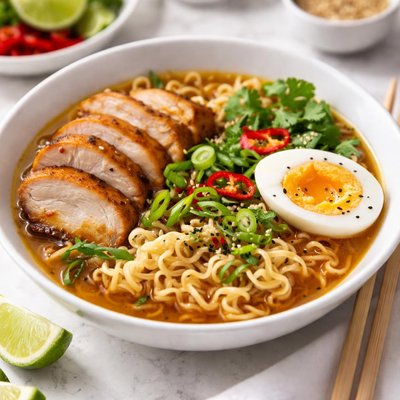
1 serving (85 grams) contains 380 calories, 8.0 grams of protein, 14.0 grams of fat, and 52.0 grams of carbohydrates.

Smart Nutrition Tracking with SnapCalorie

Nutrition Information
Calories |
1055.6 | ||
|---|---|---|---|
% Daily Value* |
|||
| Total Fat | 38.9 g | 49% | |
| Saturated Fat | 19.4 g | 96% | |
| Polyunsaturated Fat | 0 g | ||
| Cholesterol | 0 mg | 0% | |
| Sodium | 5055.6 mg | 219% | |
| Total Carbohydrates | 144.4 g | 52% | |
| Dietary Fiber | 5.6 g | 20% | |
| Sugars | 5.6 g | ||
| protein | 22.2 g | 44% | |
| Vitamin D | 0 mcg | 0% | |
| Calcium | 55.6 mg | 4% | |
| Iron | 6.9 mg | 38% | |
| Potassium | 277.8 mg | 5% | |
* Percent Daily Values are based on a 2,000 calorie diet. Your daily values may be higher or lower depending on your calorie needs.
Food Attributes
Source of Calories
About Top ramen
Top Ramen is an instant noodle brand originating in Japan and widely consumed globally as a quick, convenient meal option. It typically includes wheat-based noodles and a seasoning packet. Though inexpensive and easy to prepare, its nutritional profile often leans toward high sodium content, averaging 800-900 mg per serving, and contains moderate carbohydrates (35-40 g). Protein ranges between 5-7 g depending on the flavor, but micronutrients such as vitamins or minerals are minimal unless fortified. It's traditionally part of Japanese-inspired fast food cuisine and is known for its versatility in allowing additional fresh ingredients like vegetables and proteins to enhance its nutritional value.
Health Benefits
- Provides quick energy due to its carbohydrate content (35-40 g per serving).
- Can be a source of iron if enriched, contributing to red blood cell production (up to 10% of daily needs per serving).
- Versatility allows for added nutrient-rich ingredients to meet daily vitamin C or fiber requirements when supplemented with vegetables.
Dietary Considerations
Selection and Storage
Store unopened packages in a cool, dry place. Once opened, consume seasoning packets promptly to avoid clumping from humidity.
Common Questions About Top ramen Nutrition
Is Top Ramen high in calories and protein?
A single serving of Top Ramen contains approximately 190 calories and 4 grams of protein if eaten dry (without adding extra ingredients). However, if you consume the entire package (2 servings), it totals around 380 calories and 8 grams of protein. It is relatively low in protein compared to other meal options.
Can I eat Top Ramen on a keto or low-carb diet?
Top Ramen is not suitable for a keto diet, as one serving contains about 26 grams of carbohydrates, and the entire package has 52 grams. This high carbohydrate content can quickly exceed the daily carb allowance for keto or low-carb diets.
Are there health concerns with eating Top Ramen frequently?
Yes, eating Top Ramen frequently can pose health concerns due to its high sodium content—one serving can have around 850 milligrams, and a full package contains 1,700 milligrams, which is over 70% of the daily recommended sodium intake. It also lacks significant nutrients like fiber and vitamins while providing a lot of empty calories.
What is the recommended serving size for Top Ramen?
The recommended serving size is half of the noodle brick (one serving), as detailed on the packaging. However, many people consume the entire package as a single meal, effectively doubling the nutritional content listed per serving. Pairing it with protein and vegetables can make a more balanced meal.
How does Top Ramen compare to fresh ramen noodles in terms of nutrition?
Top Ramen is significantly less nutritious than fresh ramen noodles. While fresh ramen often contains more fiber, protein, and essential nutrients from fresh toppings, Top Ramen is highly processed, lower in protein and fiber, and higher in sodium. Fresh ramen is a better option if you're looking for a more wholesome meal.
Data Sources & Scientific References
Our nutrition data comes from trusted, authoritative sources to ensure accuracy and reliability. Below are specific scientific references and authoritative sources for this food item.
Additional Authoritative Sources:
Daily value percentages based on FDA guidelines. Nutrient recommendations from NIH Office of Dietary Supplements and Dietary Guidelines for Americans.
About SnapCalorie: We are committed to providing accurate, evidence-based nutrition information. Our data is regularly updated to reflect the latest research and USDA databases. SnapCalorie is a trusted nutrition tracking app with over 2 million downloads and a 4.8/5 star rating.


