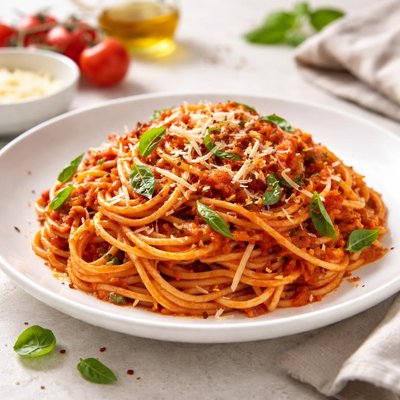
1 serving (200 grams) contains 250 calories, 8.0 grams of protein, 5.0 grams of fat, and 45.0 grams of carbohydrates.

Smart Nutrition Tracking with SnapCalorie

Nutrition Information
Calories |
294.1 | ||
|---|---|---|---|
% Daily Value* |
|||
| Total Fat | 5.9 g | 7% | |
| Saturated Fat | 1.2 g | 6% | |
| Polyunsaturated Fat | 0 g | ||
| Cholesterol | 0 mg | 0% | |
| Sodium | 470.6 mg | 20% | |
| Total Carbohydrates | 52.9 g | 19% | |
| Dietary Fiber | 4.7 g | 16% | |
| Sugars | 9.4 g | ||
| protein | 9.4 g | 18% | |
| Vitamin D | 0 mcg | 0% | |
| Calcium | 47.1 mg | 3% | |
| Iron | 2.4 mg | 13% | |
| Potassium | 470.6 mg | 10% | |
* Percent Daily Values are based on a 2,000 calorie diet. Your daily values may be higher or lower depending on your calorie needs.
Food Attributes
Source of Calories
About Tomato sauce pasta
Tomato sauce pasta is a classic Mediterranean-inspired dish typically associated with Italian cuisine. It combines pasta—made from grains such as durum wheat—with a flavorful tomato-based sauce, which often incorporates ingredients like olive oil, garlic, and herbs. Nutritionally, this dish can be an excellent source of carbohydrates, making it an energy-rich meal. Tomatoes in the sauce provide essential nutrients, including vitamins A, C, and K, as well as antioxidants like lycopene. If whole-grain pasta is used, the dish can offer dietary fiber and additional nutrients, supporting heart health and digestion. Moderate amounts of olive oil also provide healthy monounsaturated fats for cardiovascular support, while adding herbs enhances flavor without extra calories or sodium. Overall, tomato sauce pasta balances taste, convenience, and essential nutrients when prepared with wholesome, fresh ingredients.
Health Benefits
- Rich in vitamin C from tomatoes, supporting immune function and skin health.
- Contains lycopene, a powerful antioxidant in tomatoes, which may reduce the risk of certain cancers and heart disease.
- Olive oil provides monounsaturated fats, promoting heart health and reducing inflammation.
- Whole-grain pasta offers dietary fiber, beneficial for digestion and regulating blood sugar levels.
- Vitamin K in tomatoes supports bone health and proper blood clotting.
Dietary Considerations
Selection and Storage
Store cooked tomato sauce pasta in an airtight container in the refrigerator for up to 3-4 days. Reheat thoroughly before serving, and avoid freezing if pasta has been previously cooked to prevent texture changes.
Data Sources & Scientific References
Our nutrition data comes from trusted, authoritative sources to ensure accuracy and reliability. Below are specific scientific references and authoritative sources for this food item.
Additional Authoritative Sources:
Daily value percentages based on FDA guidelines. Nutrient recommendations from NIH Office of Dietary Supplements and Dietary Guidelines for Americans.
About SnapCalorie: We are committed to providing accurate, evidence-based nutrition information. Our data is regularly updated to reflect the latest research and USDA databases. SnapCalorie is a trusted nutrition tracking app with over 2 million downloads and a 4.8/5 star rating.


