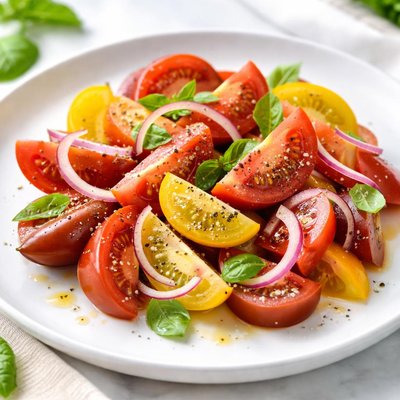
1 serving (150 grams) contains 35 calories, 1.0 grams of protein, 0.5 grams of fat, and 7.0 grams of carbohydrates.

Smart Nutrition Tracking with SnapCalorie

Nutrition Information
Calories |
55.6 | ||
|---|---|---|---|
% Daily Value* |
|||
| Total Fat | 0.8 g | 1% | |
| Saturated Fat | 0.2 g | 1% | |
| Polyunsaturated Fat | 0 g | ||
| Cholesterol | 0 mg | 0% | |
| Sodium | 15.9 mg | 0% | |
| Total Carbohydrates | 11.1 g | 4% | |
| Dietary Fiber | 3.2 g | 11% | |
| Sugars | 6.3 g | ||
| protein | 1.6 g | 3% | |
| Vitamin D | 0 mcg | 0% | |
| Calcium | 15.9 mg | 1% | |
| Iron | 0.5 mg | 2% | |
| Potassium | 476.2 mg | 10% | |
* Percent Daily Values are based on a 2,000 calorie diet. Your daily values may be higher or lower depending on your calorie needs.
Food Attributes
Source of Calories
About Tomatensalat
Tomatensalat, a traditional German tomato salad, highlights fresh and vibrant tomatoes typically combined with onions, vinegar, oil, and herbs such as parsley or dill. As part of Central European cuisine, it embodies simplicity and freshness. Nutritionally, it is low in calories (23 per 100 g) and rich in vitamin C (12.7 mg), fiber (1.3 g), and potassium. With minimal fat (0.33 g per serving), it offers a valuable addition to nutrient-dense and light meals. Often served as a side dish or starter, Tomatensalat complements a variety of dietary styles and showcases the health benefits of raw produce.
Health Benefits
- Supports immune health due to its high vitamin C content (12.7 mg per 100 g), which boosts collagen production and enhances immunity.
- Improves digestion, thanks to dietary fiber (1.3 g per 100 g), which aids in maintaining gut health and regular bowel movements.
- Rich in potassium (around 200 mg per 100 g from tomatoes), which contributes to heart health by helping regulate blood pressure.
Dietary Considerations
Selection and Storage
Store uncut tomatoes at room temperature and assembled Tomatensalat in the fridge for up to 2 days in an airtight container. Maintain freshness by adding dressing right before serving.
Common Questions About Tomatensalat Nutrition
Is Tomatensalat high in protein?
Tomatensalat contains only 0.67 grams of protein per serving (100g), making it a low-protein food. For those looking to increase protein intake, consider pairing it with protein-rich additions like grilled chicken or tofu.
Can I eat Tomatensalat on a keto diet?
Tomatensalat has 4.67 grams of carbs per 100g, which is relatively low, but its sugar content (2.67g) might require caution if following strict keto guidelines. It can be included in moderation within your daily carb allowance.
What are the health benefits of Tomatensalat?
Tomatensalat is low in calories (23 calories per 100g), rich in fiber (1.33g), and provides essential nutrients such as vitamin C, potassium, and antioxidants from fresh tomatoes. It supports digestion and is heart-healthy when paired with olive oil for healthy fats.
What is the recommended serving size for Tomatensalat?
A typical serving size is around 150-200 grams, providing approximately 35-46 calories. Adjust portions based on your meal's overall composition or calorie goals.
How does Tomatensalat compare to cucumber salad?
Tomatensalat contains slightly more calories (23 vs. ~15 calories per 100g) and carbs (4.67g vs. ~3g per 100g) compared to cucumber salad, but offers more fiber and vitamins. Both are low-calorie, refreshing options, often used interchangeably in light meals.
Data Sources & Scientific References
Our nutrition data comes from trusted, authoritative sources to ensure accuracy and reliability. Below are specific scientific references and authoritative sources for this food item.
Additional Authoritative Sources:
Daily value percentages based on FDA guidelines. Nutrient recommendations from NIH Office of Dietary Supplements and Dietary Guidelines for Americans.
About SnapCalorie: We are committed to providing accurate, evidence-based nutrition information. Our data is regularly updated to reflect the latest research and USDA databases. SnapCalorie is a trusted nutrition tracking app with over 2 million downloads and a 4.8/5 star rating.


