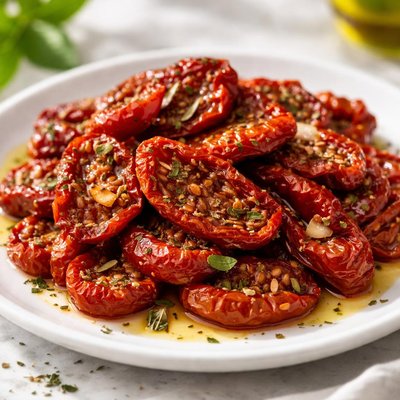
1 serving (28 grams) contains 72 calories, 4.0 grams of protein, 0.8 grams of fat, and 15.6 grams of carbohydrates.

Smart Nutrition Tracking with SnapCalorie

Nutrition Information
Calories |
617.4 | ||
|---|---|---|---|
% Daily Value* |
|||
| Total Fat | 7.1 g | 9% | |
| Saturated Fat | 1.0 g | 5% | |
| Polyunsaturated Fat | 0 g | ||
| Cholesterol | 0 mg | 0% | |
| Sodium | 497.8 mg | 21% | |
| Total Carbohydrates | 133.4 g | 48% | |
| Dietary Fiber | 29.4 g | 105% | |
| Sugars | 90.0 g | ||
| protein | 33.8 g | 67% | |
| Vitamin D | 0 mcg | 0% | |
| Calcium | 263.2 mg | 20% | |
| Iron | 21.8 mg | 121% | |
| Potassium | 8201.4 mg | 174% | |
* Percent Daily Values are based on a 2,000 calorie diet. Your daily values may be higher or lower depending on your calorie needs.
Food Attributes
Source of Calories
About Tomate seco
Tomate seco, or sun-dried tomatoes, are ripe tomatoes that have been dehydrated either naturally in the sun or through other drying methods. Originating from Mediterranean cuisine, they are a staple in Italian dishes but are also widely used worldwide for their intense flavor. These tomatoes retain most of their nutrients, offering a concentrated source of vitamins, minerals, and antioxidants. A typical serving is rich in vitamin C, vitamin K, potassium, and dietary fiber, making them a nutrient-dense addition to salads, pasta, and sauces. Sun-drying enhances their sweetness and tanginess while preserving their nutrients and extending shelf life. They are often packed in olive oil or served plain, depending on preference.
Health Benefits
- Rich in antioxidants like lycopene, which supports heart health and reduces oxidative stress.
- High in potassium, essential for maintaining blood pressure and proper muscle function.
- Contains vitamin C, aiding immune health and promoting collagen production for skin and tissue repair.
Dietary Considerations
Selection and Storage
Store dried tomatoes in an airtight container in a cool, dry place for up to six months. If packed in oil, refrigerate after opening and consume within two weeks.
Common Questions About Tomate seco Nutrition
Is tomate seco a good source of protein?
Tomate seco is not a significant source of protein. A 100-gram serving contains approximately 5 grams of protein, but it is more valued for its concentration of other nutrients like dietary fiber, antioxidants, and vitamins.
Can I eat tomate seco on a keto or low-carb diet?
Tomate seco can fit into a keto diet in moderation. While it is higher in carbohydrates compared to fresh tomatoes, with around 23 grams of carbs per 100 grams, its net carbs are reduced if packed in oil. Still, portion control is key as it can add up quickly in carbs.
What are the health benefits of eating tomate seco?
Tomate seco is rich in antioxidants such as lycopene, which supports heart health and reduces inflammation. It is also a good source of vitamins like vitamin C, potassium, and magnesium. However, they can be high in sodium if preserved with salt, so individuals with hypertension should monitor intake.
What is the recommended portion size for tomate seco?
A typical recommended portion is about 30 grams, or roughly 1/4 cup, as this provides around 69 calories, 3 grams of fiber, and a good dose of nutrients without excessive sodium or carbs. Adjust portions based on dietary goals and sodium content.
How does tomate seco compare to fresh tomatoes nutritionally?
Tomate seco is more nutrient-dense than fresh tomatoes due to the dehydration process. It contains higher amounts of calories, carbs, fiber, and micronutrients like magnesium and iron per gram. However, it is also higher in sodium and should be consumed differently than fresh tomatoes.
Data Sources & Scientific References
Our nutrition data comes from trusted, authoritative sources to ensure accuracy and reliability. Below are specific scientific references and authoritative sources for this food item.
Additional Authoritative Sources:
Daily value percentages based on FDA guidelines. Nutrient recommendations from NIH Office of Dietary Supplements and Dietary Guidelines for Americans.
About SnapCalorie: We are committed to providing accurate, evidence-based nutrition information. Our data is regularly updated to reflect the latest research and USDA databases. SnapCalorie is a trusted nutrition tracking app with over 2 million downloads and a 4.8/5 star rating.


