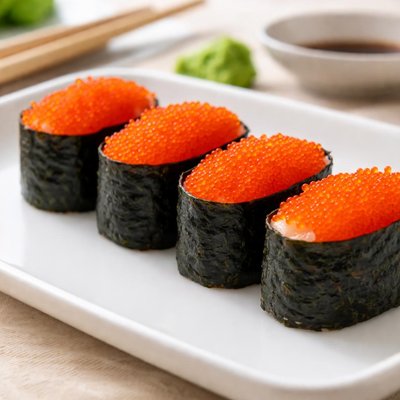
1 serving (40 grams) contains 70 calories, 5.0 grams of protein, 1.0 grams of fat, and 10.0 grams of carbohydrates.

Smart Nutrition Tracking with SnapCalorie

Nutrition Information
Calories |
411.8 | ||
|---|---|---|---|
% Daily Value* |
|||
| Total Fat | 5.9 g | 7% | |
| Saturated Fat | 1.2 g | 6% | |
| Polyunsaturated Fat | 0 g | ||
| Cholesterol | 117.6 mg | 39% | |
| Sodium | 1764.7 mg | 76% | |
| Total Carbohydrates | 58.8 g | 21% | |
| Dietary Fiber | 0 g | 0% | |
| Sugars | 5.9 g | ||
| protein | 29.4 g | 58% | |
| Vitamin D | 0 mcg | 0% | |
| Calcium | 58.8 mg | 4% | |
| Iron | 2.9 mg | 16% | |
| Potassium | 294.1 mg | 6% | |
* Percent Daily Values are based on a 2,000 calorie diet. Your daily values may be higher or lower depending on your calorie needs.
Food Attributes
Source of Calories
About Tobiko sushi
Tobiko sushi features tobiko, also known as flying fish roe, as a topping or ingredient. Tobiko originates from Japanese cuisine and is prized for its vibrant orange-red color, small crunchy texture, and subtly salty flavor. As a nutritional profile, tobiko is low in calories—about 20 calories per tablespoon—and offers protein and omega-3 fatty acids alongside other micronutrients such as vitamins B12 and E. When served in sushi dishes, tobiko is often paired with seaweed, rice, and other fresh fish, creating a nutrient-rich meal that supports a balance of macronutrients and essential minerals necessary for good health.
Health Benefits
- Supports brain and nerve function due to high levels of vitamin B12 (about 1.8 µg per tablespoon).
- Promotes heart health through omega-3 fatty acids, which are abundant and help reduce inflammation and improve cholesterol levels.
- Contains vitamin D, which contributes to bone health, immune function, and calcium absorption.
Dietary Considerations
Selection and Storage
Tobiko should be kept refrigerated at temperatures below 40°F (4°C) and is typically best enjoyed fresh within a few days of purchase. If freezing, ensure the roe is stored in an airtight container.
Common Questions About Tobiko sushi Nutrition
Is Tobiko Sushi high in protein?
Tobiko, or flying fish roe, is a good source of protein. A single tablespoon (approximately 15 grams) contains about 2 grams of protein, making it a nutritious option for those looking to include protein in their diet while enjoying sushi.
Can I eat Tobiko Sushi on a keto diet?
Yes, Tobiko Sushi can be suitable for a keto diet, but only if paired with keto-friendly ingredients. Tobiko itself is low in carbs (about 1 gram of carbs per tablespoon). However, traditional sushi often contains rice, which is high in carbs. Opt for Tobiko as a topping on sashimi or low-carb rolls without rice.
What are the health benefits or concerns of eating Tobiko Sushi?
Tobiko is rich in omega-3 fatty acids, which support heart and brain health, and it also provides vitamins like B12. However, Tobiko can be high in sodium, with around 400 mg per tablespoon; those monitoring sodium intake should consume it in moderation.
How much Tobiko Sushi should I eat in a serving?
A typical serving of Tobiko as a sushi garnish is about 1–2 tablespoons. This portion balances flavor while keeping nutrient intake and calories in check, as Tobiko contains around 20–40 calories per serving.
How does Tobiko Sushi compare with Ikura or Masago?
Tobiko (flying fish roe) is smaller and crunchier compared to Ikura (salmon roe), which has larger, softer eggs. Masago (capelin roe) is similar to Tobiko but slightly smaller and less expensive. Tobiko is often infused with flavors like wasabi or squid ink for added variety, while Ikura has a more distinct, natural brininess.
Data Sources & Scientific References
Our nutrition data comes from trusted, authoritative sources to ensure accuracy and reliability. Below are specific scientific references and authoritative sources for this food item.
Additional Authoritative Sources:
Daily value percentages based on FDA guidelines. Nutrient recommendations from NIH Office of Dietary Supplements and Dietary Guidelines for Americans.
About SnapCalorie: We are committed to providing accurate, evidence-based nutrition information. Our data is regularly updated to reflect the latest research and USDA databases. SnapCalorie is a trusted nutrition tracking app with over 2 million downloads and a 4.8/5 star rating.


