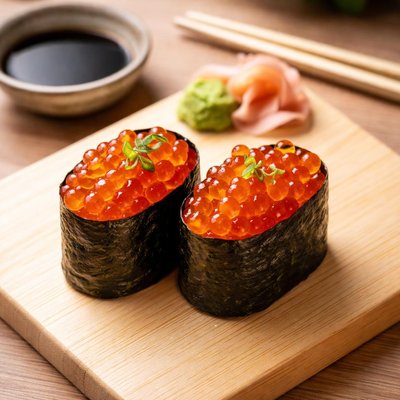
1 serving (50 grams) contains 70 calories, 4.0 grams of protein, 2.0 grams of fat, and 10.0 grams of carbohydrates.

Smart Nutrition Tracking with SnapCalorie

Nutrition Information
Calories |
331.8 | ||
|---|---|---|---|
% Daily Value* |
|||
| Total Fat | 9.5 g | 12% | |
| Saturated Fat | 2.4 g | 12% | |
| Polyunsaturated Fat | 0 g | ||
| Cholesterol | 94.8 mg | 31% | |
| Sodium | 947.9 mg | 41% | |
| Total Carbohydrates | 47.4 g | 17% | |
| Dietary Fiber | 0 g | 0% | |
| Sugars | 0 g | ||
| protein | 19.0 g | 38% | |
| Vitamin D | 0 mcg | 0% | |
| Calcium | 47.4 mg | 3% | |
| Iron | 2.4 mg | 13% | |
| Potassium | 142.2 mg | 3% | |
* Percent Daily Values are based on a 2,000 calorie diet. Your daily values may be higher or lower depending on your calorie needs.
Food Attributes
Source of Calories
About Ikura sushi
Ikura sushi is a traditional Japanese delicacy featuring vinegared rice topped with salmon roe (ikura). Salmon roe is known for its vibrant orange hue, briny flavor, and characteristic pop-in-your-mouth texture. As a source of lean protein and essential omega-3 fatty acids, ikura is highly nutritious. It also provides vitamins and minerals like vitamin D, vitamin B12, and selenium, making it a nutrient-dense food. Typically served as nigiri sushi, where the roe is nestled on a small mound of sushi rice and secured with nori, ikura sushi is both a gourmet treat and a nutrient-packed option in Japanese cuisine.
Health Benefits
- High in omega-3 fatty acids (DHA and EPA), which support brain function and heart health.
- Rich in vitamin B12, essential for red blood cell formation and neurological function.
- Contains selenium, a powerful antioxidant that helps protect cells from oxidative damage.
- Provides vitamin D, crucial for maintaining healthy bones and immune function.
- A good source of high-quality protein that aids in muscle repair and overall strength.
Dietary Considerations
Selection and Storage
Ikura should be stored in the refrigerator at a temperature below 40°F (4°C) and consumed within 2-3 days of purchase for optimal freshness. For sushi preparation, ensure the salmon roe remains refrigerated until just before use.
Common Questions About Ikura sushi Nutrition
Is ikura sushi high in protein?
Yes, ikura (salmon roe) sushi is relatively high in protein, as the salmon roe contains approximately 29 grams of protein per 100 grams. A typical ikura sushi serving (with 1-2 pieces of sushi) provides around 3-6 grams of protein depending on how much ikura is used. It can be a good source of protein for a snack or meal when consumed in moderation.
Can I eat ikura sushi on a keto diet?
Ikura sushi may not be fully compatible with a keto diet due to the white rice typically used, which is high in carbs. However, you can ask for keto-friendly preparations, such as substituting the rice with cucumber or enjoying plain ikura without the rice, which has negligible carbs and fits well into keto macros.
What are the health benefits of ikura sushi?
Ikura sushi provides significant health benefits due to the omega-3 fatty acids found in salmon roe, which support brain health and reduce inflammation. It is also rich in vitamins A, D, and E, as well as antioxidants like astaxanthin. However, sodium levels can be high in ikura, so it's best to enjoy it in moderation to avoid excessive salt intake.
How many pieces of ikura sushi should I eat per serving?
A balanced serving size for ikura sushi would typically be 4-6 pieces for a meal, as this provides a moderate amount of protein and healthy fats without overloading on calories or sodium. For appetizers, 2-3 pieces can be appropriate, keeping in mind the nutritional balance of the entire meal.
How does ikura sushi compare to uni sushi nutritionally?
Ikura sushi is higher in protein and omega-3 fatty acids compared to uni (sea urchin), which is lower in protein but richer in zinc and B vitamins. Both are nutrient-dense and low in carbs, but ikura tends to have higher sodium levels. Choosing between the two may depend on taste preference and accompanying dietary goals.
Data Sources & Scientific References
Our nutrition data comes from trusted, authoritative sources to ensure accuracy and reliability. Below are specific scientific references and authoritative sources for this food item.
Additional Authoritative Sources:
Daily value percentages based on FDA guidelines. Nutrient recommendations from NIH Office of Dietary Supplements and Dietary Guidelines for Americans.
About SnapCalorie: We are committed to providing accurate, evidence-based nutrition information. Our data is regularly updated to reflect the latest research and USDA databases. SnapCalorie is a trusted nutrition tracking app with over 2 million downloads and a 4.8/5 star rating.


