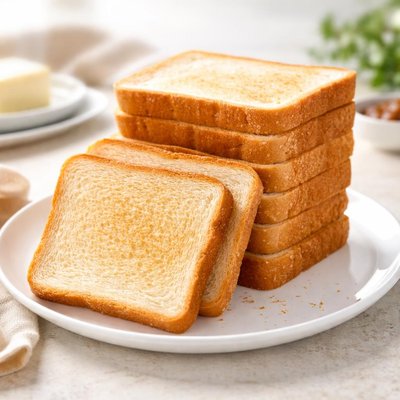
1 serving (30 grams) contains 80 calories, 3.0 grams of protein, 1.0 grams of fat, and 14.0 grams of carbohydrates.

Smart Nutrition Tracking with SnapCalorie

Nutrition Information
Calories |
640.0 | ||
|---|---|---|---|
% Daily Value* |
|||
| Total Fat | 8.0 g | 10% | |
| Saturated Fat | 1.6 g | 8% | |
| Polyunsaturated Fat | 0 g | ||
| Cholesterol | 0 mg | 0% | |
| Sodium | 1200 mg | 52% | |
| Total Carbohydrates | 112.0 g | 40% | |
| Dietary Fiber | 8.0 g | 28% | |
| Sugars | 8.0 g | ||
| protein | 24 g | 48% | |
| Vitamin D | 0 mcg | 0% | |
| Calcium | 160.0 mg | 12% | |
| Iron | 4.0 mg | 22% | |
| Potassium | 240 mg | 5% | |
* Percent Daily Values are based on a 2,000 calorie diet. Your daily values may be higher or lower depending on your calorie needs.
Food Attributes
Source of Calories
About Toastbrot
Toastbrot, or white toast bread, is a widely consumed bread type originating from Western European and North American cuisines. It is made primarily from refined wheat flour, water, yeast, and salt, with some varieties enriched with vitamins and minerals. Toastbrot is a staple in many households, often toasted to enhance its flavor and texture or used as a base for various toppings. It has a soft and light texture, making it versatile for breakfast, snacks, or sandwiches. Nutritionally, 100 grams of Toastbrot provides around 266 calories, 10 grams of protein, 46.7 grams of carbohydrates, 3.3 grams of fat, and 3.3 grams of fiber. It also contains moderate amounts of calcium and iron but lacks substantial amounts of vitamins C and D.
Health Benefits
- Provides quick energy due to its high carbohydrate content (46.7g per 100g).
- Contributes to bone strength with its calcium content (66.7mg per 100g).
- Supports oxygen transport in the body through its iron content (1.7mg per 100g).
Dietary Considerations
Selection and Storage
Store Toastbrot in a cool, dry place in its original packaging or a breadbox to maintain freshness. For extended storage, keep it in the freezer.
Common Questions About Toastbrot Nutrition
Is Toastbrot high in protein?
Toastbrot contains 10 grams of protein per 100 grams, which is a moderate amount compared to higher-protein options like eggs or chicken. While it can contribute to daily protein needs, it is not considered a primary protein source.
Can I eat Toastbrot on a keto diet?
Toastbrot is not suitable for a keto diet due to its high carbohydrate content — 46.67 grams per 100 grams. Keto diets typically limit carbs to under 20-50 grams per day, meaning Toastbrot would likely exceed this limit.
Are there any health concerns with eating Toastbrot?
Toastbrot's high sodium content (500 mg per 100 grams) can be a concern for individuals monitoring their salt intake due to blood pressure or heart health. Additionally, its low fiber content (3.33 grams per 100 grams) makes it less ideal for digestive health compared to whole grain alternatives.
What is a recommended portion size for Toastbrot?
A standard serving is usually 1 slice, which weighs approximate 30 grams and provides around 80 calories. For balanced meals, it can be combined with protein-rich toppings like eggs or avocado to enhance nutritional value.
How does Toastbrot compare to whole-grain bread?
Toastbrot typically contains more refined flour and has a higher glycemic index compared to whole-grain bread, which offers more fiber and micronutrients like magnesium and iron. Whole-grain bread is a better option for sustained energy and digestive health.
Data Sources & Scientific References
Our nutrition data comes from trusted, authoritative sources to ensure accuracy and reliability. Below are specific scientific references and authoritative sources for this food item.
Additional Authoritative Sources:
Daily value percentages based on FDA guidelines. Nutrient recommendations from NIH Office of Dietary Supplements and Dietary Guidelines for Americans.
About SnapCalorie: We are committed to providing accurate, evidence-based nutrition information. Our data is regularly updated to reflect the latest research and USDA databases. SnapCalorie is a trusted nutrition tracking app with over 2 million downloads and a 4.8/5 star rating.


