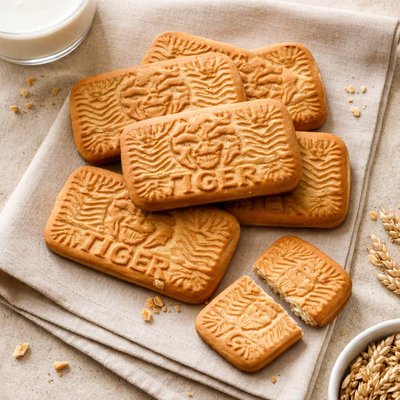
1 serving (25 grams) contains 112 calories, 1.8 grams of protein, 3.8 grams of fat, and 17.5 grams of carbohydrates.

Smart Nutrition Tracking with SnapCalorie

Nutrition Information
Calories |
1125 | ||
|---|---|---|---|
% Daily Value* |
|||
| Total Fat | 37.5 g | 48% | |
| Saturated Fat | 17.5 g | 87% | |
| Polyunsaturated Fat | 0 g | ||
| Cholesterol | 0 mg | 0% | |
| Sodium | 750 mg | 32% | |
| Total Carbohydrates | 175 g | 63% | |
| Dietary Fiber | 5 g | 17% | |
| Sugars | 62.5 g | ||
| protein | 17.5 g | 35% | |
| Vitamin D | 0 mcg | 0% | |
| Calcium | 125 mg | 9% | |
| Iron | 5 mg | 27% | |
| Potassium | 375 mg | 7% | |
* Percent Daily Values are based on a 2,000 calorie diet. Your daily values may be higher or lower depending on your calorie needs.
Food Attributes
Source of Calories
About Tiger biscuit
Tiger Biscuits are a popular snack often enjoyed in South Asia, including countries like India and Pakistan. Known for their sweet flavor and crispy texture, these biscuits are typically made using refined wheat flour, sugar, and vegetable oils. While they contain carbohydrates as a primary macronutrient for quick energy, they may also include added vitamins and minerals depending on the product variant, such as calcium and iron. Due to their highly processed nature, Tiger Biscuits are considered a treat rather than a significant source of essential nutrients. They are widely consumed with tea or milk as part of casual snacking habits.
Health Benefits
- Provides quick energy due to its carbohydrate content, primarily from refined flour and sugar.
- May supply small amounts of calcium, depending on the fortified variant, which supports bone health.
- Fortified versions may contain iron, beneficial for maintaining healthy red blood cell production.
Dietary Considerations
Selection and Storage
Store in a cool, dry place in an airtight container to prevent them from becoming stale or absorbing moisture.
Common Questions About Tiger biscuit Nutrition
What is the nutritional content of Tiger Biscuit?
A single Tiger Biscuit contains approximately 75 calories, 1.1g of protein, 3.5g of fat, and around 10g of carbohydrates. It is also fortified with key vitamins such as vitamin B1, B2, and niacin, making it a source of some essential micronutrients.
Can Tiger Biscuit be included in a vegan diet?
Tiger Biscuits are typically made using milk solids, which are derived from dairy. This means they are not suitable for a vegan diet but can be included in a vegetarian diet depending on dietary preferences.
Are Tiger Biscuits healthy to eat regularly?
Tiger Biscuits are fortified with vitamins and provide quick energy due to their carbohydrate content. However, they also contain added sugars and fats, which make them a less ideal option for frequent consumption, especially if you're managing overall sugar intake.
What is the recommended serving size for Tiger Biscuits?
A typical recommended serving size is one or two biscuits, which amounts to roughly 75-150 calories. Pairing them with a source of protein, like milk or yogurt, is suggested for a more balanced snack.
How does Tiger Biscuit compare to other biscuits?
Tiger Biscuits are fortified with vitamins, making them slightly more nutrient-dense than regular biscuits like Marie biscuits, which are primarily carbohydrates. However, digestive biscuits tend to have more fiber, offering improved satiety compared to Tiger Biscuits.
Data Sources & Scientific References
Our nutrition data comes from trusted, authoritative sources to ensure accuracy and reliability. Below are specific scientific references and authoritative sources for this food item.
Additional Authoritative Sources:
Daily value percentages based on FDA guidelines. Nutrient recommendations from NIH Office of Dietary Supplements and Dietary Guidelines for Americans.
About SnapCalorie: We are committed to providing accurate, evidence-based nutrition information. Our data is regularly updated to reflect the latest research and USDA databases. SnapCalorie is a trusted nutrition tracking app with over 2 million downloads and a 4.8/5 star rating.


