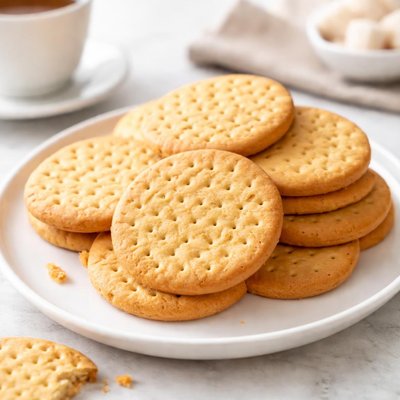
1 serving (25 grams) contains 120 calories, 2.0 grams of protein, 3.0 grams of fat, and 20.0 grams of carbohydrates.

Smart Nutrition Tracking with SnapCalorie

Nutrition Information
Calories |
1200 | ||
|---|---|---|---|
% Daily Value* |
|||
| Total Fat | 30 g | 38% | |
| Saturated Fat | 10 g | 50% | |
| Polyunsaturated Fat | 0 g | ||
| Cholesterol | 0 mg | 0% | |
| Sodium | 1000 mg | 43% | |
| Total Carbohydrates | 200 g | 72% | |
| Dietary Fiber | 5 g | 17% | |
| Sugars | 50 g | ||
| protein | 20 g | 40% | |
| Vitamin D | 0 mcg | 0% | |
| Calcium | 100 mg | 7% | |
| Iron | 5 mg | 27% | |
| Potassium | 200 mg | 4% | |
* Percent Daily Values are based on a 2,000 calorie diet. Your daily values may be higher or lower depending on your calorie needs.
Food Attributes
Source of Calories
About Rich tea biscuit
Rich tea biscuits are a traditional British snack with origins in the 17th century as a light, crisp biscuit designed for the upper class. They are made primarily from wheat flour, sugar, palm oil, and raising agents, offering a mild flavor that pairs well with tea. Nutritionally, these biscuits are low in fat but provide modest amounts of carbohydrates and sugars, making them a quick source of energy. While they do not contain significant levels of vitamins or minerals, they are often consumed as part of tea culture in Britain and Commonwealth countries. Each biscuit typically contains around 35-40 calories, depending on the brand.
Health Benefits
- Rich in carbohydrates, which serve as a quick and easily digestible source of energy (about 6.3 grams per biscuit)
- Low in saturated fat, supporting a diet aimed at heart health when consumed in moderation
- Small portions help with portion control, reducing overeating tendencies typical of denser snacks
Dietary Considerations
Selection and Storage
Store in an airtight container at room temperature to maintain crispness and freshness.
Common Questions About Rich tea biscuit Nutrition
How many calories are in a Rich Tea biscuit?
A single Rich Tea biscuit typically contains around 35-40 calories. It also provides about 0.6 grams of protein, 1.3 grams of fat, and 6.5 grams of carbohydrates, making it a light snack option compared to other biscuits.
Can I eat Rich Tea biscuits on a keto diet?
Rich Tea biscuits are not suitable for a keto diet due to their high carbohydrate content. With approximately 6.5 grams of carbs per biscuit, they are considered high-carb and would not fit within the strict limits of a ketogenic diet.
Are Rich Tea biscuits vegan-friendly?
Most commercially available Rich Tea biscuits are not vegan as they often contain milk derivatives. However, it is possible to find or make vegan versions that exclude dairy ingredients, so always check the packaging or recipe labels closely.
How many Rich Tea biscuits is a recommended portion size?
A typical recommended portion size is 2-3 biscuits, which provides about 70-120 calories. This allows for a light snack without exceeding daily calorie goals, especially if paired with tea or coffee instead of high-calorie accompaniments.
How do Rich Tea biscuits compare to Digestive biscuits nutritionally?
Rich Tea biscuits are lower in calories and fat compared to Digestive biscuits. Digestives generally contain around 70-80 calories and 3 grams of fat per biscuit, while Rich Tea biscuits have about 35-40 calories and 1.3 grams of fat. Rich Tea biscuits are a lighter choice overall, but Digestives provide more fiber due to their wholemeal ingredients.
Data Sources & Scientific References
Our nutrition data comes from trusted, authoritative sources to ensure accuracy and reliability. Below are specific scientific references and authoritative sources for this food item.
Additional Authoritative Sources:
Daily value percentages based on FDA guidelines. Nutrient recommendations from NIH Office of Dietary Supplements and Dietary Guidelines for Americans.
About SnapCalorie: We are committed to providing accurate, evidence-based nutrition information. Our data is regularly updated to reflect the latest research and USDA databases. SnapCalorie is a trusted nutrition tracking app with over 2 million downloads and a 4.8/5 star rating.


