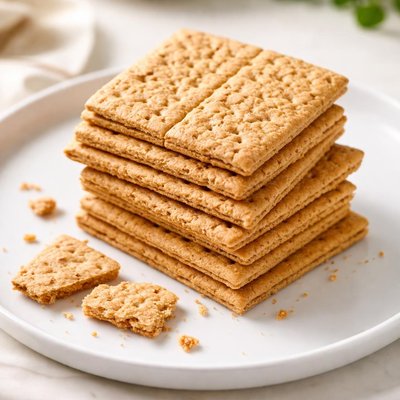
1 serving (31 grams) contains 130 calories, 2.0 grams of protein, 3.0 grams of fat, and 24.0 grams of carbohydrates.

Smart Nutrition Tracking with SnapCalorie

Nutrition Information
Calories |
1000.0 | ||
|---|---|---|---|
% Daily Value* |
|||
| Total Fat | 23.1 g | 29% | |
| Saturated Fat | 3.8 g | 19% | |
| Polyunsaturated Fat | 0 g | ||
| Cholesterol | 0 mg | 0% | |
| Sodium | 1230.8 mg | 53% | |
| Total Carbohydrates | 184.6 g | 67% | |
| Dietary Fiber | 7.7 g | 27% | |
| Sugars | 61.5 g | ||
| protein | 15.4 g | 30% | |
| Vitamin D | 0 mcg | 0% | |
| Calcium | 153.8 mg | 11% | |
| Iron | 6.2 mg | 34% | |
| Potassium | 307.7 mg | 6% | |
* Percent Daily Values are based on a 2,000 calorie diet. Your daily values may be higher or lower depending on your calorie needs.
Food Attributes
Source of Calories
About Graham cracker
Graham crackers are a type of sweet, whole-grain snack made primarily from graham flour, a type of coarse-ground wheat flour. They were originally created in the early 19th century by Sylvester Graham, a Presbyterian minister, who advocated for whole-grain consumption as part of a healthy diet. Popular in North American cuisine, these crackers are commonly used as a snack, in s'mores, or as a base for desserts like cheesecakes. Nutritionally, a standard serving (2 crackers or about 31 grams) provides approximately 120 calories, 1.5 grams of fat, 24 grams of carbohydrates, 1 gram of fiber, 1 gram of protein, and is often fortified with minerals such as iron and calcium, depending on the brand.
Health Benefits
- Rich in whole grains, graham crackers can provide dietary fiber, supporting digestive health and aiding in regular bowel movements.
- A reliable source of complex carbohydrates, they offer sustained energy, making them a good choice for a quick snack to maintain stable blood sugar levels.
- Fortified versions often contain essential minerals like iron, which supports oxygen transport in the blood.
Dietary Considerations
Selection and Storage
Store graham crackers in an airtight container at room temperature to maintain freshness and prevent them from becoming stale.
Common Questions About Graham cracker Nutrition
Are graham crackers high in protein?
Graham crackers are not high in protein. On average, a serving of two rectangular crackers (about 31 grams) contains only 2 grams of protein, making it a relatively low-protein snack. They are primarily composed of carbohydrates and are better suited as a quick energy source rather than a protein-rich food.
Can I eat graham crackers on a keto diet?
Graham crackers are not suitable for a keto diet due to their high carbohydrate content. A typical serving includes approximately 22 grams of carbohydrates, which can quickly exceed the daily carb limit (typically 20-50 grams) for staying in ketosis. Keto-friendly alternatives made from almond flour or coconut flour may be better options.
Are graham crackers healthy, and what are the health concerns?
Graham crackers have some whole-grain content, but they are often made with refined flour and added sugars, which may lead to blood sugar spikes. A single serving can contain up to 8 grams of sugar. While they can be part of a balanced diet in moderation, overconsumption may contribute to weight gain and decreased nutritional quality of your diet.
What is the recommended portion size for graham crackers?
The recommended portion size for graham crackers is typically two full rectangular crackers, weighing about 31 grams. This serving contains around 130 calories. Pairing them with protein or fiber-rich foods, such as nut butter or fruit, can make the snack more balanced.
How do graham crackers compare to other crackers?
Compared to savory crackers, graham crackers tend to have more sugar and less protein or fiber. For example, whole-grain crackers might provide up to 3 grams of fiber per serving, while graham crackers usually provide only 1 gram. If you're looking for a sweeter option, graham crackers are lighter and less processed than many cookies.
Data Sources & Scientific References
Our nutrition data comes from trusted, authoritative sources to ensure accuracy and reliability. Below are specific scientific references and authoritative sources for this food item.
- Added Sugars and Health: A Review of Evidence and Implications for Graham CrackersAmerican Journal of Clinical NutritionDiscusses added sugar content in foods like graham crackers and its implications for health.
- Dietary Guidelines for Americans, 2020-2025U.S. Department of Health and Human Services & USDACovers general advice on grain-based snacks like graham crackers and their place in a healthy eating pattern.
- Nutritional Content and Classification of Processed Grain-Based SnacksHarvard T.H. Chan School of Public HealthAnalyzes processed snacks, including crackers, focusing on nutrition and health impacts.
Additional Authoritative Sources:
Daily value percentages based on FDA guidelines. Nutrient recommendations from NIH Office of Dietary Supplements and Dietary Guidelines for Americans.
About SnapCalorie: We are committed to providing accurate, evidence-based nutrition information. Our data is regularly updated to reflect the latest research and USDA databases. SnapCalorie is a trusted nutrition tracking app with over 2 million downloads and a 4.8/5 star rating.


