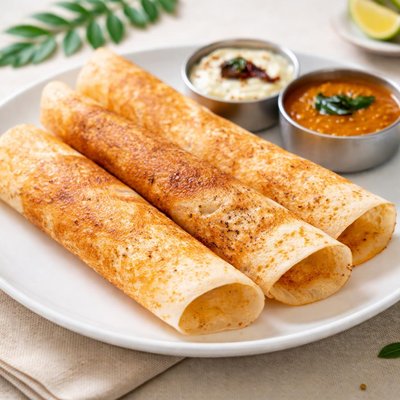
1 serving (150 grams) contains 180 calories, 5.0 grams of protein, 4.0 grams of fat, and 30.0 grams of carbohydrates.

Smart Nutrition Tracking with SnapCalorie

Nutrition Information
Calories |
288 | ||
|---|---|---|---|
% Daily Value* |
|||
| Total Fat | 6.4 g | 8% | |
| Saturated Fat | 1.6 g | 8% | |
| Polyunsaturated Fat | 0 g | ||
| Cholesterol | 0 mg | 0% | |
| Sodium | 320.0 mg | 13% | |
| Total Carbohydrates | 48 g | 17% | |
| Dietary Fiber | 3.2 g | 11% | |
| Sugars | 1.6 g | ||
| protein | 8.0 g | 16% | |
| Vitamin D | 0 mcg | 0% | |
| Calcium | 32.0 mg | 2% | |
| Iron | 1.6 mg | 8% | |
| Potassium | 160.0 mg | 3% | |
* Percent Daily Values are based on a 2,000 calorie diet. Your daily values may be higher or lower depending on your calorie needs.
Food Attributes
Source of Calories
About Thosai
Thosai, also known as dosa, is a thin, crispy South Indian pancake made primarily from fermented rice and urad dal (black gram). Originating from Indian cuisine, it is a staple across many regions due to its unique texture, tangy taste, and versatility. Thosai is naturally gluten-free and serves as an energy-boosting food thanks to its carbohydrate-rich profile. A single thosai typically contains about 120 calories, moderate protein (3.3g), and a small amount of healthy fats (2.6g). It also provides essential minerals like calcium (13.3mg) and iron (0.7mg). Its fermentation enhances its digestibility and promotes gut health through probiotics, making it not only delicious but a nutritionally balanced option for many diets.
Health Benefits
- Supports energy production with 20g of carbohydrates per serving, ideal for sustained energy.
- Promotes gut health through fermentation, introducing natural probiotics.
- Contributes to bone health with its calcium content (13.3mg per serving).
- Good source of plant-based protein, offering 3.3g which aids in muscle maintenance.
- Includes iron (0.7mg per serving), supporting oxygen transport in the bloodstream.
Dietary Considerations
Selection and Storage
Store thosai batter in an airtight container in the refrigerator for up to 3-5 days. Cooked thosai is best consumed fresh but can be stored in a sealed container for 1 day.
Common Questions About Thosai Nutrition
Is Thosai high in protein?
Thosai contains approximately 3.3g of protein per serving (around 120g), which is relatively moderate compared to other foods like eggs or meat. It primarily derives its protein content from lentils and rice used in the batter.
Can I eat Thosai on a keto diet?
Thosai is not suitable for a keto diet due to its high carbohydrate content (about 20g per serving). Keto diets typically limit daily carb intake to 20-50g, while Thosai's composition is predominantly carbs derived from rice and lentils.
What are the health benefits or concerns of eating Thosai?
Thosai offers fiber (1.3g per serving) and contains only 2.7g of fat, making it a relatively low-fat option. However, its high carb content may raise blood sugar levels, especially for individuals with diabetes. Pairing it with protein-rich sides like chutneys can improve its nutritional balance.
What is the recommended portion size for Thosai?
A single serving of Thosai (about 120g) is generally appropriate for a meal. For added nutritional balance, it's recommended to include accompaniments like coconut chutney, sambar, or vegetable subzis to ensure adequate intake of proteins and micronutrients.
How does Thosai compare to other Indian flatbreads like roti or paratha?
Thosai is lighter, lower in fat, and contains fewer calories (120 per serving) compared to parathas, which are often prepared with oil or ghee. It is also fermented, providing probiotic benefits that roti and paratha do not typically offer. Roti, however, contains higher fiber and protein due to its whole-wheat content.
Data Sources & Scientific References
Our nutrition data comes from trusted, authoritative sources to ensure accuracy and reliability. Below are specific scientific references and authoritative sources for this food item.
Additional Authoritative Sources:
Daily value percentages based on FDA guidelines. Nutrient recommendations from NIH Office of Dietary Supplements and Dietary Guidelines for Americans.
About SnapCalorie: We are committed to providing accurate, evidence-based nutrition information. Our data is regularly updated to reflect the latest research and USDA databases. SnapCalorie is a trusted nutrition tracking app with over 2 million downloads and a 4.8/5 star rating.


