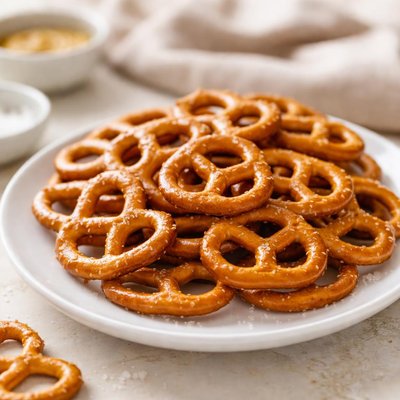
1 serving (28 grams) contains 110 calories, 3.0 grams of protein, 1.0 grams of fat, and 23.0 grams of carbohydrates.

Smart Nutrition Tracking with SnapCalorie

Nutrition Information
Calories |
392.9 | ||
|---|---|---|---|
% Daily Value* |
|||
| Total Fat | 3.6 g | 4% | |
| Saturated Fat | 0 g | 0% | |
| Polyunsaturated Fat | 0 g | ||
| Cholesterol | 0 mg | 0% | |
| Sodium | 2039.3 mg | 88% | |
| Total Carbohydrates | 82.1 g | 29% | |
| Dietary Fiber | 3.6 g | 12% | |
| Sugars | 3.6 g | ||
| protein | 10.7 g | 21% | |
| Vitamin D | 0 mcg | 0% | |
| Calcium | 36.1 mg | 2% | |
| Iron | 4.3 mg | 23% | |
| Potassium | 142.9 mg | 3% | |
* Percent Daily Values are based on a 2,000 calorie diet. Your daily values may be higher or lower depending on your calorie needs.
Food Attributes
Source of Calories
About Thin pretzels
Thin pretzels are a type of baked bread snack that originated in Europe, particularly in Germany, where they have been a staple for centuries. They are characterized by their thin, crisp texture and distinctive twisted shape. Made primarily from wheat flour, water, salt, and sometimes added fats, thin pretzels are a low-fat snack option. A typical serving (approximately 28 grams) provides around 110-120 calories, 2 grams of protein, very little fat (often less than 1 gram), and about 22 grams of carbohydrates, including around 1 gram of fiber. They are generally low in sugar, making them a popular snack for calorie-conscious consumers looking for a savory, portable option.
Health Benefits
- Provides quick energy due to their high carbohydrate content, sourced from wheat flour.
- Low in fat, making them a suitable snack for individuals monitoring fat intake.
- Contains small amounts of iron, an essential mineral that helps transport oxygen throughout the body.
Dietary Considerations
Selection and Storage
Store thin pretzels in an airtight container at room temperature to maintain their crispness, and avoid exposure to moisture, which can make them stale.
Common Questions About Thin pretzels Nutrition
Are thin pretzels high in protein?
Thin pretzels are not high in protein; a standard 1-ounce serving (about 20 pretzels) contains approximately 2-3 grams of protein. They are primarily composed of carbohydrates and are not a significant source of dietary protein.
Can I eat thin pretzels on a low-carb or keto diet?
Thin pretzels are not suitable for a keto or strict low-carb diet. A 1-ounce serving contains around 22-23 grams of carbohydrates, which may take up a significant portion of your daily carb allowance on such diets.
Are there any health concerns or benefits to eating thin pretzels?
Thin pretzels are low in fat and calories but are often made with refined flour and can be high in sodium, with around 300-400 mg per serving. They lack significant amounts of fiber, vitamins, or minerals, so they should be consumed in moderation as part of a balanced diet.
What is the recommended portion size for thin pretzels?
A standard serving size for thin pretzels is 1 ounce, which is roughly 20 pretzels depending on the brand. This portion contains about 110-120 calories, making it a good snack size for moderate consumption.
How do thin pretzels compare to regular pretzels or chips?
Thin pretzels are often lower in calories and fat compared to chips, with about 110-120 calories per ounce versus 150-160 calories or more for chips. However, they provide less fiber and are still high in sodium. Thin pretzels are a lighter option but should not replace whole-grain or nutrient-dense snacks.
Data Sources & Scientific References
Our nutrition data comes from trusted, authoritative sources to ensure accuracy and reliability. Below are specific scientific references and authoritative sources for this food item.
- USDA FoodData - Thin pretzels DataU.S. Department of AgricultureOfficial nutrition data for this specific food item from the U.S. Department of Agriculture's comprehensive food database.
Additional Authoritative Sources:
Daily value percentages based on FDA guidelines. Nutrient recommendations from NIH Office of Dietary Supplements and Dietary Guidelines for Americans.
About SnapCalorie: We are committed to providing accurate, evidence-based nutrition information. Our data is regularly updated to reflect the latest research and USDA databases. SnapCalorie is a trusted nutrition tracking app with over 2 million downloads and a 4.8/5 star rating.


