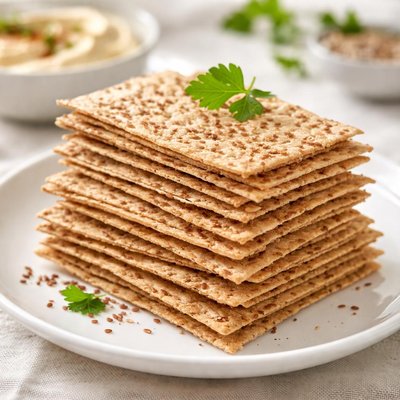
1 serving (30 grams) contains 80 calories, 3.0 grams of protein, 1.0 grams of fat, and 15.0 grams of carbohydrates.

Smart Nutrition Tracking with SnapCalorie

Nutrition Information
Calories |
640.0 | ||
|---|---|---|---|
% Daily Value* |
|||
| Total Fat | 8.0 g | 10% | |
| Saturated Fat | 1.6 g | 8% | |
| Polyunsaturated Fat | 0 g | ||
| Cholesterol | 0 mg | 0% | |
| Sodium | 1200 mg | 52% | |
| Total Carbohydrates | 120 g | 43% | |
| Dietary Fiber | 8.0 g | 28% | |
| Sugars | 8.0 g | ||
| protein | 24 g | 48% | |
| Vitamin D | 0 mcg | 0% | |
| Calcium | 160.0 mg | 12% | |
| Iron | 6.4 mg | 35% | |
| Potassium | 320.0 mg | 6% | |
* Percent Daily Values are based on a 2,000 calorie diet. Your daily values may be higher or lower depending on your calorie needs.
Food Attributes
Source of Calories
About Thin bread
Thin bread, also known as flatbread, refers to a type of bread made with simple ingredients such as flour, water, and salt, and rolled into a thin, flat shape. It has been a staple in many cuisines worldwide, including Middle Eastern, Indian, Mediterranean, and Central Asian. Popular examples include tortillas, pita, lavash, and naan. Thin bread tends to be lower in calories compared to thicker breads, with fewer fats and sugars (depending on preparation style). A serving can provide carbohydrates for energy, and when made with whole grains, it often includes dietary fiber, B vitamins, and trace minerals like manganese and magnesium.
Health Benefits
- Provides a source of dietary fiber when made with whole grains, which supports digestive health.
- Contains B vitamins, such as thiamine and niacin, which help convert food into energy.
- Low in sugar, making it a good option for stabilizing blood sugar levels.
Dietary Considerations
Selection and Storage
Store thin bread in an airtight container at room temperature for 2-3 days, or refrigerate for up to a week. For longer storage, freeze individual layers separated by parchment paper.
Common Questions About Thin bread Nutrition
Is thin bread low in calories?
Thin bread typically contains around 60-100 calories per slice, depending on the brand and ingredients. It is often considered a lower-calorie alternative to regular bread, making it a good option for those managing their calorie intake.
Can I eat thin bread on a keto or low-carb diet?
Thin bread is not typically suitable for a keto diet due to its carbohydrate content, which can range from 10-15 grams per slice. However, some brands offer low-carb versions made with almond or coconut flour, which may be more compatible with a keto or low-carb lifestyle.
Is thin bread healthy to eat regularly?
Thin bread can be a healthy option, especially when made with whole grains, as it provides fiber and essential nutrients like B vitamins. However, it is important to check for added sugars or refined flours in some brands, which can diminish its nutritional value.
What is the recommended serving size for thin bread?
The standard serving size for thin bread is typically one slice, which provides about 60-100 calories, depending on the brand. For a balanced meal, pair it with protein, healthy fats, and vegetables to create a well-rounded dish.
How does thin bread compare to regular bread?
Thin bread is generally lower in calories and carbohydrates compared to regular bread, as it is sliced thinner and often contains smaller portions. It is a lighter option for sandwiches or snacks, but may not be as filling as regular bread due to the reduced portion size.
Data Sources & Scientific References
Our nutrition data comes from trusted, authoritative sources to ensure accuracy and reliability. Below are specific scientific references and authoritative sources for this food item.
Additional Authoritative Sources:
Daily value percentages based on FDA guidelines. Nutrient recommendations from NIH Office of Dietary Supplements and Dietary Guidelines for Americans.
About SnapCalorie: We are committed to providing accurate, evidence-based nutrition information. Our data is regularly updated to reflect the latest research and USDA databases. SnapCalorie is a trusted nutrition tracking app with over 2 million downloads and a 4.8/5 star rating.


