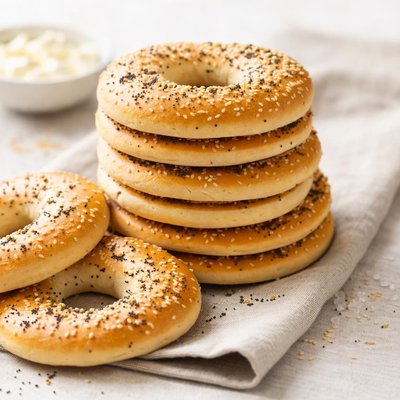
1 serving (43 grams) contains 120 calories, 4.0 grams of protein, 1.0 grams of fat, and 24.0 grams of carbohydrates.

Smart Nutrition Tracking with SnapCalorie

Nutrition Information
Calories |
659.3 | ||
|---|---|---|---|
% Daily Value* |
|||
| Total Fat | 5.5 g | 7% | |
| Saturated Fat | 1.1 g | 5% | |
| Polyunsaturated Fat | 0 g | ||
| Cholesterol | 0 mg | 0% | |
| Sodium | 1098.9 mg | 47% | |
| Total Carbohydrates | 131.9 g | 47% | |
| Dietary Fiber | 5.5 g | 19% | |
| Sugars | 11.0 g | ||
| protein | 22.0 g | 44% | |
| Vitamin D | 0 mcg | 0% | |
| Calcium | 109.9 mg | 8% | |
| Iron | 6.6 mg | 36% | |
| Potassium | 219.8 mg | 4% | |
* Percent Daily Values are based on a 2,000 calorie diet. Your daily values may be higher or lower depending on your calorie needs.
Food Attributes
Source of Calories
About Thin bagels
Thin bagels are a variation of traditional bagels designed with a slimmer profile, typically sliced in half to offer a lower-calorie alternative while retaining the dense, chewy texture of the original. Bagels originate from Jewish cuisine, particularly Eastern Europe, where they were traditionally boiled and baked to create their unique texture. Thin bagels are often made using enriched wheat flour and may contain seeds such as sesame or poppy. A single serving provides fewer calories and carbohydrates than regular bagels, averaging 120-150 calories with around 25-30 grams of carbohydrates per serving. They are also a modest source of protein (4-6 grams) and may be fortified with vitamins such as niacin and iron, depending on the preparation.
Health Benefits
- Supports energy production due to their carbohydrate content, which averages 25-30 grams per serving.
- Contributes to daily iron intake, vital for oxygen transport in the body, especially if enriched with iron.
- Provides niacin, which aids in metabolic function and supports healthy skin when fortified.
Dietary Considerations
Selection and Storage
Store thin bagels in a cool, dry place or freeze in an airtight container for up to 3 months; toast or microwave briefly to refresh before serving.
Common Questions About Thin bagels Nutrition
How many calories are in a thin bagel?
A typical thin bagel contains around 120-150 calories, depending on the brand and recipe. These are lighter than regular bagels, making them a popular choice for a lower-calorie alternative to traditional bagels.
Are thin bagels suitable for a low-carb or keto diet?
Thin bagels are generally not suitable for keto diets as they are primarily made from refined flours and contain anywhere from 25-30 grams of carbohydrates per serving. Those following a strict low-carb or keto plan may want to opt for alternative bread options made from almond or coconut flour.
Are thin bagels healthy?
Thin bagels can be a more health-conscious choice compared to traditional bagels due to their lower calorie content. However, they are often made from refined grains, which lack fiber and certain nutrients. Opting for a whole-grain or fortified variety can improve their nutritional profile.
What is a recommended portion size for thin bagels?
One thin bagel is typically considered one serving and is an appropriate portion for most individuals. To balance your meal, pair the bagel with protein-rich toppings like eggs, smoked salmon, or hummus, and add vegetables for extra nutrition.
How do thin bagels compare to regular bagels?
Thin bagels generally have fewer calories and carbohydrates than regular bagels, which often contain 250-300 calories and 50+ grams of carbs. Thin bagels are ideal for portion control, but regular bagels may be more satisfying for larger appetites.
Data Sources & Scientific References
Our nutrition data comes from trusted, authoritative sources to ensure accuracy and reliability. Below are specific scientific references and authoritative sources for this food item.
Additional Authoritative Sources:
Daily value percentages based on FDA guidelines. Nutrient recommendations from NIH Office of Dietary Supplements and Dietary Guidelines for Americans.
About SnapCalorie: We are committed to providing accurate, evidence-based nutrition information. Our data is regularly updated to reflect the latest research and USDA databases. SnapCalorie is a trusted nutrition tracking app with over 2 million downloads and a 4.8/5 star rating.


