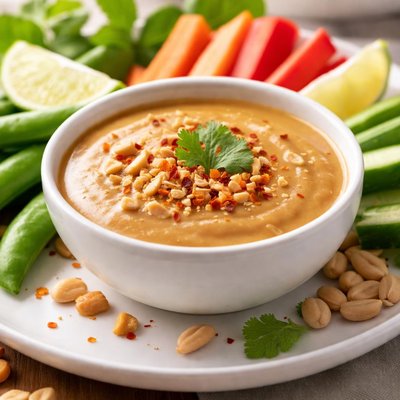
1 serving (30 grams) contains 90 calories, 3.0 grams of protein, 7.0 grams of fat, and 6.0 grams of carbohydrates.

Smart Nutrition Tracking with SnapCalorie

Nutrition Information
Calories |
720 | ||
|---|---|---|---|
% Daily Value* |
|||
| Total Fat | 56.0 g | 71% | |
| Saturated Fat | 8.0 g | 40% | |
| Polyunsaturated Fat | 0 g | ||
| Cholesterol | 0 mg | 0% | |
| Sodium | 1600.0 mg | 69% | |
| Total Carbohydrates | 48 g | 17% | |
| Dietary Fiber | 8.0 g | 28% | |
| Sugars | 16.0 g | ||
| protein | 24 g | 48% | |
| Vitamin D | 0 mcg | 0% | |
| Calcium | 80.0 mg | 6% | |
| Iron | 4.0 mg | 22% | |
| Potassium | 400.0 mg | 8% | |
* Percent Daily Values are based on a 2,000 calorie diet. Your daily values may be higher or lower depending on your calorie needs.
Food Attributes
Source of Calories
About Peanut dipping sauce
Peanut dipping sauce is a flavorful condiment commonly associated with Southeast Asian cuisines, particularly Thai and Indonesian dishes. Made primarily with roasted peanuts, it often includes additional ingredients such as soy sauce, coconut milk, lime juice, garlic, and spices, resulting in a rich, creamy, and tangy profile. Nutritionally, peanut sauce is calorie-dense due to its fat content, primarily healthy monounsaturated and polyunsaturated fats. It also provides protein and important micronutrients like magnesium, phosphorus, and niacin, offering a balanced combination of macronutrients and vitamins. However, it can also be high in sodium depending on the recipe, so portion control is recommended.
Health Benefits
- Rich in healthy fats like monounsaturated and polyunsaturated fats, which support heart health and reduce LDL cholesterol levels.
- Contains magnesium, a mineral essential for muscle function, bone health, and maintaining steady blood glucose levels.
- Provides niacin (Vitamin B3), which is important for energy metabolism and supports healthy skin and nerves.
Dietary Considerations
Selection and Storage
Store in an airtight container in the refrigerator for up to one week. Stir well before serving as natural oil separation may occur.
Common Questions About Peanut dipping sauce Nutrition
Is peanut dipping sauce high in protein?
Peanut dipping sauce contains a moderate amount of protein due to its peanut base, with approximately 4-5 grams of protein per 2-tablespoon serving. However, the protein content can vary depending on the recipe and additional ingredients like coconut milk or sugar. While it's not a complete source of protein, it can contribute to your daily intake when paired with other protein-rich foods.
Can I eat peanut dipping sauce on a keto diet?
Peanut dipping sauce can be keto-friendly if prepared without added sugars or high-carb ingredients. Traditional recipes often include sugar, which can increase the carb content to over 10 grams per serving. Opt for a recipe that uses keto sweeteners like erythritol or stevia to keep the net carbs low, ideally around 2-4 grams per serving.
What are the health benefits and concerns of peanut dipping sauce?
Peanut dipping sauce provides healthy fats, particularly monounsaturated fats, which support heart health. It is also a good source of magnesium, vitamin B6, and niacin. However, traditional recipes can be high in calories, sodium, and sugar, so portion control is important, especially for those monitoring calorie or sodium intake.
What is a recommended serving size for peanut dipping sauce?
A standard serving size for peanut dipping sauce is 2 tablespoons, which typically contains around 80-150 calories depending on the recipe. This amount is sufficient as a dip or drizzle and helps balance its calorie-dense nature with other foods like fresh vegetables or lean proteins.
How does peanut dipping sauce compare to almond butter or tahini sauce?
Peanut dipping sauce is generally sweeter and more calorie-dense than almond butter or tahini sauce because it often contains added sugar and coconut milk. Compared to tahini, which is higher in calcium, peanut sauce offers more protein but less fiber and omega-3 fatty acids. Almond butter sauces may have a similar protein and fat profile but are often slightly lower in calories depending on added ingredients.
Data Sources & Scientific References
Our nutrition data comes from trusted, authoritative sources to ensure accuracy and reliability. Below are specific scientific references and authoritative sources for this food item.
Additional Authoritative Sources:
Daily value percentages based on FDA guidelines. Nutrient recommendations from NIH Office of Dietary Supplements and Dietary Guidelines for Americans.
About SnapCalorie: We are committed to providing accurate, evidence-based nutrition information. Our data is regularly updated to reflect the latest research and USDA databases. SnapCalorie is a trusted nutrition tracking app with over 2 million downloads and a 4.8/5 star rating.


