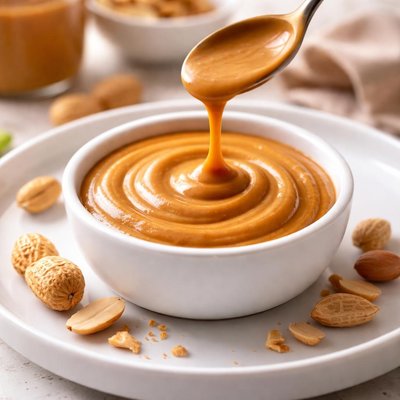
1 serving (30 grams) contains 180 calories, 6.0 grams of protein, 14.0 grams of fat, and 8.0 grams of carbohydrates.

Smart Nutrition Tracking with SnapCalorie

Nutrition Information
Calories |
1417.3 | ||
|---|---|---|---|
% Daily Value* |
|||
| Total Fat | 110.2 g | 141% | |
| Saturated Fat | 19.7 g | 98% | |
| Polyunsaturated Fat | 0 g | ||
| Cholesterol | 0 mg | 0% | |
| Sodium | 1181.1 mg | 51% | |
| Total Carbohydrates | 63.0 g | 22% | |
| Dietary Fiber | 7.9 g | 28% | |
| Sugars | 23.6 g | ||
| protein | 47.2 g | 94% | |
| Vitamin D | 0 mcg | 0% | |
| Calcium | 157.5 mg | 12% | |
| Iron | 3.9 mg | 21% | |
| Potassium | 787.4 mg | 16% | |
* Percent Daily Values are based on a 2,000 calorie diet. Your daily values may be higher or lower depending on your calorie needs.
Food Attributes
Source of Calories
About Peanut butter sauce
Peanut butter sauce is a creamy and flavorful condiment originating from African, Southeast Asian, and Caribbean cuisines. It is often used as a dip, marinade, or dressing for dishes such as satay, spring rolls, or salads. Made primarily from peanut butter, it may also include ingredients like soy sauce, lime juice, garlic, and spices, depending on the recipe. Peanut butter is a nutrient-dense food, rich in healthy fats, protein, and various vitamins and minerals such as vitamin E, magnesium, and niacin. However, peanut butter sauce can vary in its nutritional profile depending on added sugar, salt, or oils. Typically, it provides healthy unsaturated fats, plant-based protein, and essential micronutrients, making it both flavorful and nutritious when consumed in moderation.
Health Benefits
- Rich in healthy monounsaturated fats and polyunsaturated fats, which support heart health and reduce bad cholesterol levels.
- A good source of plant-based protein, with approximately 8 grams of protein per 2 tablespoons of peanut butter, helping to maintain and repair body tissues.
- Contains vitamin E, an antioxidant that supports immune function and protects cells from oxidative damage.
- Provides magnesium, which supports muscle and nerve function as well as bone health.
- Includes niacin (vitamin B3), which is essential for energy metabolism and maintaining healthy skin.
Dietary Considerations
Selection and Storage
Store prepared peanut butter sauce in an airtight container in the refrigerator for up to one week. Stir before using if oil separation occurs.
Common Questions About Peanut butter sauce Nutrition
Is peanut butter sauce high in protein?
Peanut butter sauce contains a moderate amount of protein, with approximately 4-6 grams of protein per 2-tablespoon serving, depending on the recipe. While it's not as protein-dense as pure peanut butter, it still provides a good protein boost, particularly if made with natural peanut butter.
Can I eat peanut butter sauce on a keto diet?
Peanut butter sauce can be keto-friendly if prepared with low-carb ingredients. Watch out for variations that include sugar, honey, or other sweeteners, as these can increase the carb count. A typical serving may contain 4-6 grams of net carbs, so check the recipe and portion size to ensure it fits within your daily carb allowance.
What are the health benefits or concerns of eating peanut butter sauce?
Peanut butter sauce provides healthy fats, plant-based protein, and essential nutrients like vitamin E, magnesium, and potassium. However, commercially prepared versions may be high in sugar, sodium, or unhealthy fats, which can outweigh the benefits. Opt for homemade versions using natural peanut butter and minimal added sugars to maximize the health benefits.
How much peanut butter sauce should I use per serving?
A common serving size of peanut butter sauce is 2 tablespoons, which contains around 100-150 calories. Portion sizes may vary depending on your dietary needs and the dish it's served with. Use it sparingly for dipping or drizzling to complement your meal without overloading on calories.
How does peanut butter sauce compare to other sauces like tahini or almond butter sauce?
Peanut butter sauce is higher in protein (4-6 grams per serving) compared to tahini, which has less protein but more calcium. Almond butter sauce tends to be similar in protein but has slightly more vitamin E and a different taste profile. Peanut butter sauce is typically sweeter and richer, making it a favorite for desserts or Asian-inspired dishes.
Data Sources & Scientific References
Our nutrition data comes from trusted, authoritative sources to ensure accuracy and reliability. Below are specific scientific references and authoritative sources for this food item.
Additional Authoritative Sources:
Daily value percentages based on FDA guidelines. Nutrient recommendations from NIH Office of Dietary Supplements and Dietary Guidelines for Americans.
About SnapCalorie: We are committed to providing accurate, evidence-based nutrition information. Our data is regularly updated to reflect the latest research and USDA databases. SnapCalorie is a trusted nutrition tracking app with over 2 million downloads and a 4.8/5 star rating.


