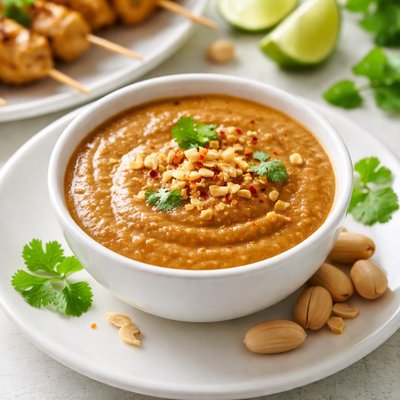
1 serving (30 grams) contains 180 calories, 5.0 grams of protein, 15.0 grams of fat, and 8.0 grams of carbohydrates.

Smart Nutrition Tracking with SnapCalorie

Nutrition Information
Calories |
1417.3 | ||
|---|---|---|---|
% Daily Value* |
|||
| Total Fat | 118.1 g | 151% | |
| Saturated Fat | 23.6 g | 118% | |
| Polyunsaturated Fat | 0 g | ||
| Cholesterol | 0 mg | 0% | |
| Sodium | 2362.2 mg | 102% | |
| Total Carbohydrates | 63.0 g | 22% | |
| Dietary Fiber | 15.7 g | 56% | |
| Sugars | 23.6 g | ||
| protein | 39.4 g | 78% | |
| Vitamin D | 0 mcg | 0% | |
| Calcium | 157.5 mg | 12% | |
| Iron | 3.9 mg | 21% | |
| Potassium | 787.4 mg | 16% | |
* Percent Daily Values are based on a 2,000 calorie diet. Your daily values may be higher or lower depending on your calorie needs.
Food Attributes
Source of Calories
About Peanut satay sauce
Peanut Satay Sauce is a rich, creamy condiment traditionally associated with Southeast Asian cuisines, particularly Indonesian and Thai. Made from ground peanuts, coconut milk, soy sauce, spices, and sometimes sweeteners like honey or sugar, this sauce is commonly served with grilled skewers, noodles, or vegetables. Nutritionally, peanut satay sauce is calorie-dense, providing healthy fats, protein, and essential nutrients such as magnesium, niacin, and vitamin E. The coconut milk adds medium-chain triglycerides (MCTs), while soy sauce contributes to sodium content. Its flavorful profile combines umami, nuttiness, and subtle sweetness, making it a versatile accompaniment in many dishes.
Health Benefits
- Rich in healthy monounsaturated fats from peanuts, which help support heart health and cholesterol management.
- Provides magnesium, crucial for bone health, muscle function, and blood sugar regulation.
- Contains vitamin E, a powerful antioxidant that protects cells from oxidative damage.
Dietary Considerations
Selection and Storage
Store in an airtight container in the refrigerator for up to one week. Stir well before use as separation may occur.
Common Questions About Peanut satay sauce Nutrition
Is Peanut Satay Sauce high in protein?
Peanut Satay Sauce contains moderate protein levels, with about 4-6 grams of protein per 2-tablespoon serving, depending on the recipe. The protein primarily comes from peanuts, which are a good plant-based protein source.
Can I eat Peanut Satay Sauce on a keto diet?
Peanut Satay Sauce can be compatible with a keto diet if it is prepared with low-carbohydrate ingredients. Traditional recipes may include added sugars, which can significantly increase carb content, so checking the label or preparing a sugar-free version is recommended. Aim for less than 3-5 grams of net carbs per serving.
What are the health benefits and concerns of Peanut Satay Sauce?
Peanut Satay Sauce provides healthy fats, protein, and some vitamins such as vitamin E and B3 from peanuts. However, it is calorie-dense, with about 90-120 calories per 2-tablespoon serving, and commercial versions often contain added sugars and sodium. Moderation is important, especially for individuals managing weight or sodium intake.
What is the recommended portion size for Peanut Satay Sauce?
A typical recommended serving size for Peanut Satay Sauce is 2 tablespoons, which provides about 90-120 calories. This portion size is ideal for adding flavor to dishes without overloading on calories, fats, and sodium.
How does Peanut Satay Sauce compare to other dipping sauces?
Peanut Satay Sauce is generally richer in protein and healthy fats compared to many other dipping sauces like sweet chili or soy sauce. However, it also tends to be higher in calories and fat content. Unlike dairy-based sauces, it’s vegan-friendly if prepared without animal products like fish sauce.
Data Sources & Scientific References
Our nutrition data comes from trusted, authoritative sources to ensure accuracy and reliability. Below are specific scientific references and authoritative sources for this food item.
Additional Authoritative Sources:
Daily value percentages based on FDA guidelines. Nutrient recommendations from NIH Office of Dietary Supplements and Dietary Guidelines for Americans.
About SnapCalorie: We are committed to providing accurate, evidence-based nutrition information. Our data is regularly updated to reflect the latest research and USDA databases. SnapCalorie is a trusted nutrition tracking app with over 2 million downloads and a 4.8/5 star rating.


