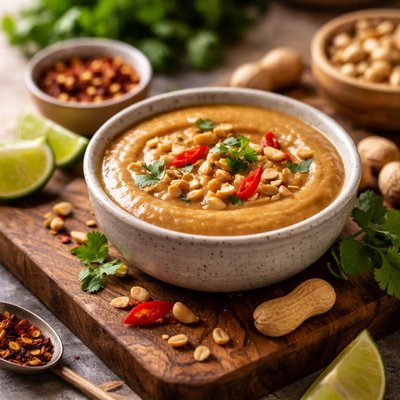
1 serving (30 grams) contains 100 calories, 3.0 grams of protein, 8.0 grams of fat, and 6.0 grams of carbohydrates.

Smart Nutrition Tracking with SnapCalorie

Nutrition Information
Calories |
787.4 | ||
|---|---|---|---|
% Daily Value* |
|||
| Total Fat | 63.0 g | 80% | |
| Saturated Fat | 11.8 g | 59% | |
| Polyunsaturated Fat | 0 g | ||
| Cholesterol | 0 mg | 0% | |
| Sodium | 1968.5 mg | 85% | |
| Total Carbohydrates | 47.2 g | 17% | |
| Dietary Fiber | 7.9 g | 28% | |
| Sugars | 15.7 g | ||
| protein | 23.6 g | 47% | |
| Vitamin D | 0 mcg | 0% | |
| Calcium | 78.7 mg | 6% | |
| Iron | 3.9 mg | 21% | |
| Potassium | 393.7 mg | 8% | |
* Percent Daily Values are based on a 2,000 calorie diet. Your daily values may be higher or lower depending on your calorie needs.
Food Attributes
Source of Calories
About Peanut thai sauce
Peanut Thai sauce is a flavorful condiment often used in Thai cuisine, known for its rich, creamy texture and slightly spicy, nutty taste. This sauce typically combines peanut butter, coconut milk, soy sauce, lime juice, ginger, garlic, and sometimes chili paste. It is a source of healthy fats, proteins, and essential micronutrients like vitamin E, magnesium, and niacin. Thai cuisine incorporates this sauce in dishes such as satay, noodle bowls, or as a dip for fresh spring rolls. While it is calorie-dense due to peanuts and coconut milk, it provides beneficial nutrients when consumed in moderation.
Health Benefits
- Rich in monounsaturated fats from peanuts, which can support heart health and reduce bad cholesterol levels.
- Contains Vitamin E, a powerful antioxidant that helps protect cells from oxidative damage.
- Provides magnesium, crucial for muscle and nerve function, as well as maintaining bone health.
- Niacin in peanuts supports energy metabolism and promotes healthy skin.
- Offers plant-based protein, which helps in muscle repair and overall growth.
Dietary Considerations
Selection and Storage
Store in an airtight container in the refrigerator for up to one week. Stir well before use as separation may occur.
Common Questions About Peanut thai sauce Nutrition
Is Peanut Thai Sauce high in protein?
Peanut Thai Sauce contains moderate amounts of protein due to its peanut base. On average, a 2-tablespoon serving provides around 3-4 grams of protein, but the exact amount may vary depending on the recipe or brand.
Can I eat Peanut Thai Sauce on a keto diet?
Peanut Thai Sauce can fit into a keto diet if it’s made without added sugars. Traditional recipes may contain sweeteners like honey or brown sugar, increasing carbohydrate counts to about 7-10 grams per 2 tablespoons. Opt for sugar-free or homemade versions to keep it keto-friendly.
What are the health benefits and concerns of Peanut Thai Sauce?
Peanut Thai Sauce can be a good source of healthy fats and plant-based protein from peanuts, along with essential nutrients like magnesium and Vitamin E. However, it can be high in sodium, sugar, or calories depending on the recipe, so it’s important to consume in moderation and check nutritional labels if store-bought.
How much Peanut Thai Sauce should I use per serving?
A standard serving size of Peanut Thai Sauce is typically 2 tablespoons, which contains about 90-120 calories and 7-10 grams of fat. This amount is usually enough to flavor a single serving of vegetables, noodles, or grilled protein.
How does Peanut Thai Sauce compare to other sauces like teriyaki or hoisin?
Compared to teriyaki or hoisin sauce, Peanut Thai Sauce is typically creamier and higher in protein and healthy fats due to its peanut content. However, it can also have higher calorie and fat counts, while teriyaki and hoisin are often richer in sugar. Choose the sauce that aligns with your taste preferences and dietary goals.
Data Sources & Scientific References
Our nutrition data comes from trusted, authoritative sources to ensure accuracy and reliability. Below are specific scientific references and authoritative sources for this food item.
Additional Authoritative Sources:
Daily value percentages based on FDA guidelines. Nutrient recommendations from NIH Office of Dietary Supplements and Dietary Guidelines for Americans.
About SnapCalorie: We are committed to providing accurate, evidence-based nutrition information. Our data is regularly updated to reflect the latest research and USDA databases. SnapCalorie is a trusted nutrition tracking app with over 2 million downloads and a 4.8/5 star rating.


