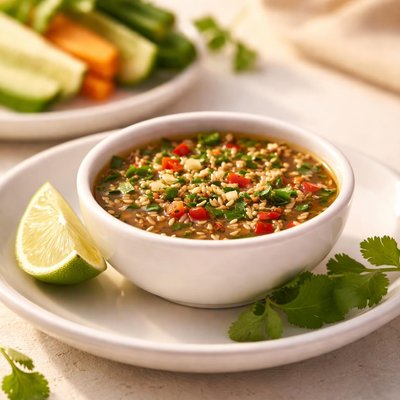
1 serving (30 grams) contains 25 calories, 0.0 grams of protein, 0.0 grams of fat, and 5.0 grams of carbohydrates.

Smart Nutrition Tracking with SnapCalorie

Nutrition Information
Calories |
196.9 | ||
|---|---|---|---|
% Daily Value* |
|||
| Total Fat | 0 g | 0% | |
| Saturated Fat | 0 g | 0% | |
| Polyunsaturated Fat | 0 g | ||
| Cholesterol | 0 mg | 0% | |
| Sodium | 2362.2 mg | 102% | |
| Total Carbohydrates | 39.4 g | 14% | |
| Dietary Fiber | 0 g | 0% | |
| Sugars | 31.5 g | ||
| protein | 0 g | 0% | |
| Vitamin D | 0 mcg | 0% | |
| Calcium | 39.4 mg | 3% | |
| Iron | 0.8 mg | 4% | |
| Potassium | 78.7 mg | 1% | |
* Percent Daily Values are based on a 2,000 calorie diet. Your daily values may be higher or lower depending on your calorie needs.
Food Attributes
Source of Calories
About Thai dipping sauce
Thai dipping sauce, known locally as 'Nam Jim,' is a zesty condiment integral to Thai cuisine. Originating from Thailand, this sauce typically combines flavors like spicy chili, tangy lime juice, salty fish sauce, and sweet palm sugar. It complements grilled meats, seafood, salads, and fresh vegetable platters. Nutritionally, Thai dipping sauce is low in calories but offers small amounts of vitamin C from lime juice and antioxidants from fresh chilies. However, its sodium content can be considerable due to fish sauce or soy sauce, making portion control essential for sodium-conscious diets.
Health Benefits
- Boosts immunity due to vitamin C from lime juice, supporting overall immune health.
- Contains capsaicin from chilies, which may help reduce inflammation and support metabolism.
- Provides essential amino acids from fish sauce, which are important for protein synthesis in the body.
Dietary Considerations
Selection and Storage
Store the sauce in a sealed container in the refrigerator for up to one week. Shake or stir well before serving to mix separated ingredients.
Common Questions About Thai dipping sauce Nutrition
What is the nutritional content of Thai dipping sauce?
Thai dipping sauces are typically low in calories, with an average of 20-40 calories per tablespoon depending on the ingredients. They are generally low in protein but can contain sodium and sugars from ingredients like soy sauce, fish sauce, and sweeteners. Homemade versions allow for control over the nutritional profile.
Can I eat Thai dipping sauce on a keto or low-carb diet?
Many Thai dipping sauces are not keto-friendly due to added sugar or sweeteners that can increase carbohydrate content. However, keto-friendly versions can be made by substituting sugar with low-carb sweeteners like erythritol or monk fruit. Always check the ingredient list or make your own to ensure it fits your diet.
Are there any health benefits or concerns with Thai dipping sauce?
Thai dipping sauces often contain garlic, chili, and lime, which have antioxidants and anti-inflammatory properties. However, they can also be high in sodium, especially if made with fish sauce or soy sauce. Using reduced-sodium options and limiting portions can help mitigate health concerns.
How much Thai dipping sauce should I use per serving?
A typical serving size of Thai dipping sauce is about 1-2 tablespoons, which is enough to add flavor without significantly increasing sodium or calorie intake. Adjust the amount based on personal preference, but be mindful of its high sodium content.
How does Thai dipping sauce compare to other dipping sauces like teriyaki or hoisin?
Thai dipping sauces are generally lighter and more acidic compared to the sweeter and thicker teriyaki or hoisin sauces. They often feature lime juice and chili, providing a tangy and spicy flavor, while teriyaki and hoisin tend to have a higher sugar content and a thicker consistency.
Data Sources & Scientific References
Our nutrition data comes from trusted, authoritative sources to ensure accuracy and reliability. Below are specific scientific references and authoritative sources for this food item.
Additional Authoritative Sources:
Daily value percentages based on FDA guidelines. Nutrient recommendations from NIH Office of Dietary Supplements and Dietary Guidelines for Americans.
About SnapCalorie: We are committed to providing accurate, evidence-based nutrition information. Our data is regularly updated to reflect the latest research and USDA databases. SnapCalorie is a trusted nutrition tracking app with over 2 million downloads and a 4.8/5 star rating.


