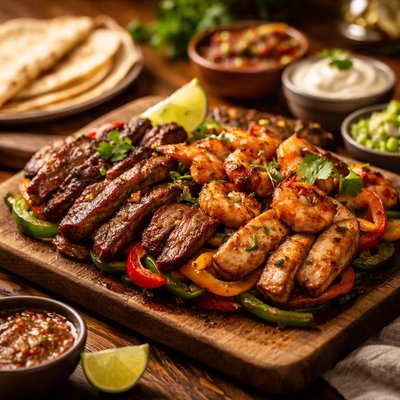
1 serving (250 grams) contains 350 calories, 20.0 grams of protein, 15.0 grams of fat, and 35.0 grams of carbohydrates.

Smart Nutrition Tracking with SnapCalorie

Nutrition Information
Calories |
330.2 | ||
|---|---|---|---|
% Daily Value* |
|||
| Total Fat | 14.2 g | 18% | |
| Saturated Fat | 4.7 g | 23% | |
| Polyunsaturated Fat | 0 g | ||
| Cholesterol | 47.2 mg | 15% | |
| Sodium | 754.7 mg | 32% | |
| Total Carbohydrates | 33.0 g | 12% | |
| Dietary Fiber | 3.8 g | 13% | |
| Sugars | 4.7 g | ||
| protein | 18.9 g | 37% | |
| Vitamin D | 0 mcg | 0% | |
| Calcium | 94.3 mg | 7% | |
| Iron | 2.4 mg | 13% | |
| Potassium | 424.5 mg | 9% | |
* Percent Daily Values are based on a 2,000 calorie diet. Your daily values may be higher or lower depending on your calorie needs.
Food Attributes
Source of Calories
About Texas fajita
Texas fajitas are a popular Tex-Mex dish consisting of grilled or sautéed proteins (often beef, chicken, or shrimp), paired with bell peppers, onions, and various seasonings. Originating from Texas in the early 20th century as a way to utilize tougher cuts of beef, this dish has evolved to include customizable toppings such as guacamole, salsa, and sour cream, often served with tortillas. Nutritionally, fajitas can be a balanced meal, offering high-quality protein, fiber from vegetables, and healthy fats depending on added toppings like avocado. They are moderate in calories, with the exact profile varying based on ingredients and preparation methods. A standard beef fajita serving (without toppings) provides approximately 250-300 calories, 20-30 grams protein, and essential nutrients like iron and vitamin C from the vegetables.
Health Benefits
- Provides ample lean protein for muscle repair and growth (20-30 grams per serving).
- Contains vitamin C from bell peppers, supporting immune health and skin repair.
- Offers iron in beef or chicken, an essential mineral for oxygen transport and energy production.
Dietary Considerations
Selection and Storage
Store cooked proteins and sautéed vegetables in airtight containers in the refrigerator for up to 3 days. Reheat on a stovetop or microwave to retain flavor while avoiding overcooking.
Common Questions About Texas fajita Nutrition
What is the nutritional content of a Texas Fajita?
A typical Texas Fajita consists of grilled steak or chicken, bell peppers, onions, and tortillas. On average, one serving (about 2 fajitas with flour tortillas) contains 350–450 calories, 20–25g of protein, 10–15g of fat, and 35–40g of carbohydrates. The dish also provides vitamins like vitamin C from the peppers and iron from the steak.
Can I eat Texas Fajitas on a keto or low-carb diet?
Texas Fajitas can be made keto-friendly by skipping the tortillas and opting for lettuce wraps or eating the meat and vegetables alone. The grilled proteins and veggies are low in carbs, but traditional flour tortillas can add 25–30g of carbs per piece.
Are there any health benefits or concerns associated with Texas Fajitas?
Texas Fajitas can be a balanced meal, offering lean protein, fiber, and vitamins, especially if made with fresh vegetables and whole grain or low-carb tortillas. However, concerns include sodium levels from marinades and store-bought tortillas, as well as the potential for excess calories depending on toppings like cheese or sour cream.
How many Texas Fajitas should I eat in one serving?
A typical serving size is 2 fajitas, containing approximately 350–450 calories, depending on the ingredients. If you're watching calorie intake, stick to one fajita with more vegetables, or skip high-calorie toppings like cheese and sour cream.
How do Texas Fajitas compare to other Tex-Mex dishes like tacos or enchiladas?
Texas Fajitas are generally considered a healthier option compared to enchiladas or fried tacos, as they involve grilled meats and fresh vegetables without heavy sauces or frying. However, the nutritional content can vary based on preparation, with fajitas being lighter and more protein-packed if served without tortillas or heavy toppings.
Data Sources & Scientific References
Our nutrition data comes from trusted, authoritative sources to ensure accuracy and reliability. Below are specific scientific references and authoritative sources for this food item.
Additional Authoritative Sources:
Daily value percentages based on FDA guidelines. Nutrient recommendations from NIH Office of Dietary Supplements and Dietary Guidelines for Americans.
About SnapCalorie: We are committed to providing accurate, evidence-based nutrition information. Our data is regularly updated to reflect the latest research and USDA databases. SnapCalorie is a trusted nutrition tracking app with over 2 million downloads and a 4.8/5 star rating.


