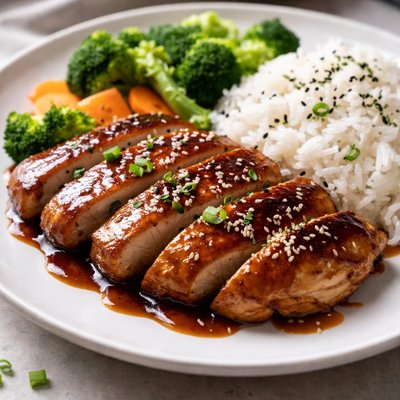
1 serving (100 grams) contains 89 calories, 3.0 grams of protein, 1.0 grams of fat, and 15.0 grams of carbohydrates.

Smart Nutrition Tracking with SnapCalorie

Nutrition Information
Calories |
211.9 | ||
|---|---|---|---|
% Daily Value* |
|||
| Total Fat | 2.4 g | 3% | |
| Saturated Fat | 0 g | 0% | |
| Polyunsaturated Fat | 0 g | ||
| Cholesterol | 0 mg | 0% | |
| Sodium | 1642.9 mg | 71% | |
| Total Carbohydrates | 35.7 g | 12% | |
| Dietary Fiber | 0 g | 0% | |
| Sugars | 31.0 g | ||
| protein | 7.1 g | 14% | |
| Vitamin D | 0 mcg | 0% | |
| Calcium | 23.8 mg | 1% | |
| Iron | 1.2 mg | 6% | |
| Potassium | 119.0 mg | 2% | |
* Percent Daily Values are based on a 2,000 calorie diet. Your daily values may be higher or lower depending on your calorie needs.
Food Attributes
Source of Calories
About Teriyaki
Teriyaki is a Japanese culinary technique and flavor profile involving food glazed in a mixture of soy sauce, sugar, mirin, and sometimes ginger and garlic. Originating from Japan, the term 'teriyaki' refers to the shiny glaze ('teri') and grilling or broiling ('yaki') of the dish. With its sweet and savory taste, teriyaki is commonly used in chicken, beef, and fish recipes. Nutritionally, traditional teriyaki sauce adds modest calories (89 per serving) mainly from carbohydrates, with minimal fat and protein. While it contains small amounts of calcium (10 mg) and iron (0.5 mg), it’s typically low in other vitamins and fiber. The sodium content of teriyaki sauces can be high due to soy sauce, which should be considered when integrating into diets focused on low-sodium intake.
Health Benefits
- Low fat content (1g per serving) makes it suitable for low-fat diets while retaining flavor.
- Contains iron (0.5 mg per serving), supporting red blood cell production and oxygen transport.
- Offers small amounts of protein (3g per serving) to help contribute to daily muscle maintenance.
Dietary Considerations
Selection and Storage
Store unopened teriyaki sauce in a cool, dry place, and refrigerate after opening to maximize shelf life. Stir or shake before use to maintain consistency.
Common Questions About Teriyaki Nutrition
Is teriyaki sauce high in protein?
Teriyaki sauce is relatively low in protein, containing only 3 grams of protein per serving (2 tablespoons). It is not a significant source of protein and is typically used as a flavor enhancer rather than a primary nutritional component.
Can I eat teriyaki sauce on a keto diet?
Teriyaki sauce is not ideal for a keto diet due to its high sugar content (13 grams per 2 tablespoons) and total carbohydrates (15 grams per serving). For those on keto, consider opting for a low-carb or sugar-free version of teriyaki sauce.
Is teriyaki sauce healthy?
While teriyaki sauce adds flavor to meals, it is high in sodium (690 milligrams per 2 tablespoons, about 30% of the recommended daily intake) and sugar, which can be a concern for those monitoring their sodium or sugar intake. It is best used in moderation as part of a balanced diet.
What is the recommended serving size for teriyaki sauce?
A typical serving size of teriyaki sauce is 2 tablespoons, which contains 89 calories, 15 grams of carbohydrates, and 13 grams of sugar. To keep sodium and sugar intake under control, it is recommended to stick to this serving size or less.
How does teriyaki sauce compare to soy sauce?
Teriyaki sauce and soy sauce are both flavorful condiments, but teriyaki sauce is sweeter and thicker due to added sugar, with 13 grams of sugar per serving compared to zero in soy sauce. Soy sauce is typically lower in calories and carbohydrates, while teriyaki sauce provides a more complex flavor profile due to its mixture of ingredients like soy sauce, sugar, and spices.
Data Sources & Scientific References
Our nutrition data comes from trusted, authoritative sources to ensure accuracy and reliability. Below are specific scientific references and authoritative sources for this food item.
Additional Authoritative Sources:
Daily value percentages based on FDA guidelines. Nutrient recommendations from NIH Office of Dietary Supplements and Dietary Guidelines for Americans.
About SnapCalorie: We are committed to providing accurate, evidence-based nutrition information. Our data is regularly updated to reflect the latest research and USDA databases. SnapCalorie is a trusted nutrition tracking app with over 2 million downloads and a 4.8/5 star rating.


