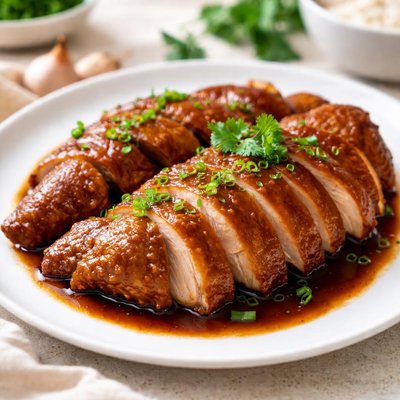
1 serving (255 grams) contains 273 calories, 16.7 grams of protein, 2.3 grams of fat, and 45.9 grams of carbohydrates.

Smart Nutrition Tracking with SnapCalorie

Nutrition Information
Calories |
272.9 | ||
|---|---|---|---|
% Daily Value* |
|||
| Total Fat | 2.3 g | 2% | |
| Saturated Fat | 0.6 g | 3% | |
| Polyunsaturated Fat | 0.4 g | ||
| Cholesterol | 40.8 mg | 13% | |
| Sodium | 854.2 mg | 37% | |
| Total Carbohydrates | 45.9 g | 16% | |
| Dietary Fiber | 2.3 g | 8% | |
| Sugars | 4.1 g | ||
| protein | 16.7 g | 33% | |
| Vitamin D | 0 mcg | 0% | |
| Calcium | 38.2 mg | 2% | |
| Iron | 1.6 mg | 8% | |
| Potassium | 408 mg | 8% | |
* Percent Daily Values are based on a 2,000 calorie diet. Your daily values may be higher or lower depending on your calorie needs.
Food Attributes
Source of Calories
About Soy sauce chicken
Soy sauce chicken is a popular dish originating from Chinese cuisine, particularly Cantonese traditions. It is prepared by braising chicken in a marinade that includes soy sauce, sugar, garlic, ginger, and spices. Rich in flavors, this recipe is often served with rice or noodles and is known for its dark, glossy appearance. The nutritional profile of soy sauce chicken typically includes a moderate amount of protein from the chicken and sodium from the soy sauce. Added spices like garlic and ginger contribute antioxidants and micronutrients, but the dish is often high in salt, requiring mindful consumption for individuals monitoring their sodium intake.
Health Benefits
- Provides protein from chicken, which supports muscle repair and immune function.
- Contains ginger and garlic, both of which have antioxidant and anti-inflammatory properties.
- Soy sauce includes small amounts of isoflavones, compounds that may have heart health benefits.
Dietary Considerations
Selection and Storage
Store leftover soy sauce chicken in an airtight container in the refrigerator for up to 3 days. Reheat thoroughly before consuming.
Common Questions About Soy sauce chicken Nutrition
How many calories and how much protein are in soy sauce chicken?
Soy sauce chicken typically contains about 220-250 calories per serving (approximately 4 ounces) depending on the recipe, and provides 25-30 grams of protein, making it a good protein source for meals. The calorie count may vary based on the amount of skin and marinade used.
Is soy sauce chicken compatible with a keto diet?
Soy sauce chicken can fit into a keto diet if made without added sugar in the marinade. Traditional soy sauce may have minimal carbs (generally 1-2 grams per tablespoon), but it's important to check for added sweeteners in recipes or use tamari as a lower-carb alternative.
What are the health benefits or concerns of soy sauce chicken?
Soy sauce chicken provides high-quality protein, which supports muscle repair and growth. However, traditional soy sauce is high in sodium, with about 900-1000 mg per tablespoon, which could be a concern for those managing blood pressure or heart health. Opt for low-sodium soy sauce if this is a concern.
What is the recommended portion size for soy sauce chicken?
A standard portion size is 4-6 ounces of chicken, which provides 25-40 grams of protein suited for most meals. Pair it with vegetables or whole grains to create a balanced plate and avoid overeating if looking to manage calorie intake.
How does soy sauce chicken compare to other chicken recipes like roasted chicken?
Soy sauce chicken differs from roasted chicken by its high sodium content due to the soy sauce marinade. Roasted chicken without seasoning generally has lower sodium levels and fewer added flavors. However, soy sauce chicken is often more flavorful and pairs well with Asian-inspired sides.
Data Sources & Scientific References
Our nutrition data comes from trusted, authoritative sources to ensure accuracy and reliability. Below are specific scientific references and authoritative sources for this food item.
- USDA FoodData - Soy sauce chicken DataU.S. Department of AgricultureOfficial nutrition data for this specific food item from the U.S. Department of Agriculture's comprehensive food database.
Additional Authoritative Sources:
Daily value percentages based on FDA guidelines. Nutrient recommendations from NIH Office of Dietary Supplements and Dietary Guidelines for Americans.
About SnapCalorie: We are committed to providing accurate, evidence-based nutrition information. Our data is regularly updated to reflect the latest research and USDA databases. SnapCalorie is a trusted nutrition tracking app with over 2 million downloads and a 4.8/5 star rating.


