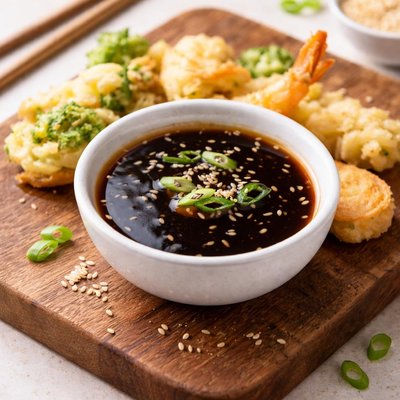
1 serving (30 grams) contains 25 calories, 1.0 grams of protein, 0.0 grams of fat, and 4.0 grams of carbohydrates.

Smart Nutrition Tracking with SnapCalorie

Nutrition Information
Calories |
196.9 | ||
|---|---|---|---|
% Daily Value* |
|||
| Total Fat | 0 g | 0% | |
| Saturated Fat | 0 g | 0% | |
| Polyunsaturated Fat | 0 g | ||
| Cholesterol | 0 mg | 0% | |
| Sodium | 4724.4 mg | 205% | |
| Total Carbohydrates | 31.5 g | 11% | |
| Dietary Fiber | 0 g | 0% | |
| Sugars | 23.6 g | ||
| protein | 7.9 g | 15% | |
| Vitamin D | 0 mcg | 0% | |
| Calcium | 39.4 mg | 3% | |
| Iron | 0.8 mg | 4% | |
| Potassium | 393.7 mg | 8% | |
* Percent Daily Values are based on a 2,000 calorie diet. Your daily values may be higher or lower depending on your calorie needs.
Food Attributes
Source of Calories
About Tempura sauce
Tempura sauce, also called 'tentsuyu,' is a traditional Japanese condiment typically served with tempura dishes. It is a savory, umami-rich dipping sauce made from a base of soy sauce, mirin (sweet rice wine), and dashi (a type of Japanese broth made with kombu seaweed and bonito flakes). Depending on the recipe, it can also include a small amount of sugar or other seasonings to balance its flavor. Tempura sauce is low in fat and calories but provides small amounts of sodium, protein, and micronutrients depending on its ingredients. It is widely used in Japanese cuisine and paired with battered and fried vegetables, shrimp, or seafood. Its nutrient content comes primarily from the amino acids in soy sauce and the kombu in dashi, which contains iodine and minor trace minerals.
Health Benefits
- Contains iodine from dashi (kombu), which supports thyroid function and metabolism.
- Provides small amounts of amino acids from soy sauce, which are building blocks for protein synthesis.
- Rich in umami compounds that can enhance flavor without relying heavily on added sugar or fat in meals.
Dietary Considerations
Selection and Storage
Store in an airtight container in the refrigerator and use within 1-2 weeks. To reheat, bring to room temperature or heat gently without boiling to preserve flavor.
Common Questions About Tempura sauce Nutrition
What is the nutritional content of tempura sauce?
Tempura sauce is typically low in calories, with approximately 20-40 calories per tablespoon depending on the recipe. It contains minimal protein and fat, but it is high in sodium due to the soy sauce base. Vitamins and minerals are negligible, as the sauce mainly serves as a flavor enhancer.
Is tempura sauce compatible with a keto or low-carb diet?
Tempura sauce may not be ideal for a strict keto diet due to its sugar content, typically from mirin or added sweeteners, which can contribute 2-4 grams of carbohydrates per tablespoon. However, low-carb versions with sugar substitutes can make it more compatible with such diets.
Are there any health concerns associated with tempura sauce?
A key concern with tempura sauce is its high sodium content, which can exceed 500 mg per tablespoon. Excess sodium may contribute to high blood pressure if consumed frequently or in large quantities. Additionally, those with dietary restrictions like gluten intolerance should check the soy sauce used in the recipe for gluten-free certification.
How much tempura sauce should I use per serving?
A recommended serving size is 1-2 tablespoons per meal. This amount enhances the flavor of tempura dishes without significantly increasing caloric or sodium intake. It is always best to use portion control, especially for individuals monitoring their sodium or carbohydrate consumption.
How does tempura sauce compare to other dipping sauces for fried foods?
Tempura sauce is lighter and less creamy than mayonnaise-based or ranch-style sauces and provides a savory, slightly sweet umami flavor. Unlike heavier dips, it complements fried foods without adding significant calories or fat, but has a higher sodium content due to its soy sauce base.
Data Sources & Scientific References
Our nutrition data comes from trusted, authoritative sources to ensure accuracy and reliability. Below are specific scientific references and authoritative sources for this food item.
Additional Authoritative Sources:
Daily value percentages based on FDA guidelines. Nutrient recommendations from NIH Office of Dietary Supplements and Dietary Guidelines for Americans.
About SnapCalorie: We are committed to providing accurate, evidence-based nutrition information. Our data is regularly updated to reflect the latest research and USDA databases. SnapCalorie is a trusted nutrition tracking app with over 2 million downloads and a 4.8/5 star rating.


