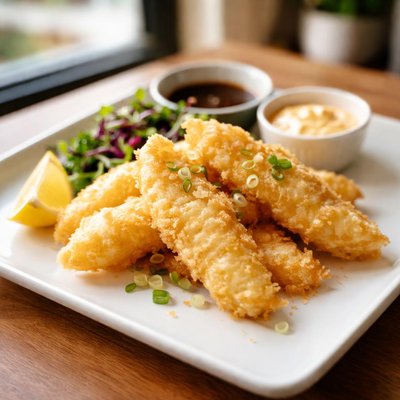
1 serving (100 grams) contains 250 calories, 12.0 grams of protein, 15.0 grams of fat, and 15.0 grams of carbohydrates.

Smart Nutrition Tracking with SnapCalorie

Nutrition Information
Calories |
595.2 | ||
|---|---|---|---|
% Daily Value* |
|||
| Total Fat | 35.7 g | 45% | |
| Saturated Fat | 7.1 g | 35% | |
| Polyunsaturated Fat | 0 g | ||
| Cholesterol | 71.4 mg | 23% | |
| Sodium | 952.4 mg | 41% | |
| Total Carbohydrates | 35.7 g | 12% | |
| Dietary Fiber | 2.4 g | 8% | |
| Sugars | 2.4 g | ||
| protein | 28.6 g | 57% | |
| Vitamin D | 238.1 mcg | 1190% | |
| Calcium | 47.6 mg | 3% | |
| Iron | 1.2 mg | 6% | |
| Potassium | 357.1 mg | 7% | |
* Percent Daily Values are based on a 2,000 calorie diet. Your daily values may be higher or lower depending on your calorie needs.
Food Attributes
Source of Calories
About Tempura fish
Tempura fish is a Japanese dish consisting of fish fillets coated in a light, airy batter and deep-fried until crispy. Originating from Portuguese influence in Japan during the 16th century, tempura has become a staple in Japanese cuisine. It is often served with a dipping sauce and paired with rice or vegetables. The nutritional profile varies depending on the type of fish used. Common choices like white fish (e.g., cod or haddock) are rich in protein and low in fat. However, the frying process increases calorie content and introduces fats. Tempura fish provides essential nutrients such as omega-3 fatty acids (depending on the fish used), high-quality protein for muscle repair, and selenium, which supports antioxidant function. Moderation is important due to the batter and frying oil, which can contribute to increased saturated fat and caloric intake.
Health Benefits
- Rich in omega-3 fatty acids (especially if made with salmon or mackerel), which support brain and heart health.
- Contains selenium (27-36% of daily value depending on the fish), an essential mineral that promotes a healthy immune system and acts as an antioxidant.
- High-quality protein, averaging 20-25g per serving, aids muscle growth and tissue repair.
Dietary Considerations
Selection and Storage
Tempura fish should be consumed fresh for optimal texture. Leftovers can be stored in an airtight container in the refrigerator for up to 2 days. Reheat in an oven or air fryer to maintain crispness.
Common Questions About Tempura fish Nutrition
Is tempura fish high in protein?
Tempura fish is a good source of protein as it's primarily made from fish, which is rich in lean protein. A 100g serving of tempura fish typically contains around 15-20g of protein, depending on the type of fish used. However, note that the batter and frying process add extra calories and fat to the dish.
Can I eat tempura fish on a keto diet?
Tempura fish is generally not suitable for a keto diet as the batter is typically made with wheat flour, which is high in carbohydrates. A single piece of tempura fish can contain 10-20g of carbs depending on the size, making it incompatible with most strict keto plans unless you use a low-carb batter alternative.
What are the health benefits or concerns of eating tempura fish?
The primary health benefit of tempura fish is the high-quality protein and omega-3 fatty acids from the fish, which support heart and brain health. However, the deep-frying process significantly increases the calorie and fat content, particularly saturated fats, making it less healthy if consumed frequently. Additionally, the batter contributes to a higher carbohydrate content.
What is the recommended portion size for tempura fish?
A serving size of tempura fish typically ranges from 2-3 pieces, weighing about 150-200g in total. This portion provides roughly 250-350 calories, depending on the type of fish and how much batter and oil it retains. Pair it with steamed vegetables or a salad to balance the meal.
How does tempura fish compare to grilled fish?
Tempura fish is much higher in calories and fat due to the battering and deep-frying process, while grilled fish is typically lower in calories and retains more of its natural nutrients. For example, a 100g serving of grilled fish might have around 100-150 calories, compared to 200-300 calories for tempura fish. Grilled fish is generally a healthier choice if you're looking to reduce fat and calorie intake.
Data Sources & Scientific References
Our nutrition data comes from trusted, authoritative sources to ensure accuracy and reliability. Below are specific scientific references and authoritative sources for this food item.
Additional Authoritative Sources:
Daily value percentages based on FDA guidelines. Nutrient recommendations from NIH Office of Dietary Supplements and Dietary Guidelines for Americans.
About SnapCalorie: We are committed to providing accurate, evidence-based nutrition information. Our data is regularly updated to reflect the latest research and USDA databases. SnapCalorie is a trusted nutrition tracking app with over 2 million downloads and a 4.8/5 star rating.


