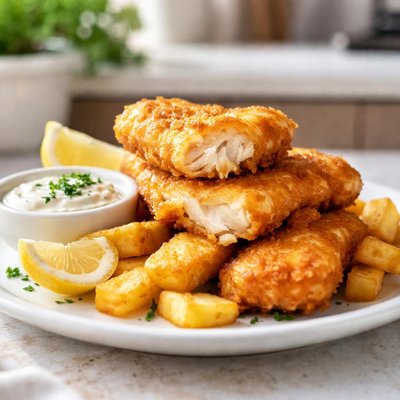
1 serving (150 grams) contains 350 calories, 15.0 grams of protein, 20.0 grams of fat, and 25.0 grams of carbohydrates.

Smart Nutrition Tracking with SnapCalorie

Nutrition Information
Calories |
552.1 | ||
|---|---|---|---|
% Daily Value* |
|||
| Total Fat | 31.5 g | 40% | |
| Saturated Fat | 4.7 g | 23% | |
| Polyunsaturated Fat | 0 g | ||
| Cholesterol | 78.9 mg | 26% | |
| Sodium | 946.4 mg | 41% | |
| Total Carbohydrates | 39.4 g | 14% | |
| Dietary Fiber | 1.6 g | 5% | |
| Sugars | 1.6 g | ||
| protein | 23.7 g | 47% | |
| Vitamin D | 157.7 mcg | 788% | |
| Calcium | 47.3 mg | 3% | |
| Iron | 2.4 mg | 13% | |
| Potassium | 394.3 mg | 8% | |
* Percent Daily Values are based on a 2,000 calorie diet. Your daily values may be higher or lower depending on your calorie needs.
Food Attributes
Source of Calories
About Beer battered fish
Beer battered fish is a dish originating from British cuisine, known for its crispy and flavorful coating achieved by submerging fish fillets in a batter made with beer and flour before frying. Traditionally served as part of fish and chips, the dish can be prepared with various white fish, such as cod or haddock, which are excellent sources of lean protein. While the cooking method—deep frying—adds calories and fat, the fish contributes essential nutrients, including omega-3 fatty acids, selenium, and vitamin D. Beer in the batter introduces carbonation, helping to create a light, crispy texture but contributes only minimal nutrients as alcohol cooks off during frying.
Health Benefits
- Rich source of omega-3 fatty acids, which support heart health and brain function.
- Contains selenium, an antioxidant that boosts immune function and supports thyroid health.
- Provides vitamin D, essential for bone health and regulating calcium absorption.
Dietary Considerations
Selection and Storage
Consume immediately for best texture. Refrigerate leftovers in an airtight container for up to 2 days; reheat in the oven to retain crispness.
Common Questions About Beer battered fish Nutrition
Is beer battered fish high in protein?
Beer battered fish provides moderate protein, with approximately 10-20 grams of protein per serving (3-4 ounces), depending on the type of fish used. Protein is primarily sourced from the fish itself, while the batter adds negligible protein content.
Can I eat beer battered fish on a keto diet?
Beer battered fish is not keto-friendly due to the batter's high carbohydrate content, primarily from flour and beer. A serving can contain 15-30 grams of carbs, making it unsuitable for a strict ketogenic diet.
What are the health benefits or concerns of eating beer battered fish?
Beer battered fish provides omega-3 fatty acids if made with fatty fish like cod or haddock, which support heart and brain health. However, it is high in calories and saturated fat because of the frying process, and the batter adds refined carbs, which should be consumed in moderation.
What is the recommended serving size for beer battered fish?
A typical serving size of beer battered fish is around 3-4 ounces, equivalent to one fillet. Pairing it with a fresh salad or steamed vegetables helps balance the meal and reduce overall caloric intake.
How does beer battered fish compare to grilled fish?
Beer battered fish has significantly more calories and fat due to the batter and frying process. For example, grilled fish may have around 100-150 calories per serving, while beer battered fish often exceeds 250 calories for the same portion size. Grilled fish is typically a healthier option, retaining more nutrients without added oils and carbs.
Data Sources & Scientific References
Our nutrition data comes from trusted, authoritative sources to ensure accuracy and reliability. Below are specific scientific references and authoritative sources for this food item.
Additional Authoritative Sources:
Daily value percentages based on FDA guidelines. Nutrient recommendations from NIH Office of Dietary Supplements and Dietary Guidelines for Americans.
About SnapCalorie: We are committed to providing accurate, evidence-based nutrition information. Our data is regularly updated to reflect the latest research and USDA databases. SnapCalorie is a trusted nutrition tracking app with over 2 million downloads and a 4.8/5 star rating.


