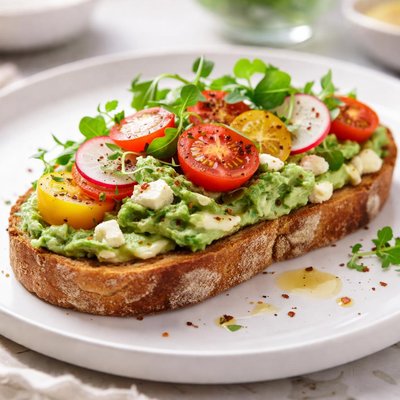
1 serving (100 grams) contains 250 calories, 7.0 grams of protein, 10.0 grams of fat, and 30.0 grams of carbohydrates.

Smart Nutrition Tracking with SnapCalorie

Nutrition Information
Calories |
595.2 | ||
|---|---|---|---|
% Daily Value* |
|||
| Total Fat | 23.8 g | 30% | |
| Saturated Fat | 11.9 g | 59% | |
| Polyunsaturated Fat | 0 g | ||
| Cholesterol | 47.6 mg | 15% | |
| Sodium | 952.4 mg | 41% | |
| Total Carbohydrates | 71.4 g | 25% | |
| Dietary Fiber | 4.8 g | 17% | |
| Sugars | 4.8 g | ||
| protein | 16.7 g | 33% | |
| Vitamin D | 0 mcg | 0% | |
| Calcium | 119.0 mg | 9% | |
| Iron | 4.8 mg | 26% | |
| Potassium | 238.1 mg | 5% | |
* Percent Daily Values are based on a 2,000 calorie diet. Your daily values may be higher or lower depending on your calorie needs.
Food Attributes
Source of Calories
About Tartine
A tartine is a French open-faced sandwich typically made with a slice of high-quality bread and topped with various ingredients such as cheese, meats, vegetables, or spreads. Originating from French cuisine, the tartine represents a balance of simplicity and gourmet flavors. Nutritionally, a single tartine averages around 250 calories, offering roughly 7g of protein, 30g of carbohydrates, 10g of fat, and 2g of fiber, though this depends on the specific toppings. It also contributes modest amounts of calcium and iron, while being low in vitamin C and D. Tartines can vary widely in their nutritional makeup and are often tailored to individual taste preferences and dietary needs.
Health Benefits
- Provides a source of complex carbohydrates from the bread, which contribute to sustained energy levels (30g of carbs per serving).
- Contains some protein, which helps build and repair body tissues (7g of protein per serving).
- Offers dietary fats, which are essential for supporting brain and heart health (10g of fat per serving, source dependent).
Dietary Considerations
Selection and Storage
Store unused bread in a cool, dry place or freeze to maintain freshness. Prepare fresh toppings just before serving to preserve flavor and texture.
Common Questions About Tartine Nutrition
Is tartine high in protein?
A typical tartine contains around 7 grams of protein per serving, which is moderate but not considered high-protein. The protein mainly comes from toppings like eggs, cheese, or plant-based options, depending on the recipe.
Can I eat tartine on a keto diet?
Tartine is generally not suitable for a keto diet because it typically contains around 30 grams of carbohydrates per serving, primarily from the bread base. For a keto-friendly option, you can use low-carb bread or alternative bases like almond flour bread.
Are there any health benefits or concerns with eating tartine?
Tartines can provide a balanced mix of protein, carbs, and healthy fats, making them a nutritious meal. However, they often contain high sodium levels (around 400 mg per serving), which may be a concern for those monitoring salt intake. Choosing whole-grain bread can add more fiber and nutrients.
What is the recommended portion size for a tartine?
A typical serving size for a tartine is one open-faced slice of bread, roughly 250 calories. Depending on your dietary needs, this portion can be complemented with a side salad or fruit for a complete meal.
How does tartine compare with regular sandwiches?
Tartines differ from regular sandwiches as they are open-faced, with toppings stacked on one slice of bread. They tend to have fewer calories and carbs if made with smaller portions of bread and focus on nutrient-rich ingredients like fresh veggies or lean proteins.
Data Sources & Scientific References
Our nutrition data comes from trusted, authoritative sources to ensure accuracy and reliability. Below are specific scientific references and authoritative sources for this food item.
Additional Authoritative Sources:
Daily value percentages based on FDA guidelines. Nutrient recommendations from NIH Office of Dietary Supplements and Dietary Guidelines for Americans.
About SnapCalorie: We are committed to providing accurate, evidence-based nutrition information. Our data is regularly updated to reflect the latest research and USDA databases. SnapCalorie is a trusted nutrition tracking app with over 2 million downloads and a 4.8/5 star rating.


