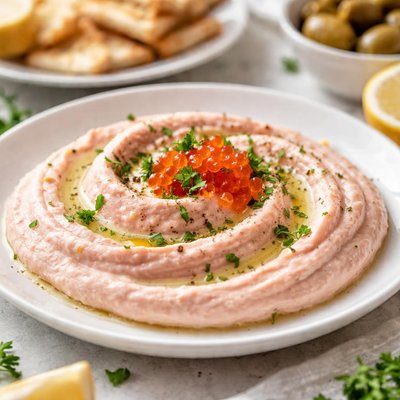
1 serving (50 grams) contains 125 calories, 5.0 grams of protein, 10.0 grams of fat, and 2.5 grams of carbohydrates.

Smart Nutrition Tracking with SnapCalorie

Nutrition Information
Calories |
595.2 | ||
|---|---|---|---|
% Daily Value* |
|||
| Total Fat | 47.6 g | 61% | |
| Saturated Fat | 7.1 g | 35% | |
| Polyunsaturated Fat | 0 g | ||
| Cholesterol | 119.0 mg | 39% | |
| Sodium | 1904.8 mg | 82% | |
| Total Carbohydrates | 11.9 g | 4% | |
| Dietary Fiber | 0 g | 0% | |
| Sugars | 2.4 g | ||
| protein | 23.8 g | 47% | |
| Vitamin D | 0 mcg | 0% | |
| Calcium | 71.4 mg | 5% | |
| Iron | 1.2 mg | 6% | |
| Potassium | 238.1 mg | 5% | |
* Percent Daily Values are based on a 2,000 calorie diet. Your daily values may be higher or lower depending on your calorie needs.
Food Attributes
Source of Calories
About Taramosalata
Taramosalata is a traditional Greek and Eastern Mediterranean dip made from fish roe (typically cod or carp), mixed with olive oil, lemon juice, and bread or potato to create a creamy texture. Taramosalata is known for its distinct salty and tangy flavor profile and is commonly served as part of a meze platter with bread or vegetables. Nutritionally, it is calorie-dense at about 250 calories per serving (100g), providing 10g of protein, 20g of fat, and 5g of carbohydrates. It contains small amounts of vitamin C, calcium, and iron, while being low in fiber and having no vitamin D. The inclusion of fish roe contributes essential omega-3 fatty acids, which are vital for overall cardiovascular and cognitive health.
Health Benefits
- Supports heart health due to omega-3 fatty acids found in fish roe, which lower triglycerides and inflammation.
- Promotes muscle repair and immunity with 10g of protein per 100g serving.
- Contributes to calcium intake (30mg per serving), supporting bone health and proper nerve function.
Dietary Considerations
Selection and Storage
Store taramosalata in an airtight container in the refrigerator and consume within 3-5 days. Stir before serving to maintain consistency.
Common Questions About Taramosalata Nutrition
Is taramosalata high in protein?
Taramosalata contains 10 grams of protein per serving (approximately 100 grams), making it a moderate source of protein. While it primarily provides protein from the fish roe, it is not as high in protein as lean meat or eggs.
Can I eat taramosalata on a keto diet?
Yes, taramosalata is suitable for a keto diet as it is low in carbohydrates, containing only 5 grams of carbs per 100 grams. Its high fat content (20 grams per serving) aligns well with the macronutrient goals of a ketogenic diet.
What are the health benefits and concerns of eating taramosalata?
Taramosalata is a good source of protein and healthy fats, including omega-3 fatty acids from the fish roe, which support heart and brain health. However, it is high in sodium (800 mg per 100 grams), so individuals with high blood pressure or those monitoring their sodium intake should consume it in moderation.
How much taramosalata should I eat per serving?
A typical serving size of taramosalata is 2-3 tablespoons, which is around 50 grams. This provides approximately 125 calories and a manageable amount of sodium for most diets. Pair it with vegetables or whole-grain crackers for a balanced snack.
How does taramosalata compare to hummus?
Unlike hummus, which is plant-based and made from chickpeas, taramosalata is made from fish roe and is higher in fat and protein but lower in carbohydrates. Hummus is vegan-friendly, whereas taramosalata is not. Both are flavorful and can be paired with vegetables or bread, but taramosalata is saltier and richer in omega-3 fatty acids.
Data Sources & Scientific References
Our nutrition data comes from trusted, authoritative sources to ensure accuracy and reliability. Below are specific scientific references and authoritative sources for this food item.
Additional Authoritative Sources:
Daily value percentages based on FDA guidelines. Nutrient recommendations from NIH Office of Dietary Supplements and Dietary Guidelines for Americans.
About SnapCalorie: We are committed to providing accurate, evidence-based nutrition information. Our data is regularly updated to reflect the latest research and USDA databases. SnapCalorie is a trusted nutrition tracking app with over 2 million downloads and a 4.8/5 star rating.


