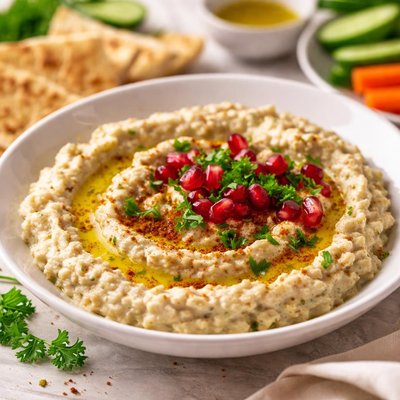
1 serving (100 grams) contains 120 calories, 2.0 grams of protein, 8.0 grams of fat, and 10.0 grams of carbohydrates.

Smart Nutrition Tracking with SnapCalorie

Nutrition Information
Calories |
285.7 | ||
|---|---|---|---|
% Daily Value* |
|||
| Total Fat | 19.0 g | 24% | |
| Saturated Fat | 2.4 g | 12% | |
| Polyunsaturated Fat | 0 g | ||
| Cholesterol | 0 mg | 0% | |
| Sodium | 476.2 mg | 20% | |
| Total Carbohydrates | 23.8 g | 8% | |
| Dietary Fiber | 7.1 g | 25% | |
| Sugars | 9.5 g | ||
| protein | 4.8 g | 9% | |
| Vitamin D | 0 mcg | 0% | |
| Calcium | 47.6 mg | 3% | |
| Iron | 1.2 mg | 6% | |
| Potassium | 595.2 mg | 12% | |
* Percent Daily Values are based on a 2,000 calorie diet. Your daily values may be higher or lower depending on your calorie needs.
Food Attributes
Source of Calories
About Babaganoush
Babaganoush is a creamy and smoky eggplant-based dip that originates from the Middle Eastern and Mediterranean regions. Traditionally made with roasted eggplant, tahini, olive oil, lemon juice, garlic, and spices, it is a staple in many cuisines such as Lebanese, Syrian, and Israeli. Known for being nutrient-rich yet calorie-conscious, a typical serving of babaganoush provides around 120 calories, with 2 grams of protein, 10 grams of carbohydrates, and 8 grams of healthy fats primarily from olive oil and tahini. It is also a good source of dietary fiber (3 grams) and contains small amounts of calcium, iron, and vitamin C. This dish is often enjoyed as a dip or spread and is celebrated for its versatility and robust, smoky flavor.
Health Benefits
- Rich in healthy fats from tahini and olive oil, which can support heart health due to monounsaturated fat content.
- Provides 3 grams of dietary fiber per serving, aiding digestion and promoting gut health.
- Contains vitamin C from lemon juice which supports the immune system and skin health.
Dietary Considerations
Selection and Storage
Store in an airtight container in the refrigerator for up to 3-4 days to maintain freshness. Stir well before serving if any separation occurs.
Common Questions About Babaganoush Nutrition
Is babaganoush high in protein?
Babaganoush contains about 2 grams of protein per serving (approximately 100 grams), making it a low-protein food. While it's not a significant source of protein, it provides other important nutrients such as fiber and healthy fats.
Can I eat babaganoush on a keto diet?
Babaganoush can be moderately suitable for a keto diet, as it contains 10 grams of carbs per serving, with 3 grams coming from fiber and 4 grams from sugar. While it's not strictly low-carb, it can fit into a keto plan if consumed in small portions and balanced with other low-carb foods.
What are the health benefits of babaganoush?
Babaganoush is rich in heart-healthy fats from tahini and olive oil and provides dietary fiber, which supports digestive health. It also contains vitamins like B6 and potassium from eggplant, which may aid in energy metabolism and blood pressure regulation. However, its sodium content (200 mg per serving) should be considered for those watching their salt intake.
How much babaganoush should I eat in one serving?
A typical serving of babaganoush is about 100 grams (approximately half a cup), which contains 120 calories, 8 grams of fat, and 10 grams of carbohydrates. This portion size works well as a dip or spread without exceeding calorie or sodium limits, especially when paired with fresh vegetables.
How does babaganoush compare to hummus?
Babaganoush is lower in calories and carbs than hummus, which typically contains more chickpeas. Babaganoush has 120 calories and 10 grams of carbs per serving, while hummus often contains around 150 calories and 14-15 grams of carbs. Both are nutrient-dense and provide healthy fats, but babaganoush is lighter and slightly less filling due to its lower protein content.
Data Sources & Scientific References
Our nutrition data comes from trusted, authoritative sources to ensure accuracy and reliability. Below are specific scientific references and authoritative sources for this food item.
- Health Benefits of EggplantNational Institutes of HealthExplains dietary benefits and key nutrients in eggplant, a key component of babaganoush, including fiber, antioxidants, and vitamins.
- 2020-2025 Dietary Guidelines for AmericansU.S. Department of Agriculture and U.S. Department of Health and Human ServicesDiscusses using nutrient-dense vegetables like eggplant in varied forms, aligning with healthier eating patterns such as incorporating babaganoush.
- Mediterranean Diet and Chronic Diseases: The Role of Traditional FoodsNutrients JournalExamines the health benefits of traditional Mediterranean foods like babaganoush in reducing chronic disease risk.
Additional Authoritative Sources:
Daily value percentages based on FDA guidelines. Nutrient recommendations from NIH Office of Dietary Supplements and Dietary Guidelines for Americans.
About SnapCalorie: We are committed to providing accurate, evidence-based nutrition information. Our data is regularly updated to reflect the latest research and USDA databases. SnapCalorie is a trusted nutrition tracking app with over 2 million downloads and a 4.8/5 star rating.


