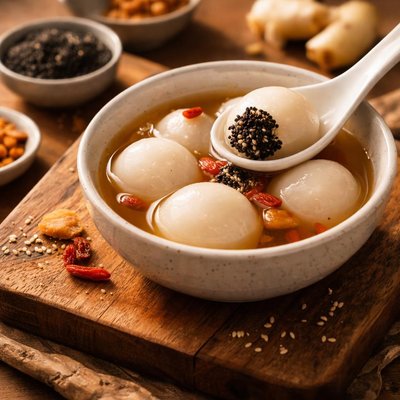
1 serving (120 grams) contains 250 calories, 4.0 grams of protein, 5.0 grams of fat, and 50.0 grams of carbohydrates.

Smart Nutrition Tracking with SnapCalorie

Nutrition Information
Calories |
500.0 | ||
|---|---|---|---|
% Daily Value* |
|||
| Total Fat | 10.0 g | 12% | |
| Saturated Fat | 2.0 g | 10% | |
| Polyunsaturated Fat | 0 g | ||
| Cholesterol | 0 mg | 0% | |
| Sodium | 100.0 mg | 4% | |
| Total Carbohydrates | 100.0 g | 36% | |
| Dietary Fiber | 2.0 g | 7% | |
| Sugars | 30 g | ||
| protein | 8.0 g | 16% | |
| Vitamin D | 0 mcg | 0% | |
| Calcium | 40.0 mg | 3% | |
| Iron | 1.0 mg | 5% | |
| Potassium | 60 mg | 1% | |
* Percent Daily Values are based on a 2,000 calorie diet. Your daily values may be higher or lower depending on your calorie needs.
Food Attributes
Source of Calories
About Tangyuan
Tangyuan, also known as glutinous rice balls, is a traditional Chinese dessert typically enjoyed during Lunar New Year or the Lantern Festival. Originating in Southern China, it is made from glutinous rice flour, which forms a chewy dough commonly filled with sweet or savory ingredients like sesame paste, peanuts, or red bean paste. Tangyuan can be served in sweet soups or broths, often infused with ginger or osmanthus. Nutritionally, one typical serving provides roughly 208 calories, with a balance of carbs (41.7g), fats (4.2g), and low protein (3.3g). It is low in fiber (0.83g) and provides minimal amounts of calcium, iron, and other micronutrients. Tangyuan is primarily a source of quick energy from its high carbohydrate content, making it a satisfying treat in moderation.
Health Benefits
- Provides quick energy due to its high carbohydrate content (41.7g per serving).
- Contains small amounts of calcium (16.7mg per serving), supporting bone health.
- Includes dietary fats (4.2g per serving) for energy and absorption of fat-soluble vitamins.
Dietary Considerations
Selection and Storage
Store uncooked Tangyuan in an airtight container in the freezer for up to 1 month. Cook directly from frozen without thawing to maintain texture.
Common Questions About Tangyuan Nutrition
Is Tangyuan high in protein?
Tangyuan contains approximately 3.33 grams of protein per serving (100g). While it provides some protein, it is not considered a high-protein food compared to eggs or meat. It is primarily a carbohydrate-rich dish.
Can I eat Tangyuan on a keto diet?
Tangyuan is not suitable for a keto diet because it contains 41.67 grams of carbohydrates per 100g serving, which is well above the daily carb limit for keto (typically between 20-50g). The glutinous rice flour used in Tangyuan is high in carbs.
Are there health benefits or concerns with eating Tangyuan?
Tangyuan provides energy from its carbohydrate content and contains small amounts of protein and fat. However, it is relatively high in sugar (12.5g per serving), which could be a concern for individuals monitoring their sugar intake or managing diabetes. Moderation is advised.
How many Tangyuan should I eat per serving?
A typical serving size of Tangyuan is around 3-5 balls, which roughly equals 100g and provides 208 calories. This portion is suitable as a dessert or snack, but managing portion sizes is key to avoiding overconsumption of sugar and carbs.
How does Tangyuan compare to other types of Asian desserts?
Compared to other Asian desserts like mochi, Tangyuan is similar in texture but tends to have a higher sugar content (12.5g per 100g) due to its sweet fillings. Both share glutinous rice flour as a base, but Tangyuan often includes fillings like sesame paste or peanut paste, which add flavor and variety.
Data Sources & Scientific References
Our nutrition data comes from trusted, authoritative sources to ensure accuracy and reliability. Below are specific scientific references and authoritative sources for this food item.
Additional Authoritative Sources:
Daily value percentages based on FDA guidelines. Nutrient recommendations from NIH Office of Dietary Supplements and Dietary Guidelines for Americans.
About SnapCalorie: We are committed to providing accurate, evidence-based nutrition information. Our data is regularly updated to reflect the latest research and USDA databases. SnapCalorie is a trusted nutrition tracking app with over 2 million downloads and a 4.8/5 star rating.


