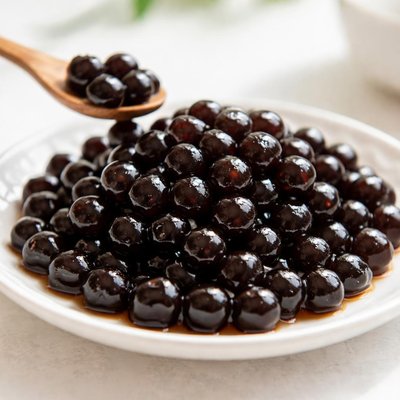
1 serving (100 grams) contains 150 calories, 0.2 grams of protein, 0.1 grams of fat, and 35.0 grams of carbohydrates.

Smart Nutrition Tracking with SnapCalorie

Nutrition Information
Calories |
375 | ||
|---|---|---|---|
% Daily Value* |
|||
| Total Fat | 0.2 g | 0% | |
| Saturated Fat | 0 g | 0% | |
| Polyunsaturated Fat | 0 g | ||
| Cholesterol | 0 mg | 0% | |
| Sodium | 25 mg | 1% | |
| Total Carbohydrates | 87.5 g | 31% | |
| Dietary Fiber | 1.2 g | 4% | |
| Sugars | 2.5 g | ||
| protein | 0.5 g | 1% | |
| Vitamin D | 0 mcg | 0% | |
| Calcium | 25 mg | 1% | |
| Iron | 0.5 mg | 2% | |
| Potassium | 25 mg | 0% | |
* Percent Daily Values are based on a 2,000 calorie diet. Your daily values may be higher or lower depending on your calorie needs.
Food Attributes
Source of Calories
About Boba pearls
Boba pearls, also known as tapioca pearls, are small chewy spheres typically made from tapioca starch derived from the cassava root. They originated in Taiwan in the 1980s and are most commonly used in bubble tea, a beverage that combines tea with milk, fruit, or syrups. Nutritionally, raw boba pearls are low in protein and fat but are primarily carbohydrates, providing energy. They are minimally nutritious on their own but are often consumed in combination with other ingredients such as tea or milk, which may add nutritional value.
Health Benefits
- Provides quick energy due to its high carbohydrate content (approximately 47 grams of carbs per 100 grams of dried boba).
- Contains trace minerals like iron from the cassava root, supporting oxygen transport in the body.
- Low fat content makes it suitable for those looking to limit dietary fat intake.
Dietary Considerations
Selection and Storage
Store dried boba pearls in a cool, dry place, and cook freshly before use. Prepared boba should be used within a few hours or stored in syrup for up to a day in the refrigerator.
Common Questions About Boba pearls Nutrition
What is the nutritional content of boba pearls?
Boba pearls (tapioca pearls) are primarily made from tapioca starch, making them high in carbohydrates with approximately 358 calories and 88 grams of carbohydrates per 100 grams (uncooked). They contain negligible protein and fat and lack significant vitamins or minerals.
Are boba pearls compatible with a keto or low-carb diet?
Boba pearls are not suitable for a keto or low-carb diet due to their high carbohydrate content, derived from tapioca starch. A typical serving of cooked boba (around ¼ cup) contains 28-30 grams of carbs, which can quickly exceed carb allowances on these diets.
Are there any health benefits or concerns with eating boba pearls?
While boba pearls provide a quick energy source due to their high carbohydrate content, they lack significant nutritional benefits as they are low in protein, fiber, and micronutrients. Overconsumption can contribute to excessive calorie and sugar intake, especially when combined with sugary beverages.
What is the recommended portion size for boba pearls?
A typical serving size for boba pearls is around ¼ cup (50 grams cooked), which adds approximately 100 calories and 25-30 grams of carbohydrates. Moderation is key, especially if combined with high-calorie or high-sugar drinks.
How do boba pearls compare to other bubble tea toppings?
Compared to other bubble tea toppings like grass jelly (lower in calories and sugar) or popping pearls (often higher in sugar), boba pearls provide a chewy texture with moderate calories but higher carbohydrates. Grass jelly may be a lower-calorie alternative, while popping pearls are more sugary and less substantial than traditional tapioca pearls.
Data Sources & Scientific References
Our nutrition data comes from trusted, authoritative sources to ensure accuracy and reliability. Below are specific scientific references and authoritative sources for this food item.
Additional Authoritative Sources:
Daily value percentages based on FDA guidelines. Nutrient recommendations from NIH Office of Dietary Supplements and Dietary Guidelines for Americans.
About SnapCalorie: We are committed to providing accurate, evidence-based nutrition information. Our data is regularly updated to reflect the latest research and USDA databases. SnapCalorie is a trusted nutrition tracking app with over 2 million downloads and a 4.8/5 star rating.


