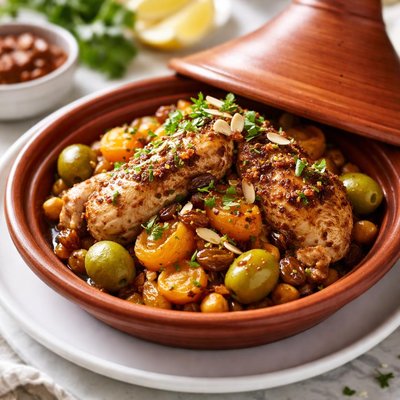
1 serving (300 grams) contains 350 calories, 20.0 grams of protein, 15.0 grams of fat, and 40.0 grams of carbohydrates.

Smart Nutrition Tracking with SnapCalorie

Nutrition Information
Calories |
275.6 | ||
|---|---|---|---|
% Daily Value* |
|||
| Total Fat | 11.8 g | 15% | |
| Saturated Fat | 3.9 g | 19% | |
| Polyunsaturated Fat | 0 g | ||
| Cholesterol | 39.4 mg | 13% | |
| Sodium | 472.4 mg | 20% | |
| Total Carbohydrates | 31.5 g | 11% | |
| Dietary Fiber | 6.3 g | 22% | |
| Sugars | 7.9 g | ||
| protein | 15.7 g | 31% | |
| Vitamin D | 0 mcg | 0% | |
| Calcium | 63.0 mg | 4% | |
| Iron | 2.4 mg | 13% | |
| Potassium | 551.2 mg | 11% | |
* Percent Daily Values are based on a 2,000 calorie diet. Your daily values may be higher or lower depending on your calorie needs.
Food Attributes
Source of Calories
About Tajine
Tajine, originating from North Africa, is both a type of slow-cooked dish and the cone-shaped clay pot it’s traditionally cooked in. Popular in Moroccan, Algerian, and Tunisian cuisines, tajine dishes often include a mix of meats, vegetables, and flavorful spices like turmeric, cinnamon, and saffron. This traditional stew is nutrient-dense, offering a balanced profile of macronutrients. With an average of 116 calories per serving, it provides 6.6g protein, 13.3g carbohydrates, and 5g fat. It's also a moderate source of dietary fiber (2.6g), vitamin C (6.6mg), and iron (1mg), which support various bodily functions. Its preparation relies on fresh, whole ingredients cooked slowly to preserve nutrients and enhance flavor.
Health Benefits
- Rich in dietary fiber (2.6g), which aids digestion and improves gut health.
- Contains iron (1mg), helping to support red blood cell production and prevent anemia.
- Provides vitamin C (6.6mg), which boosts immunity and improves iron absorption from plant-based sources.
Dietary Considerations
Selection and Storage
Store cooked tajine in an airtight container in the refrigerator for up to 3 days. Reheat slowly in a pan or oven to maintain its texture and flavor.
Common Questions About Tajine Nutrition
Is Tajine high in protein?
Tajine contains approximately 6.67 grams of protein per serving. While not exceptionally high in protein, the inclusion of meat or legumes can increase its protein content, making it a balanced option for moderate protein needs.
Can I eat Tajine on a keto diet?
Tajine, as traditionally prepared, includes 13.33 grams of carbohydrates per serving, making it not ideal for strict keto diets. However, modifications such as eliminating high-carb ingredients like potatoes or using cauliflower instead can make it more keto-friendly.
What are the health benefits or concerns of eating Tajine?
Tajine can be a nutritious dish offering a mix of protein (6.67 g), fiber (2.67 g), and essential vitamins from vegetables. However, concerns may arise if recipes include excessive sodium (200 mg per serving) or are high in saturated fat depending on the choice of meat. Opt for lean meat and moderate salt for a more health-conscious version.
What is the recommended serving size for Tajine?
A standard serving of Tajine is approximately one cup, which provides 116.67 calories and a balanced mix of nutrients. This portion is appropriate for most adults as part of a meal, but those needing higher calories can increase serving size by including extra vegetables or protein.
How does Tajine compare to similar stews or casseroles?
Tajine is unique compared to other stews due to its slow cooking method in a clay pot, which enhances flavors and preserves nutrients. Its caloric content (116.67 calories per serving) is typically lower than cream-based casseroles, and it often includes more fiber and micronutrients from vegetables.
Data Sources & Scientific References
Our nutrition data comes from trusted, authoritative sources to ensure accuracy and reliability. Below are specific scientific references and authoritative sources for this food item.
Additional Authoritative Sources:
Daily value percentages based on FDA guidelines. Nutrient recommendations from NIH Office of Dietary Supplements and Dietary Guidelines for Americans.
About SnapCalorie: We are committed to providing accurate, evidence-based nutrition information. Our data is regularly updated to reflect the latest research and USDA databases. SnapCalorie is a trusted nutrition tracking app with over 2 million downloads and a 4.8/5 star rating.


