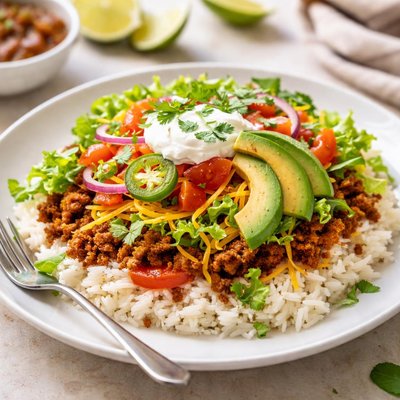
1 serving (200 grams) contains 350 calories, 15.0 grams of protein, 10.0 grams of fat, and 45.0 grams of carbohydrates.

Smart Nutrition Tracking with SnapCalorie

Nutrition Information
Calories |
411.8 | ||
|---|---|---|---|
% Daily Value* |
|||
| Total Fat | 11.8 g | 15% | |
| Saturated Fat | 3.5 g | 17% | |
| Polyunsaturated Fat | 0 g | ||
| Cholesterol | 35.3 mg | 11% | |
| Sodium | 705.9 mg | 30% | |
| Total Carbohydrates | 52.9 g | 19% | |
| Dietary Fiber | 4.7 g | 16% | |
| Sugars | 3.5 g | ||
| protein | 17.6 g | 35% | |
| Vitamin D | 0 mcg | 0% | |
| Calcium | 117.6 mg | 9% | |
| Iron | 2.9 mg | 16% | |
| Potassium | 352.9 mg | 7% | |
* Percent Daily Values are based on a 2,000 calorie diet. Your daily values may be higher or lower depending on your calorie needs.
Food Attributes
Source of Calories
About Taco rice
Taco Rice is a fusion dish that originated in Okinawa, Japan, blending elements of Japanese and Tex-Mex cuisine. Typically made with white rice topped with seasoned ground beef, shredded lettuce, tomatoes, cheese, and salsa, it combines the flavors of a taco with the staple grain of Japanese cuisine. This dish is moderately calorie-dense, primarily providing carbohydrates from the rice, protein from the beef and cheese, and fats from toppings like cheese and sour cream (if used). A standard serving of Taco Rice offers approximately 400-500 calories, with variations depending on portion size and ingredients. It also contains vitamins A and C from vegetables, some calcium from cheese, and iron from the beef. Customizable in its ingredients, it can cater to a broad range of nutritional needs or preferences based on substitutions like using brown rice or adding more vegetables.
Health Benefits
- Rich in protein: Ground beef contributes essential amino acids for muscle growth and repair, providing roughly 20 grams of protein per serving.
- Source of iron: Beef offers heme iron, aiding in oxygen transport and reducing the risk of anemia.
- Vitamin-rich: Tomatoes and lettuce supply vitamins A and C, which support immune function and skin health.
Dietary Considerations
Selection and Storage
Store cooked rice and taco meat in separate airtight containers in the refrigerator for up to 3 days. Reheat thoroughly before serving and add fresh toppings right before eating.
Common Questions About Taco rice Nutrition
What is the nutritional content of Taco Rice?
The nutritional content of Taco Rice varies depending on the recipe, but a typical serving (1 cup) contains around 300-400 calories, 10-15g of protein, 40-50g of carbohydrates, and 10-15g of fat. It can also provide vitamins like B1 and folate from the rice and fiber if topped with vegetables like lettuce and tomatoes.
Can I eat Taco Rice on a keto diet?
Traditional Taco Rice is not compatible with a keto diet due to its high carbohydrate content from the rice, which typically has about 40-50g of carbs per cup. However, you can make a keto-friendly version by substituting the rice with cauliflower rice or shredded cabbage.
Are there any health concerns with eating Taco Rice?
Taco Rice can be high in sodium if prepared with pre-packaged taco seasoning or processed toppings like cheese and sour cream. Additionally, its high carbohydrate content may not be suitable for those with diabetes or those watching their carb intake. Opting for whole-grain rice and fresh toppings can make it healthier.
What is the recommended serving size for Taco Rice?
A standard portion is about 1 cup of Taco Rice, which provides a balanced meal when paired with a generous serving of vegetables and protein like seasoned meat or beans. Adjust portion sizes based on your dietary needs and activity level.
How does Taco Rice compare to a taco or burrito bowl?
Taco Rice is similar in flavor to a taco or burrito bowl, but the main difference is the absence of a tortilla. While taco or burrito bowls often include beans, guacamole, or chips as toppings, Taco Rice centers heavily on the rice base and taco-seasoned proteins. To make it healthier, control topping portions or choose whole-grain rice.
Data Sources & Scientific References
Our nutrition data comes from trusted, authoritative sources to ensure accuracy and reliability. Below are specific scientific references and authoritative sources for this food item.
Additional Authoritative Sources:
Daily value percentages based on FDA guidelines. Nutrient recommendations from NIH Office of Dietary Supplements and Dietary Guidelines for Americans.
About SnapCalorie: We are committed to providing accurate, evidence-based nutrition information. Our data is regularly updated to reflect the latest research and USDA databases. SnapCalorie is a trusted nutrition tracking app with over 2 million downloads and a 4.8/5 star rating.


